
I’m standing over a sleeping newborn with my phone, wondering if a quick at-home newborn photo will actually look like something I’d want on the fridge. You can get cozy, professional-looking at-home newborn photos using just your phone and a few simple setups that work every time.
Don't lose this article. Enter your email below, and I'll send it to you right now. Plus a little encouragement and inspiration from me, straight to your inbox.
I’ll share what I’ve tested between diaper changes and snack runs, with real-life bits like a curious dog or an uncooperative swaddle. You’ll get easy ideas that rely on light, texture, and small tricks so you won’t need fancy gear.
1) Soft window light setup by a sunny nursery window

I love using the nursery window for newborn shots because the light is soft and even. It flatters skin and keeps things simple, which I need when one kid is asking for snacks.
Why it works: indirect daylight gives a gentle glow without harsh shadows. A plain blanket or crib sheet adds texture but stays neutral, so the baby is the focus.
How to do it: put the baby near the window on a low, safe surface—crib mattress or a folded blanket on the floor. Face them slightly toward the light and turn off overhead lights to avoid mixed colors. I prop a small white pillow under the sheet to raise their head a touch; the dog wandered in once and sniffed the edge, so keep treats handy. Use phone HDR or exposure slider and take a few quick shots while they’re calm.
2) Neutral muslin backdrop with baby swaddled in cream

I lay a soft muslin cloth on the couch and swaddle the baby in a cream wrap for a calm, cozy look. The muslin’s texture adds gentle interest without stealing attention, and cream keeps skin tones warm in phone photos.
I shoot near a big window with indirect light. I tuck the edges of the muslin under pillows so it looks neat, and I keep a folded towel under the baby’s head for safety and a tiny lift.
Use a plain shirt or blanket for extra padding if the muslin’s thin. My toddler once wandered over to poke the wrap, so I asked helpers to distract little siblings while I snapped the shots.
3) Wooden floor flatlay with knit blanket and tiny props
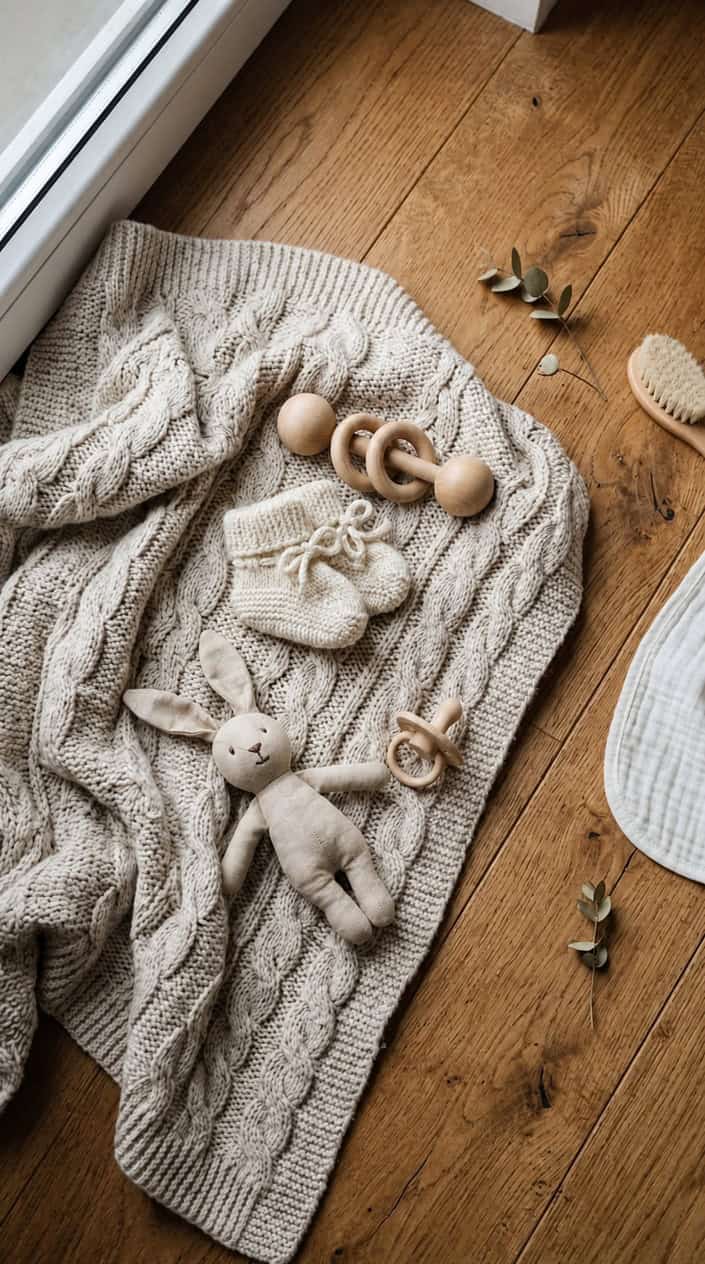
I lay the baby on a warm wooden floor, tuck a soft knit blanket under them, and add a few tiny props like a knit hat or a wooden toy. The wood gives a warm, even background and the knit adds cozy texture while the props give a size cue.
This works because phones pick up texture and contrast well. Natural window light from the side keeps shadows soft. I move a lampshade or a piece of cardboard to block harsh sun if needed.
For a first timer, clear the floor and sweep quickly so there’s no dust. Place the baby in the center, lens straight above, about two feet up, and take a bunch of shots — babies wiggle. My toddler once tried to help, so keep a hand nearby and a cup of coffee for me.
4) Wrapped in Grandma’s blanket, close-up headshot

I swaddle the baby in Grandma’s soft, worn blanket and shoot a close-up of their face. The blanket’s texture and familiar color make the photo feel cozy, and soft window light keeps shadows gentle.
I use a wide aperture on my phone (portrait mode) and get in close, filling the frame with the baby’s face and a hint of the blanket. Keep the room bright but avoid direct sun; I seat us near a north-facing window or hang a white sheet to soften light.
Tuck the blanket snug but not tight so you still see cheeks and lashes. My toddler once tried to “help” and tugged the corner — I laughed and kept shooting; those little interruptions often make the best shots.
5) Bucket prop on faux fur rug for sleepy poses

I love tucking a sleepy baby into a small bucket on a soft faux fur rug because the simple textures make the baby the focus. The light from a big window keeps things soft, and the fur adds a cozy feel without busy patterns.
Pick a plain wooden or metal bucket and a neutral-colored faux fur rug. Place both near a north-facing window for even light. I stuff the bucket with a rolled blanket first so it’s safe and comfy — my toddler once tried to climb in, so watch for helpers.
Angle your phone slightly above the baby and zoom with your feet, not fingers, to avoid losing quality. Keep sessions short; babies get cold fast. If the swaddle peels loose, tuck it back gently and snap a few quick shots.
6) Simple swaddle-and-side-lying on the bed with white sheets

I swaddle the baby snug, lay them on their side on plain white sheets, and shoot from above or at a slight angle. The white keeps light even and soft, and the swaddle adds a clean shape that a phone camera loves.
Put the bed by a big window so the face gets soft, natural light. I tuck a rolled towel behind the back to keep the baby from rolling; my toddler’s stuffed dog usually tries to join the scene.
Use a plain swaddle in a soft color or neutral print so the focus stays on the baby. I take a few close-ups of the face and a wider shot to capture the tiny hands peeking out.
7) DIY hammock pose using a fabric sling and parental hands

I drape a soft jersey sling between my hands so the baby looks like they’re floating, with my palms under for support. It works because the fabric creates a smooth texture, and the light from a nearby window keeps things soft and simple.
Keep the sling low over a couch or between two chairs and never let go—always have at least one hand under the baby. Use a plain sheet under the sling so the phone only sees clean colors, and ask your partner to peek in the frame for a warm touch; our dog usually wants to investigate, so expect a curious nose.
Use a phone in portrait mode and get close to fill the frame with the baby’s face and the sling edge. Move slowly, keep one hand steady under the head, and snap a few shots while the baby’s calm.
8) Minimalist crib corner with string lights off to side

I set up one crib corner with a soft sheet, a knit blanket, and a string of warm fairy lights hung just off to the side. The lights add a gentle glow and soft shadows that look good on a phone without stealing focus from the baby.
Don't lose this article. Enter your email below, and I'll send it to you right now. Plus a little encouragement and inspiration from me, straight to your inbox.
Keep things simple: neutral sheet, one textured blanket, and maybe a small plush. Aim the phone so the lights sit just outside the frame or barely in it—this makes skin tones warm and avoids harsh spots. I usually swaddle the baby and wait for a calm moment; sometimes my dog wanders by, and I get a cute outtake.
9) Sibling hands-holding newborn on couch shot

I had my older kid sit on the couch and hold the baby’s tiny hand while I shot from above. The soft window light, the couch texture, and that simple connection make the photo feel warm and honest.
It works because light from the window wraps faces and keeps shadows soft, and the couch fabric adds a cozy layer without stealing focus. I asked my kid to look at the baby, not the camera, which keeps the shot natural — my toddler almost dropped a toy mid-pose, so be ready to laugh.
Hold the phone directly over them at arm’s length or stand on a small stool. Shoot a few frames while they wiggle; babies and kids move fast. If the couch is dark, put a light blanket under the baby’s head for contrast.
10) Macro detail shots: toes, ears, and button nose

I like getting close to little features — tiny toes, soft ears, that button nose — because they tell the story without needing props. Close shots work when light is soft and the background is simple, so the skin texture and tiny details stand out.
Use a phone camera and tap to focus on what you want to be sharp. Move slowly and hold your breath — I always forget and get a blur. Natural window light from the side helps; I prop the baby on a blanket, and my dog usually sniffs nearby, which makes us laugh, and the toes curl.
Try using Portrait mode if your phone has it to blur the background a bit. Get several angles: straight-on, 45 degrees, and from above. If the baby wiggles, keep the session short — five minutes is plenty.
11) Parent forehead-to-forehead shot against plain wall

I stand with my forehead to my baby’s while a plain wall keeps the focus on us. The even wall cuts distractions, and the soft window light from the side gives just enough glow without harsh shadows.
I tell dad to wear a simple, solid shirt so patterns don’t steal the scene. I squint the phone camera, tap to set focus on our faces, and use a 2-second timer so I can settle into the pose — sometimes the dog wanders in, and I laugh it off.
Keep your chin level and your noses almost touching. Try a few angles: straight-on for intimacy, a slight tilt for a softer look.
12) Outdoor porch shade session at golden hour

I set the baby on a soft blanket in the shaded part of our porch right as the sun dips low. The indirect golden light hugs skin tones and keeps shadows soft, while the porch texture adds simple interest.
It works because shade gives even light, and the warm hour adds a gentle glow without squinting. I move the blanket toward the open side of the porch for a bit more warmth, or tuck it back when the sun sneaks through the railing.
Use a neutral blanket and keep props minimal — a knit wrap and a favorite hat. Sit close and use your phone’s portrait mode if you have it, or tap to expose the baby’s face. Expect the dog to sniff around; I always have a hand ready to steady a rolling swaddle.
13) Overhead changing table flatlay for baby yawns

I lay the baby on the changing pad and shoot straight down for yawns and tiny hands. The light is even and soft from a nearby window, and the plain pad keeps the focus on their face and expression.
This works because overhead keeps distractions out and shows the whole baby in a tidy frame. Textures like a knit swaddle or a fuzzy blanket add warmth without stealing the show.
Use a stool or ladder for a steady overhead angle and hold the phone vertically. Talk softly to get yawns—mine almost always pop one when I sing the wrong lullaby—and snap a burst so you catch the peak stretch.
Tricks for Calming a Fussy Model
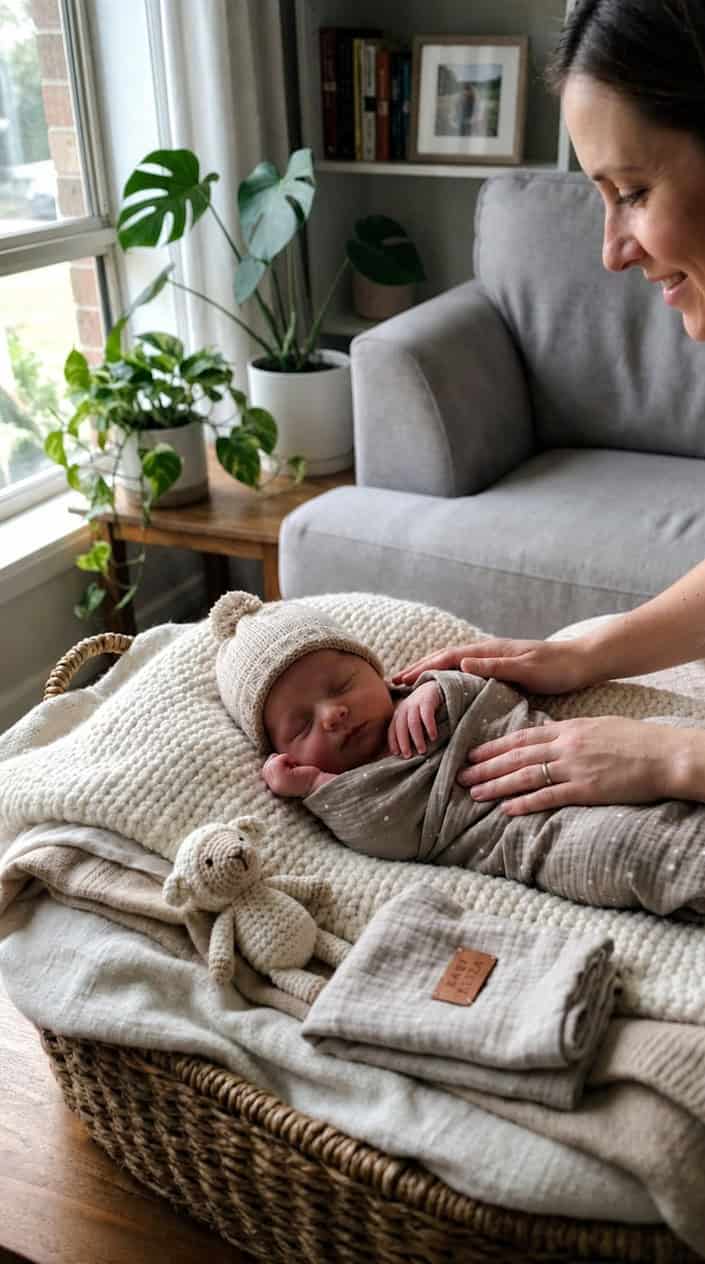
I focus on timing and coziness to keep shoots short and smooth. Small changes — a warm room, a fed baby, a quick diaper — save time and tears.
Timing Around Naps
I pick shoot times that match my baby’s nap rhythm. If my baby naps at 10 a.m., I schedule the session for 45–60 minutes after they wake. That gives time to feed, change, and settle before they get hungry again.
Watch for sleepy cues: rubbing eyes, yawning, or staring off. If you see them, pause. A 5–10 minute cuddle or gentle bounce usually brings calm. I keep a small playlist of white noise or soft lullabies on my phone. It drowns out house noise and helps them relock into sleep for quieter poses.
Bring a simple checklist: last nap time, last feed, diaper status. It keeps me from guessing and cuts the time they cry.
Keeping Baby Cozy
I set the room to about 72–75°F and use a small space heater if needed. Warmth matters — even a slightly cold baby fusses more. I lay down a soft cotton blanket that I’ve warmed in a dryer for a minute so they don’t flop onto a chilly surface.
Swaddles calm a lot of babies. I use a light muslin so arms can peek out if we need hands in the shot. If a swaddle comes loose, I tuck it again instead of unwrapping it. A pacifier or gentle suck on a finger helps some babies; others want skin-to-skin. I keep a burp cloth handy because spit-ups happen — always happen — and it saves the whole setup from needing a reset.
Editing Photos Right on Your Phone

I fix color and crop right on my phone so the shots look like I meant to take them. Quick tweaks and tight crops take minutes and stop the messy background from stealing the moment.
Quick and Easy Color Fixes
I tap the photo, then use the phone’s auto-adjust first. It usually fixes exposure and contrast fast and keeps skin tones real.
If skin looks too warm or cool, I nudge the temperature slider toward blue or yellow by small steps — +5 or -5 is usually enough.
Boosting brightness +5 to +10 helps when the room is a bit dim, but don’t push it past +20 or skin loses tone.
I add a touch of vibrance, not saturation. Vibrance +8 keeps colors gentle while keeping swaddles and props lively.
For shadows, I raise them +10 to +20 to bring out details in blankets without blowing highlights. I peek at the baby’s face at 100% to make sure it looks natural.
If there’s a slight color cast from a lamp, I use a white-balance eyedropper (in apps that have it) on a white blanket to correct it fast.
Cropping Out the Chaos
I crop tightly around the baby to remove toys, diaper bags, or a curious dog nose. Tight crops bring the viewer straight to the baby’s face.
Think about composition: I usually place the baby’s eyes on the top third of the frame. That small shift makes the image feel balanced.
Use a square crop for Instagram and a 4:5 crop for phone portrait posts; both fill the screen better than full-width landscape.
Don’t cut off tiny hands or toes — leave a little breathing room so the image feels cozy, not cramped.
If a stray hand or blanket edge is distracting, I zoom in a bit and nudge the crop until the lines lead to the baby.
When I can’t fully remove clutter, I blur the background lightly in an app to keep focus on the baby without awkward editing.


