
When my daughter came outside with a muddy spoon and a proud look on her face, I washed Tomorrow’s coffee mug. A mud kitchen was being created on our porch. It featured a salvaged picnic table and some of the reclaimed bowls from the garbage.
Don't lose this article. Enter your email below, and I'll send it to you right now. Plus a little encouragement and inspiration from me, straight to your inbox.
All the kids received a lot of very enthusiastic cheers as they announced soup. The mud kitchen inspires messy and noisy play that can consume hours and even some sunglasses. The kids enjoy every strange sticky second.
I will show you some simple and fun projects to build with materials you have lying around the house. This will help save money so you can repurpose items that you have at home and your kids can use them to play.
1) DIY mud kitchen from an old picnic table
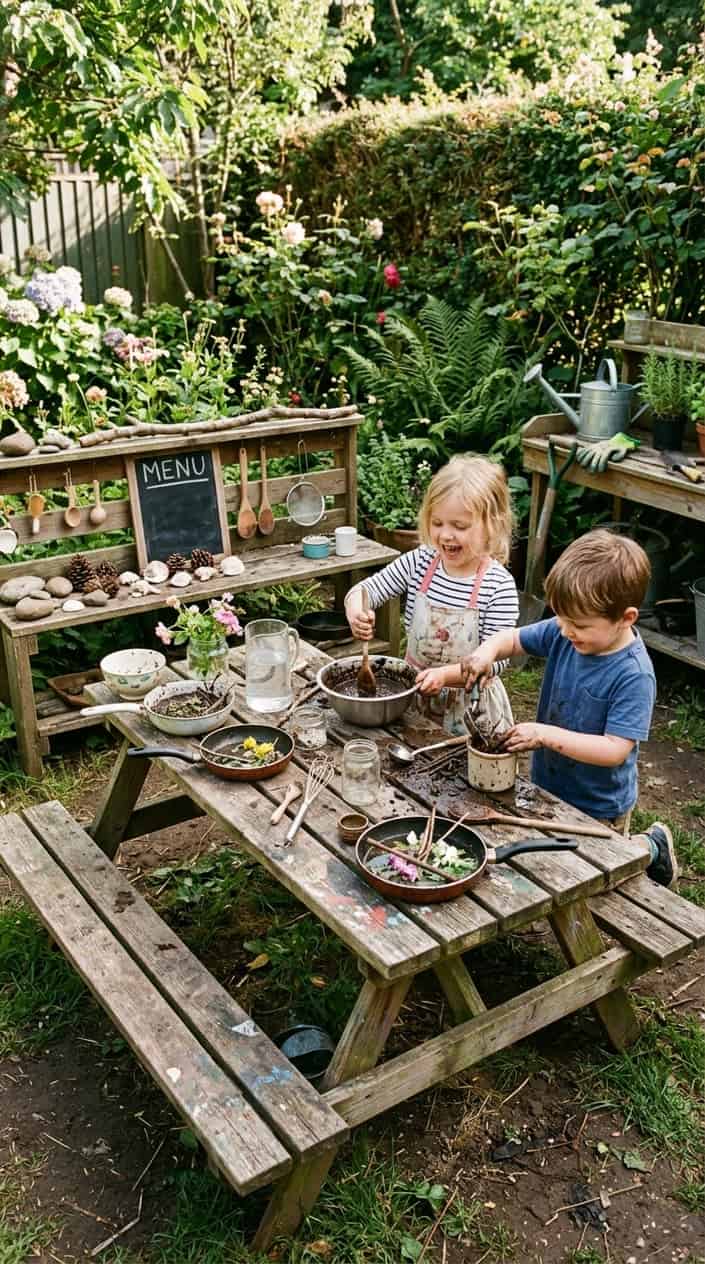
My maple picnic table is now a mud kitchen. I turned the table on its side and took off one of the benches. The other pieces now serve as a counter and a lower shelf for pots and buckets.
I attached a few old sink pans and used a garage pegboard to hang some spoons. The kids are already able to stir and scoop what we have, and it just took me one afternoon and a cheap drill.
It’s important to regularly check for screws that might be loose, as well as splintering wood, sanded rough patches, and always check the fastenings. The table is short, so taller children would have to bend down. I actually appreciate that for now, as it means the mess stays grounded.
2) Plastic storage bin sink with garden hose hookup
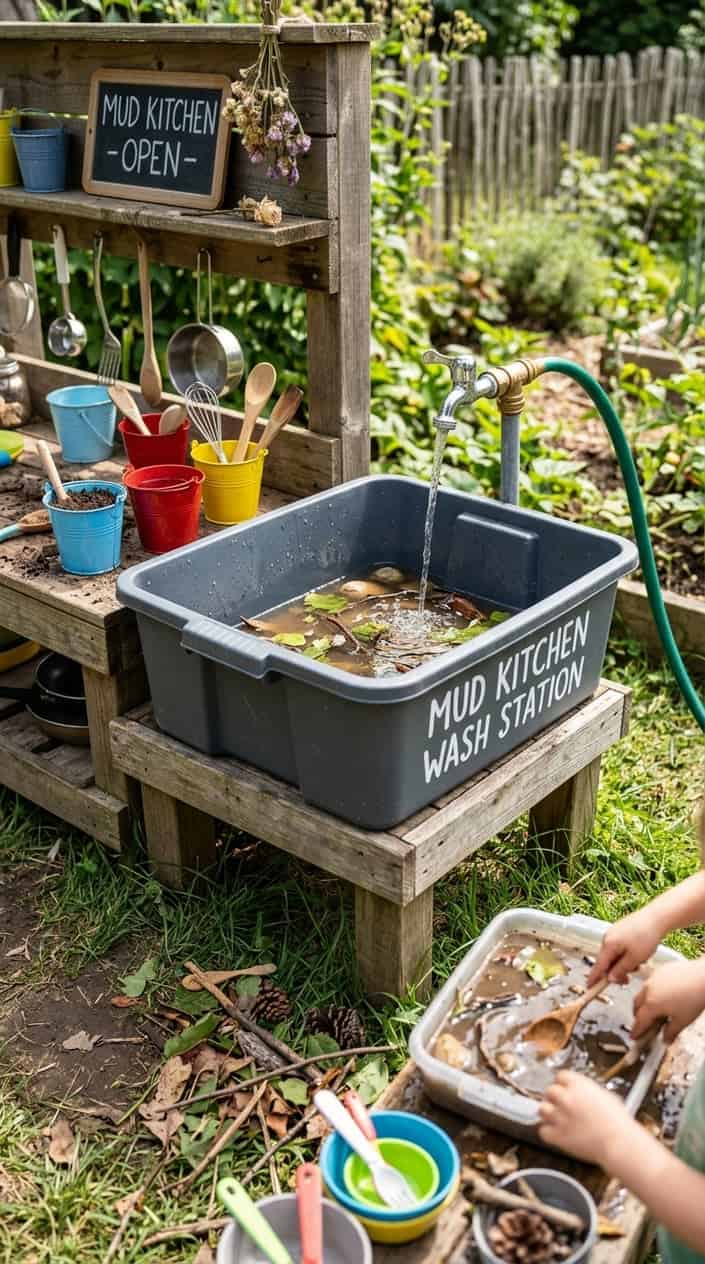
I made a sink that drains using an old plastic storage bin from the shed and a hose from the side of our house. I cut one hole on the short side of the bin, put in a bulkhead or outdoor faucet fitting (which I got at the hardware store), and screwed the hose onto that. I set the bin on top of an upside-down milk crate so the kids can reach it.
Finish screwing the other end of the hose onto the spigot or a simple Y-connector. Set the water to low as kids learn to fill and dump soil without a blowout. Adjust your expectations when kids learn how to fill and dump soil without a blowout, and be prepared for leaks at the plastic fitting, and use plumber’s tape or silicone to seal it.
3) Upcycled pallet counter with enamel pie plates for bowls
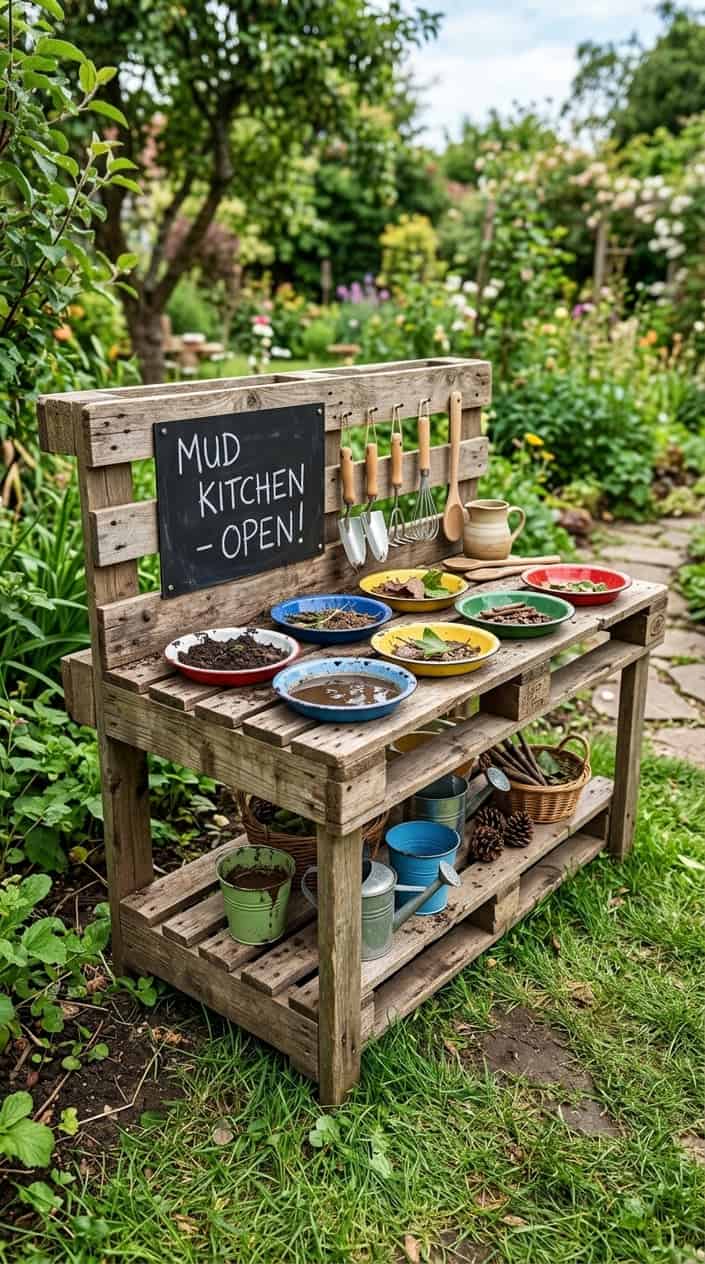
I put little effort into transforming that old pallet fence into a child’s counter. I trimmed the slats flat on top, sanded them to smooth out rough spots, and then propped them up against the shed to create a nice waist-high countertop.
I attached a scrap board across the back for support and added some hooks for spoons. I also drilled holes for bowls that are light, easy to clean, and can be a bit noisy. (Enamel pie plates)
Wobbly slats and splinters may be a danger, but a quick sanding job and a few screws will fix that. Enamel plates chip easily, so make sure to keep them over grass or a rug.
4) Bucket-and-spade mud pie station (use sand toys you already have)
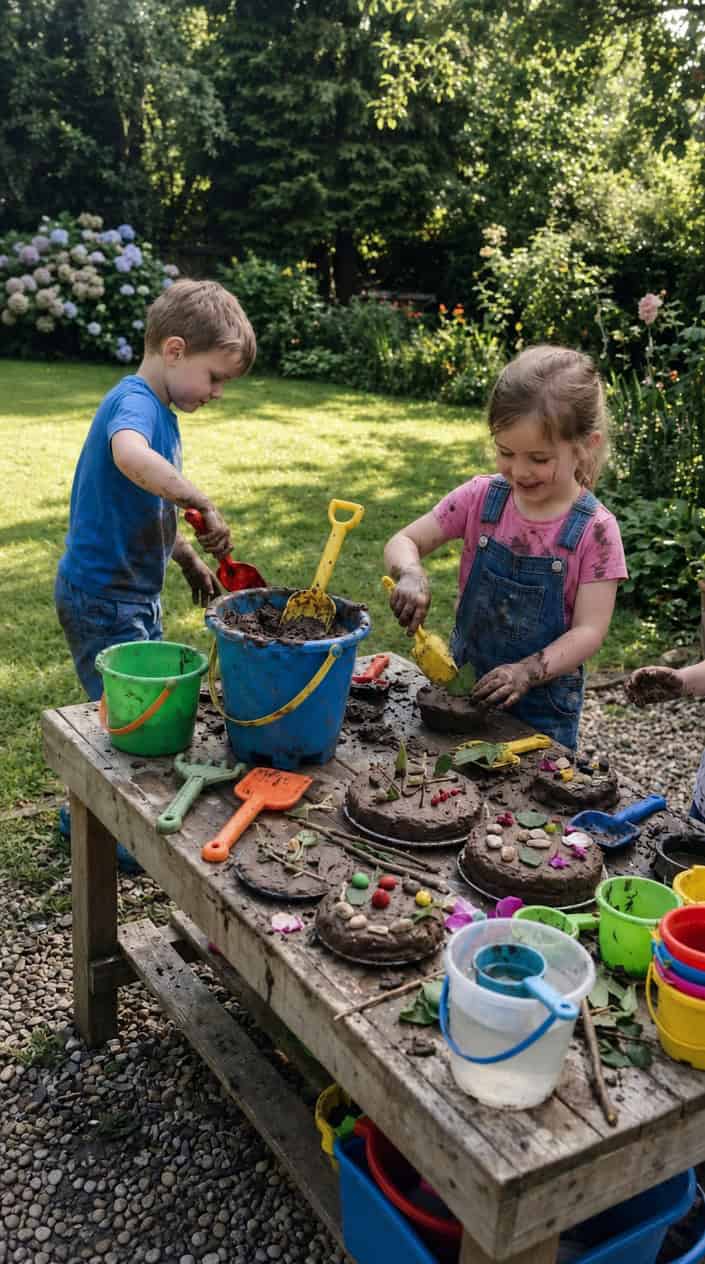
We made a mud pie station at the back fence using a bucket, some toy sand shovels, and part of a sand-toy tub that we turned into a mud pie-making kit! The bucket came from the garage, the shovels are from the toy bin, and I took a cake pan from the kitchen to use as a mud pie tin.
I set the bucket on a short milk crate so that the kids could easily stand around it. All you need to do is add some shovels, a sifter, some small cups, and show them how to scoop water from the hose to mix it right there.
Shoes can disappear into those deep puddles, and toys can get clogged with grass and other debris. Swap and hose them down weekly. I keep a towel and a spare bucket for quick cleanups.
5) Cedar shelf on cinder blocks as open prep table
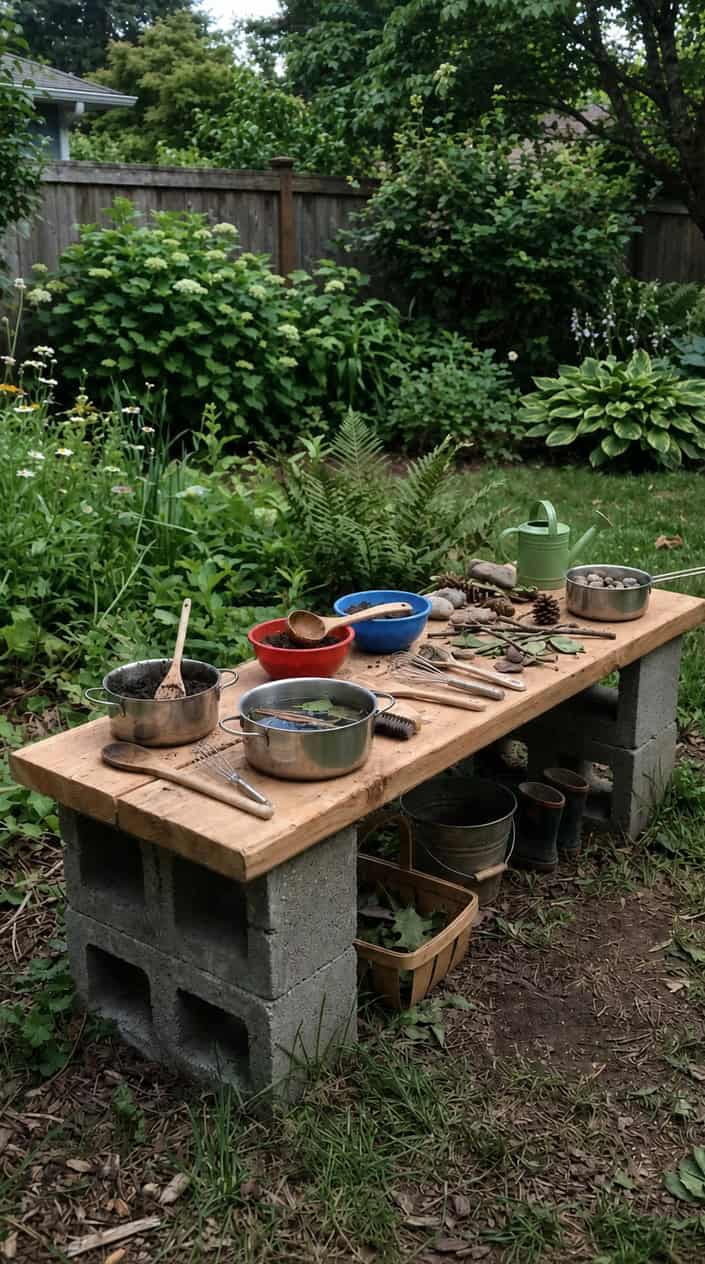
I grabbed the four cinder blocks that were stacked against the compost bin, along with an old cedar shelf from the garage. The shelf is light and weathered and shouldn’t shed splinters outdoors.
I just put a few cinder blocks into two stacks on either side and laid the shelf over them. You don’t need any tools unless you want to screw down the shelf for peace of mind.
Watch out for rain pooling at the edge of the shelf, and for small hands tipping heavy bowls over, of course. Cedar does look nice, and if you don’t like the rustic look of nature winning, you’ll want to bring it inside for winter.
6) Old wooden tray + muffin tin for recipe station
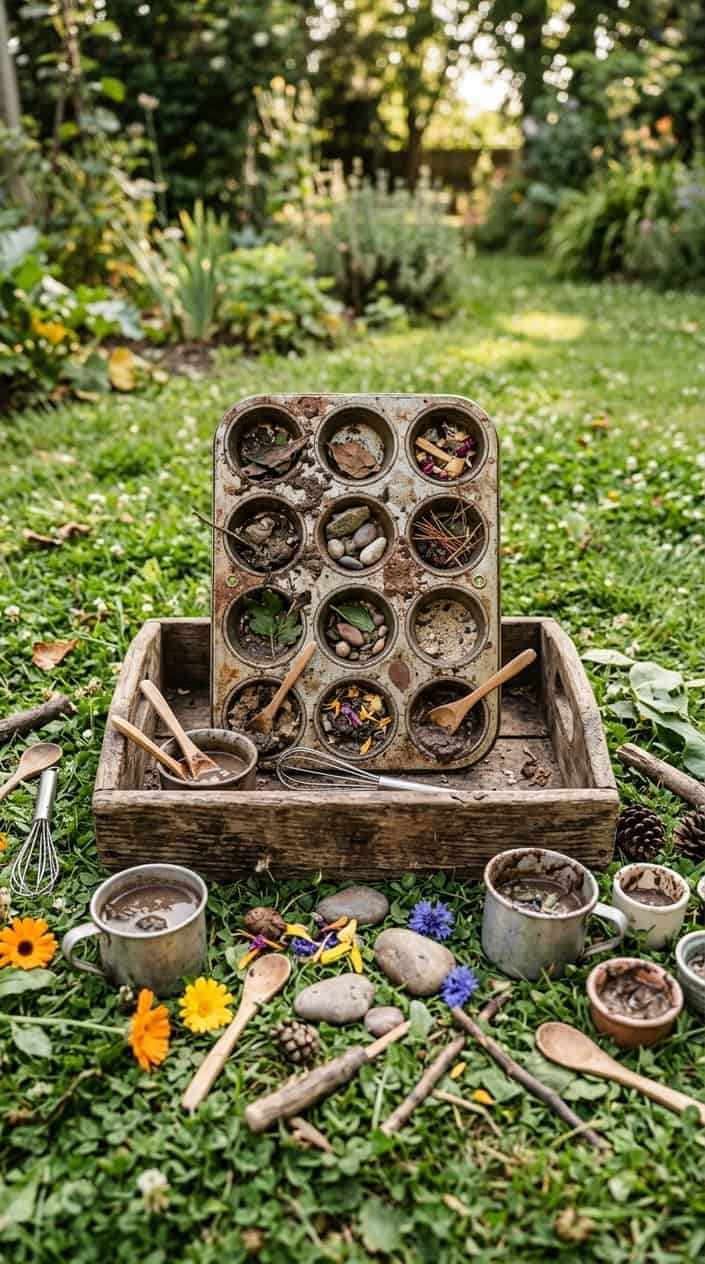
I found a wooden tray in my shed and an old, dented muffin tin. I organized my cooking station on the picnic table. The tray keeps everything in order and the muffin tin offers six little “bowls” for mud, water, leaves, or whatever else they choose to use to make soup.
Next, screw or clamp the tray to the table so it won’t jiggle anymore. After that, place the muffin tin in the tray. If the muffin tin continues to jiggle, use silicone caulk or a cloth to level it.
Watch out for rust and mold. I cleaned up a few rough areas and disposed of tins that had a lot of rust. I think the area will be cleaner and safer for playing.
7) Repurposed potting bench with plastic dishes
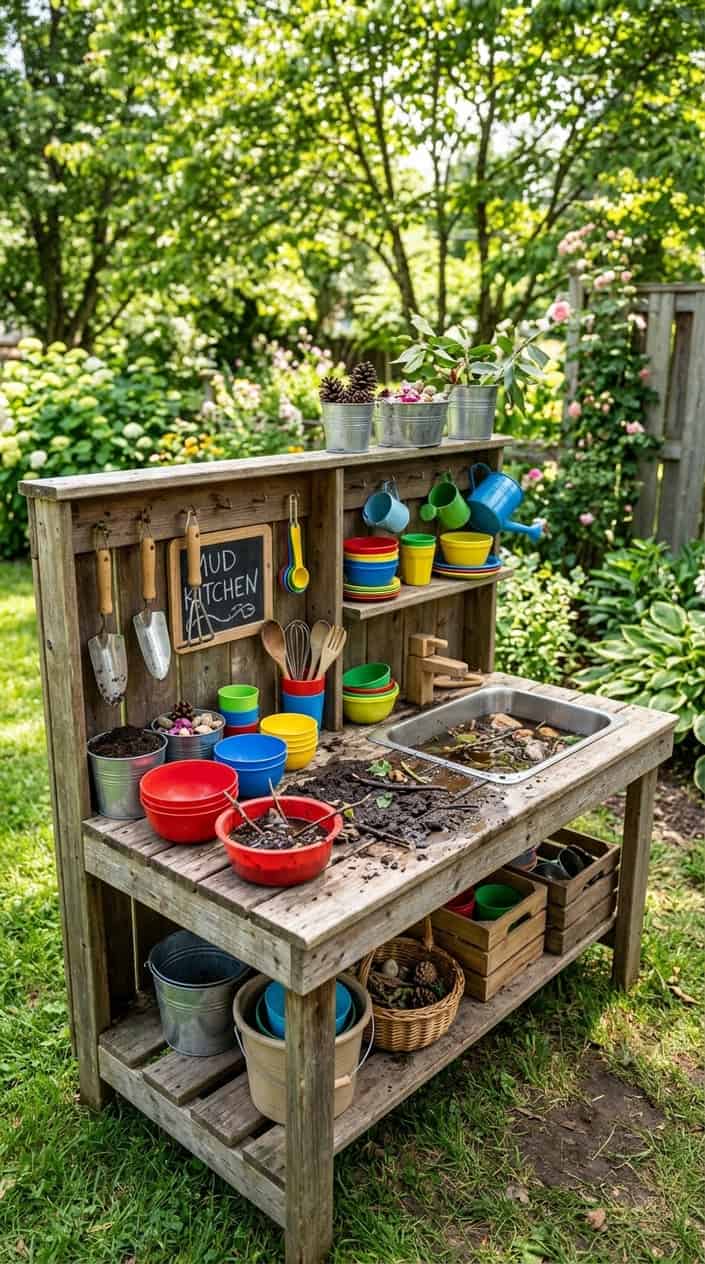
I made a mud kitchen using a potting bench that was leaning against the garage. I cleaned some cobwebs off, tightened a loose shelf, and located a basin in the shed to use as a sink.
I filled it with plastic dishes, bowls, and cutlery that I’ve got from garage sales, and from the kids’ old picnic set. The kids use soil in the basin to scoop, stir with the spoons, and serve ‘soup’ on the plates.
After rain, keep an eye out for soft spots and splinters. I applied a waterproof sealant on the top and sanded some of the rough spots. The plastic dishes will break, so be careful of falling from the tree house onto the sharp edges.
Don't lose this article. Enter your email below, and I'll send it to you right now. Plus a little encouragement and inspiration from me, straight to your inbox.
8) Child-size folding table with silicone baking mats
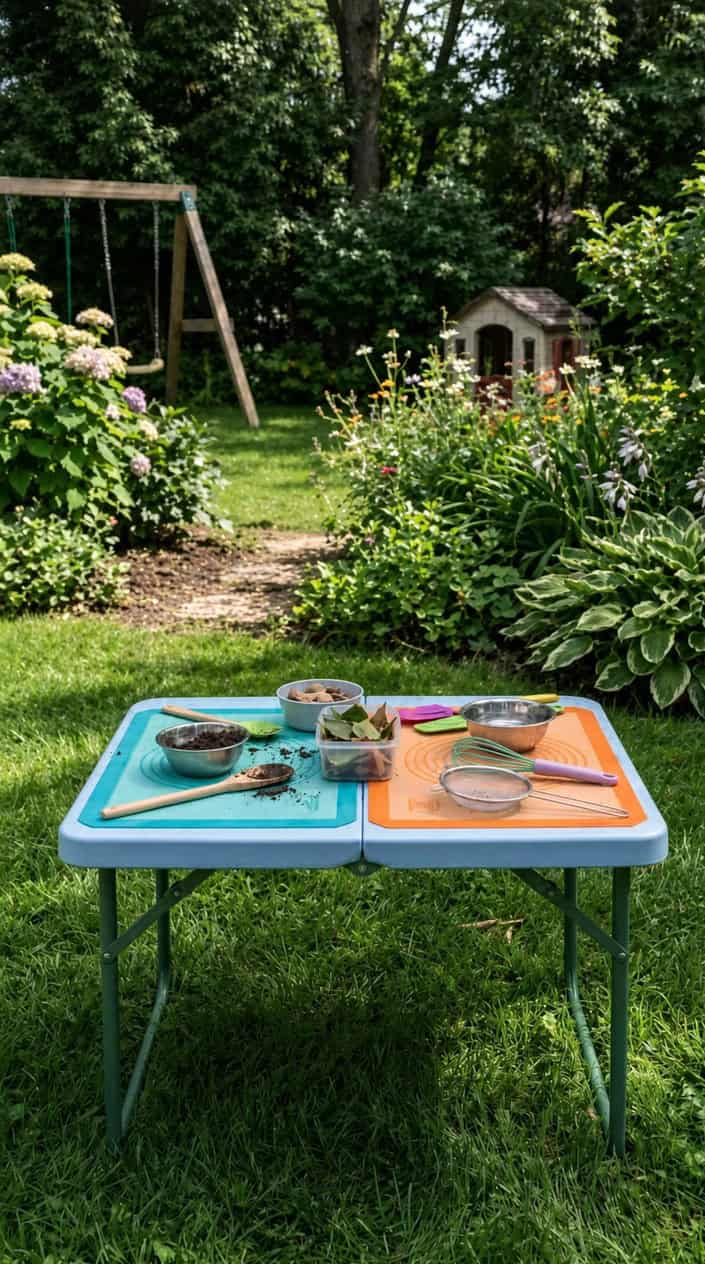
I grabbed a small folding table from the garage and some clear silicone baking mats I used for cookies. The mats are from a yard sale, and I think the table is from a yard sale, too. It was a super easy, and wipeable, work surface for the mud pies.
You can put the table where you want the mess to happen. I put ours on the grass next to the hose. Place the silicone mats on top of it and clip them with binder clips at the corners so they don’t slide when the kids stir it. If it tips over, fold the legs in a bit and tighten the clips.
Be cautious, as wind and sharp objects may be a hazard. While mats may be better than cloth at keeping stains and moving less (or possibly not at all), they can still blow off or be damaged if a scooter hits the table.
9) Tree-stump cutting board for pounding and mixing
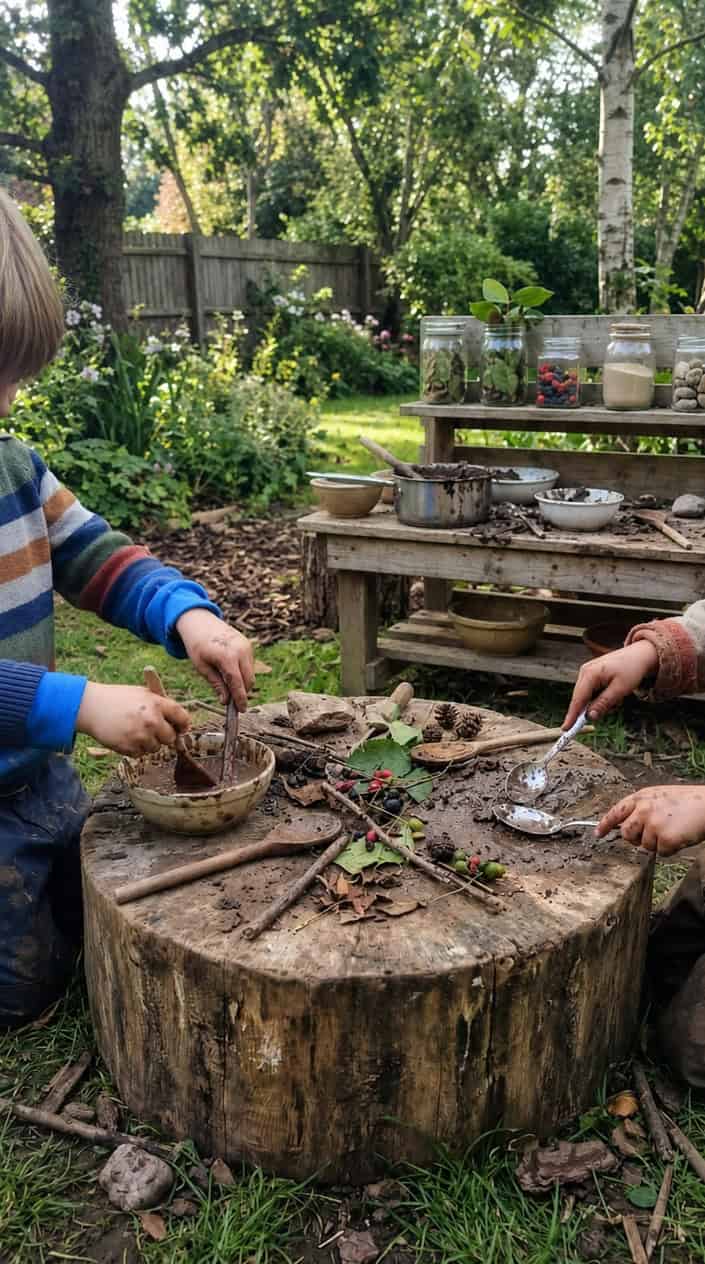
I took an old stump from the side yard and made a low table for whacking and stirring. The stump is from the big oak we had trimmed last fall, so it was already by the fence and needed a job.
I sanded the top a bit and set it on a flat stone patio so it wouldn’t wobble. I also bring out wooden spoons, a toy mallet, and some metal bowls to smash clumps into “sauce.”
A quick sand and seal with food-safe oil works. I keep an eye out for splinters and insect trails in older wood. Kids love the solid thud, but I remind them not to stand on it — it’s for mixing, not a stepping stool.
10) Hanging colander and utensil rack from a sturdy branch
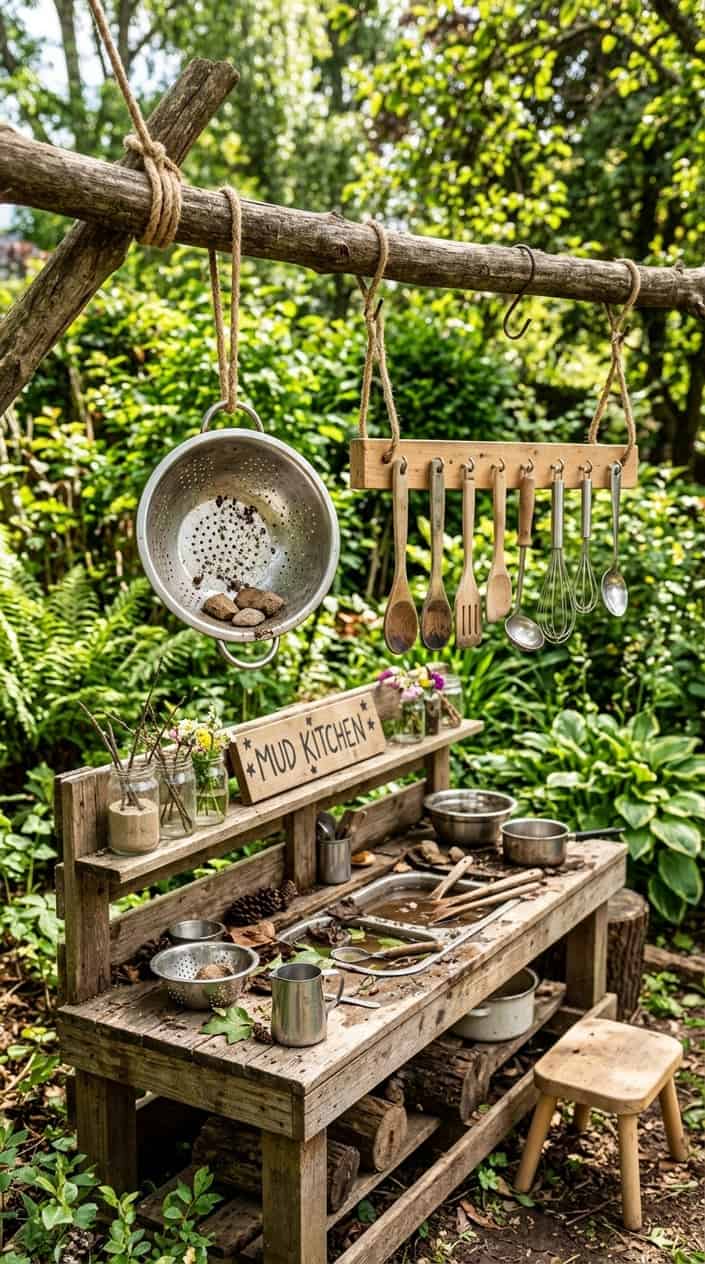
I found an old metal colander and a wire utensil rack and hung them from a thick maple branch using garden twine. You can take a colander and a small rack or a stick (the broom handle propped by the shed should work), along with a pair of twine or rope.
To dangle the colander, tie its handles so it swings a little. Then, either loop the rack over the branch or tie it with knots. For scooping mud, keep the colander lower, and for spoons and ladles, keep the rack higher.
Be cautious of the sharp edges on the metal parts, and check the knots every couple of days. Kids will love the swaying colander, but it can tip over if too many kids get in. Teach kids to grab gently, and don’t leave heavy things hanging.
11) Wheelbarrow mud mixer (kids love pushing it)
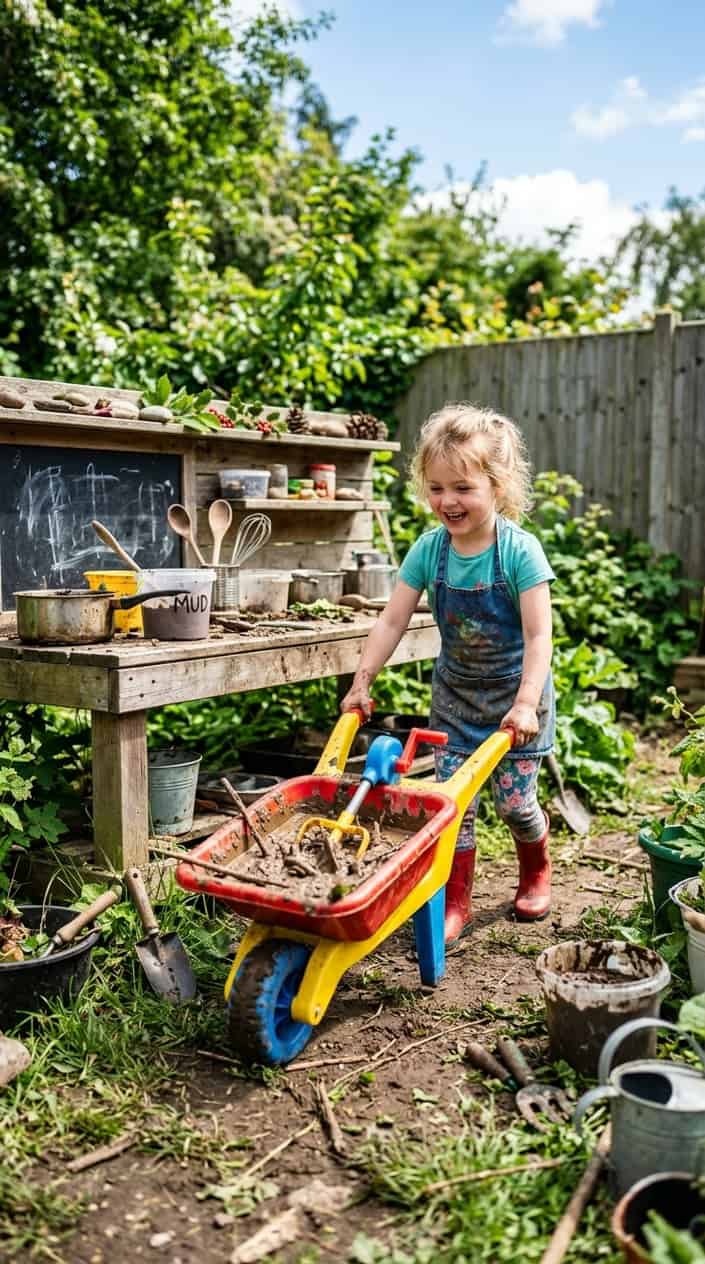
Using an old metal wheelbarrow that used to sit by the shed, I made a wobble-proof mud mixer. I also used a broken whisk, a wooden spoon, and a paint stirrer, all stuck into the wheelbarrow, which came from the garage pile.
Take the wheelbarrow to a shady area, add some dirt and water, and then let the children start mashing using the tools. I have also clamped a plastic colander over the edge to help keep the splashes to a minimum.
Look out for the wheel and handles — rusty wheelbarrows can tip over and pinch fingers. I have my daughters stand off to the side while one child pushes the wheelbarrow and another child mixes; it keeps everyone laughing and mostly out of danger.
12) Reclaimed dresser drawer sensory tray with lids
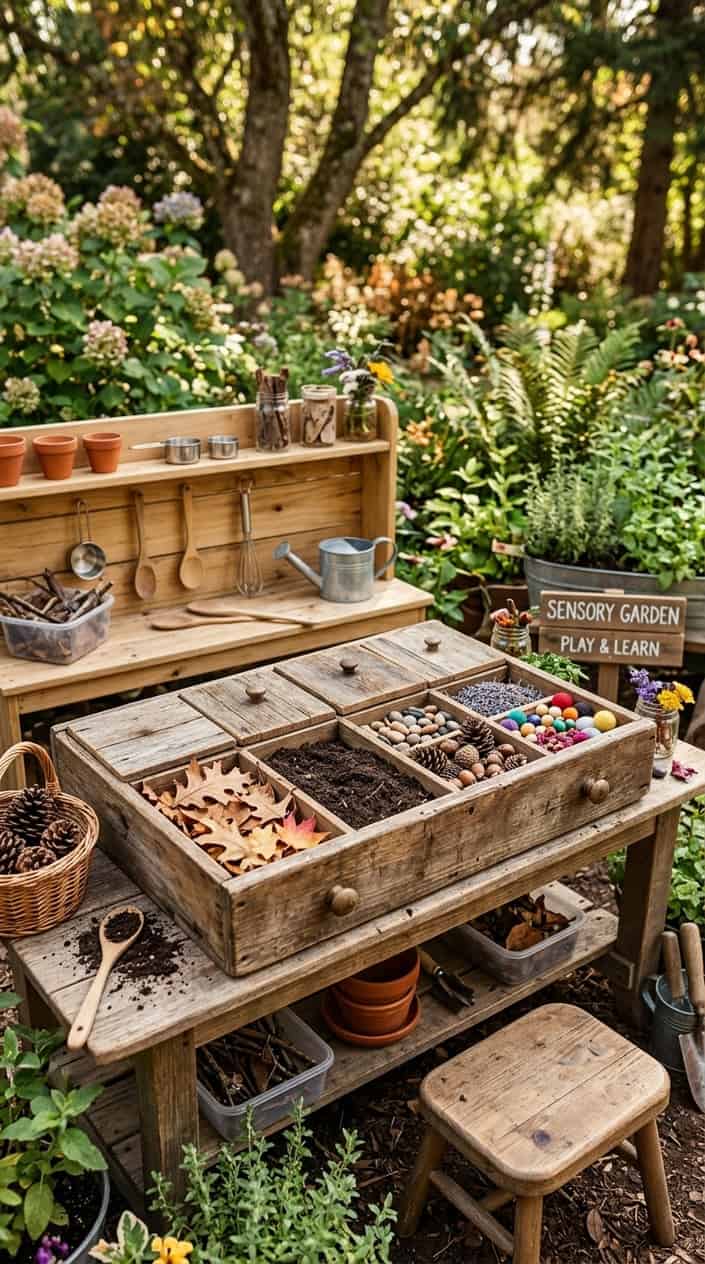
I found an old dresser drawer at the curb and made it into a shallow sensory tray. The drawer also came with a loose lid from a broken picnic chest and a couple of spare knobs from my garage sale stash.
I sanded the edges and placed the drawer on cinder blocks. As for the lid, I put it nearby to use as a cover or an additional mixing surface. I fill it with mud, leaves, pebbles, and some water, and let the girls stir with wooden spoons and toy cups.
Check for signs of rot or split wood because I’ve applied varnish to the areas that will sit wet and replaced any punky wood. The lid keeps out rain and cats, but I still bring it inside at night.
Making Mud Kitchens Safe (Even For Overenthusiastic Chefs)
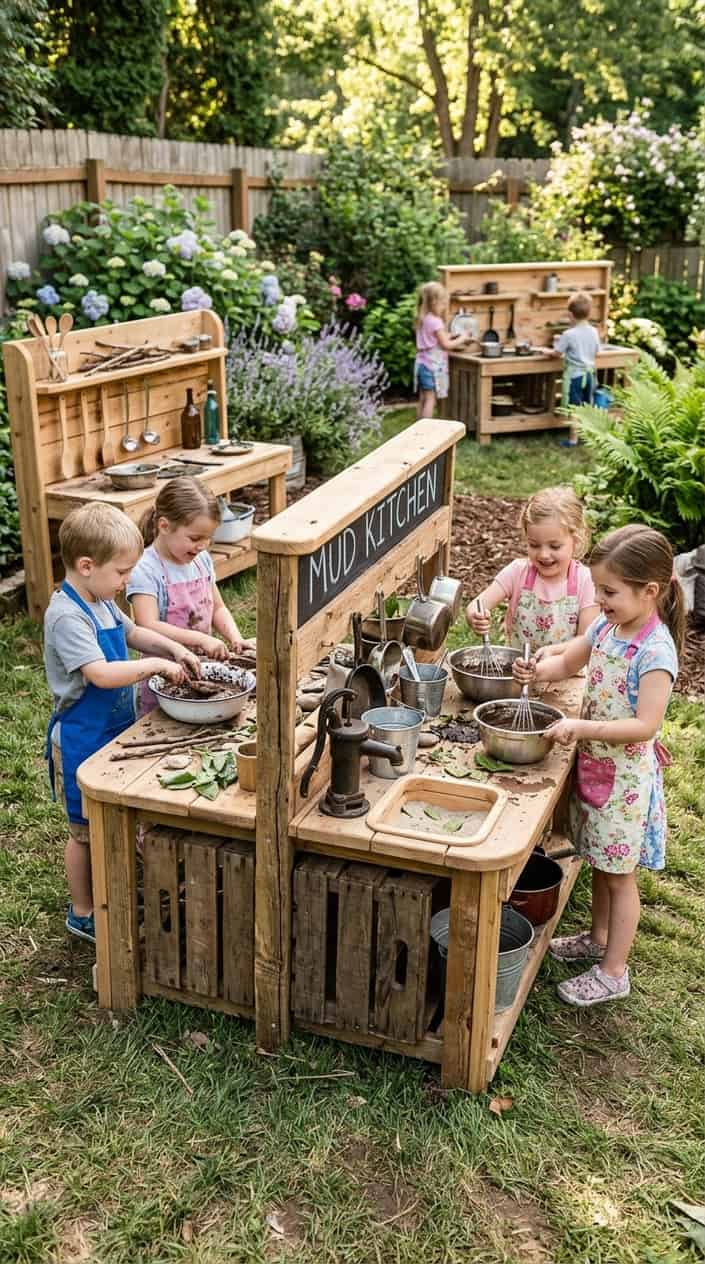
I try to keep things easy and sensible. Avoid plants that could be dangerous, keep anything sharp out of reach, and make hand cleaning easy and clear so that fights don’t start over who washed last.
Natural Materials To Skip Or Supervise
I steer clear of wild mushrooms and pokeweed, and milky sap plants near the play area because those plants may cause rashes or upset stomachs, so I remove them or use a border to block that corner of the yard. I cut back any suspect leaves on the fence line and teach my children to identify plants that they don’t know. I also control the sticks and pinecones on the ground. Long and thin sticks can cause eye injuries when children run. I have a little container of safe stirring sticks that are short, smooth, and blunt. Kids use those instead.
Handling Mud-Covered Hands (And Sibling Disputes)
I set up a bucket of warm, soapy water and grab a scrub brush to put by the mud table. It’s a lot easier to wash hands than to wrangle two kids and take them to the house. I take small towels, write their names on them, and hang them on the nails I put at kid height so I can avoid towel fights. If a fight breaks out over “my towel,” I give each kid a damp wipe, and I set a timer — two minutes each — to make it fair. I keep an emergency water, a reminder to rinse mouths, and a note to call the pediatrician if anything concerning happens. This is also for the kids who are in diapers and for the kids who eat the mud.
Keeping Play Fresh: Easy Add-Ons And Seasonal Swaps
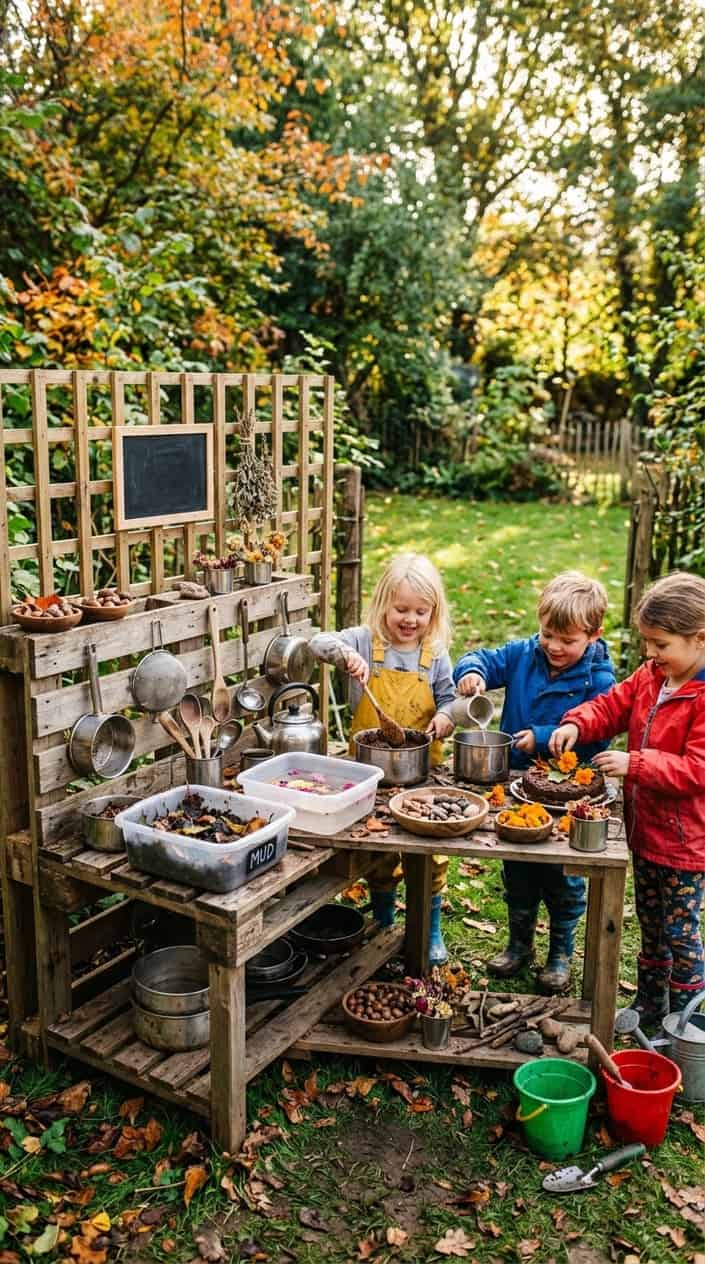
Changing a few things in the mud kitchen will keep the kids’ interest. Change one of the tools, bring in seasonal items, or change the sensory materials depending on the weather, season, or the yard materials.
Swapping Kitchen Tools As Kids Grow
We decided to use an old metal baking tray from the garage, a wooden spoon from the kitchen drawer, and three different plastic cups. When my girls wanted a bigger space, I moved them from the picnic table to the pallet bench. As they get stronger, swap in sturdier tools — replace thin plastic cups with metal tumblers, small whisks for salad tongs, and add child-sized saucepans from thrift stores.
Be careful of sharp edges and rust. I remove sharp edges, smooth out rough wood, and dispose of anything that is bent or cracked. Please do not mess up the indoors, and to reinforce this, put a bin labeled, \”outdoor only\”. This way the tools will stay outside, and you won’t be apologizing to your dinner plates.
Simple Outdoor Ingredients For Year-Round Fun
Using natural materials found in each season. In spring, they enjoy the light mud, puddles, and even dandelion heads. During summer, they like grass clippings, pretend cooking with chalk dust and lemonade. In autumn, we collect dry leaves, acorns, and pieces of apple. For winter, slushy snow and pine needles are great for hand warming and making steam with hot (steaming) water.
Keep a small caddy with the basic tools: flour-sack towel, measuring cups, squeeze bottle, jar of cinnamon for scent, etc. Before adding anything new, check for allergies and avoid thorny or poisonous plants. I often rinse the tools in a bucket after messy days so that it doesn’t mold between uses.