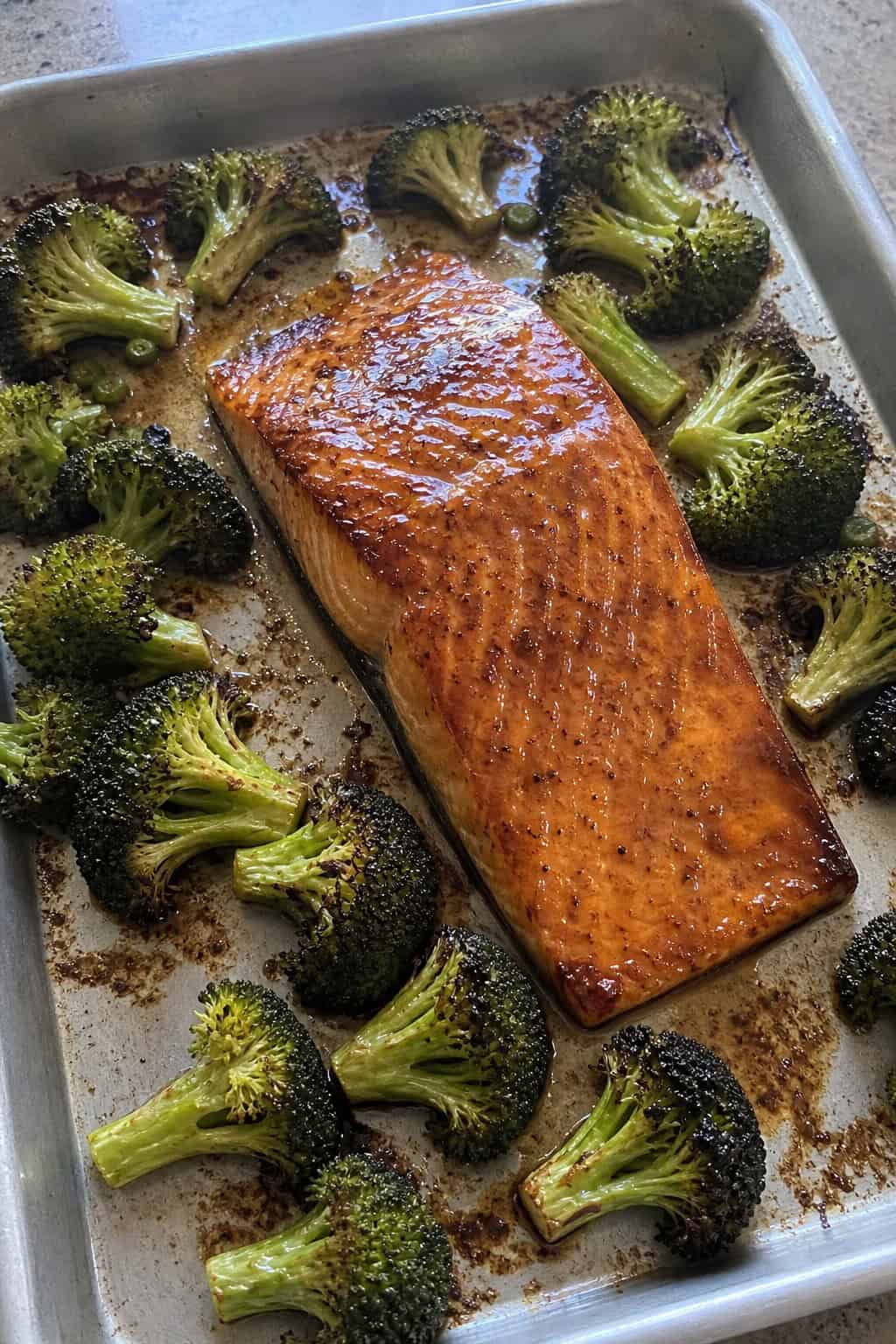
You know how it goes. Weeknight chaos between carpool, homework, and picky eaters. This is a dinner that will earn applause because it's fast, kid-approved, and so much better than takeout!
Don't lose this article. Enter your email below, and I'll send it to you right now. Plus a little encouragement and inspiration from me, straight to your inbox.
It's a one-pan glazed salmon with veggies, built for busy parents, or anyone who needs dinner fast with minimal cleanup and maximum "people will actually eat this." The dish is glossy, caramelized, and restaurant-quality without the fuss.

Five simple dinners. One grocery list.
No recipe hunting, no messy shopping notes, no complicated chef projects. Just family dinners that fit real weeks.
Ingredients
Instructions
1) Weeknight One-Pan Maple-Glazed Salmon with Roasted Brussels Sprouts and Fingerling Potatoes

1) Weeknight One-Pan Maple-Glazed Salmon with Roasted Brussels Sprouts and Fingerling Potatoes
Ingredients
Method
- Preheat oven to 425°F (220°C). Toss potatoes and Brussels sprouts with 1 tbsp oil, salt, pepper, and smoked paprika; spread on a large rimmed baking sheet. Roast 15 minutes.
- Whisk maple syrup, Dijon, soy sauce, garlic, and remaining 1 tbsp oil in a bowl. Pat salmon dry and season lightly with salt and pepper.
- Push veggies to the sides of the sheet; place salmon skin-side down in the center. Brush half the glaze over salmon and a bit on veggies.
- Roast 10–12 more minutes until potatoes are tender and salmon flakes with a fork. Brush remaining glaze, broil 1–2 minutes if you want more color.
- Squeeze lemon over everything and garnish with parsley before serving.
This sheet pan method means everything is on one rimmed baking sheet, cooking at a high heat between 400 and 425 degrees Fahrenheit. My maple glaze consists of maple syrup, soy sauce, garlic, and Dijon.
The sugar caramelizes fast, so the salmon needs to go in later than the vegetables to avoid burning. You'll want to stagger your timing with this one. Brussels sprouts and fingerlings need about 20 to 25 minutes, and your salmon only needs 10 to 12 minutes, so add it at the halfway point.
Fingerlings are waxier than regular potatoes and hold their shape better, so they cook faster and roast evenly. And a Brussels sprouts tip is to place them cut-side down, for better browning. Do not crowd your pan. If you do, the food will steam instead of roast.
, Sara
Variations & Swaps
This glaze is highly flexible, offering some really easy swaps. Honey, for instance, caramelizes faster than maple due to its higher fructose content. So, your broil time may need to be trimmed by a minute or two if you choose to go that route.
Don't lose this article. Enter your email below, and I'll send it to you right now. Plus a little encouragement and inspiration from me, straight to your inbox.
Agave has a lower glycemic index than honey or maple, and it's vegan. The flavor is milder and more neutral.
Coconut aminos have 65-70% less sodium than soy sauce and are noticeably sweeter, so this will shift the glaze balance. Make sure you taste it before pouring.
Tamari is the more one-to-one soy sauce swap, with a similar salt level and is wheat-free.
Coconut aminos will be the bigger flavor departure with these swaps, and it's naturally gluten-free. Soy sauce is a common oversight worth flagging, since there is a risk of cross-contamination when using shared equipment.
FAQ
How long do leftovers keep, and what is the best way to reheat them?
You can keep leftovers in an airtight container in the fridge for up to 3 days. When reheating, I like to warm the salmon in a covered skillet over low heat with a little water for 2 to 3 minutes instead of using the microwave. The vegetables heat up well in the microwave, or you can put them in a 375°F oven for 5 minutes to make them crisp again.
Can I freeze this?
The salmon and glaze freeze pretty well for up to 2 months. Potatoes and Brussels sprouts tend to get watery after freezing, so I usually freeze just the salmon with some extra glaze on top and make fresh vegetables when I reheat. Wrap each piece separately so you can take out only what you need.
Can I make this ahead of time?
Yes, you can make parts of this ahead. Mix the glaze up to 3 days in advance and keep it in a jar in the fridge. You can also trim and halve the vegetables the night before. I don’t recommend cooking the salmon ahead because it dries out, but doing the prep early means you can have dinner ready in about 30 minutes on a busy night.
Can I use frozen salmon?
Frozen salmon works fine here. Thaw it fully in the fridge overnight before cooking, and pat it very dry before seasoning. Extra moisture on the surface will steam the fish instead of letting it caramelize, and you will miss that glossy, slightly sticky finish that makes the glaze so good. Do not try to cook it from frozen on the sheet pan.
Do I need a specific pan or can I use what I have?
A large rimmed baking sheet, or half-sheet pan, works best because it gives the vegetables space to roast instead of steam. If the pan is too crowded, the vegetables get soggy instead of caramelized, which can be disappointing. If you only have a smaller pan, roast the vegetables in one and add the salmon to a second pan for the last 10 to 12 minutes. Using two pans is still much easier than making a full stovetop dinner.