
You want summer activities for kids that actually work, not vague advice to “just go outside” while you stand by the car texting. I get it — I’ve said yes to a walk and spent twenty minutes convincing everyone to leave the house, only to end up back inside arguing about snacks.These 30 ideas skip the elbow-grease guilt and give you hands-on options you can pull off without a parenting miracle. You’ll find simple, real-world plans that fit messy kids, short attention spans, and whatever energy level you’ve actually got today.
Don't lose this article. Enter your email below, and I'll send it to you right now. Plus a little encouragement and inspiration from me, straight to your inbox.
1) DIY Backyard Obstacle Course (laundry basket hurdles and pool noodle limbo)
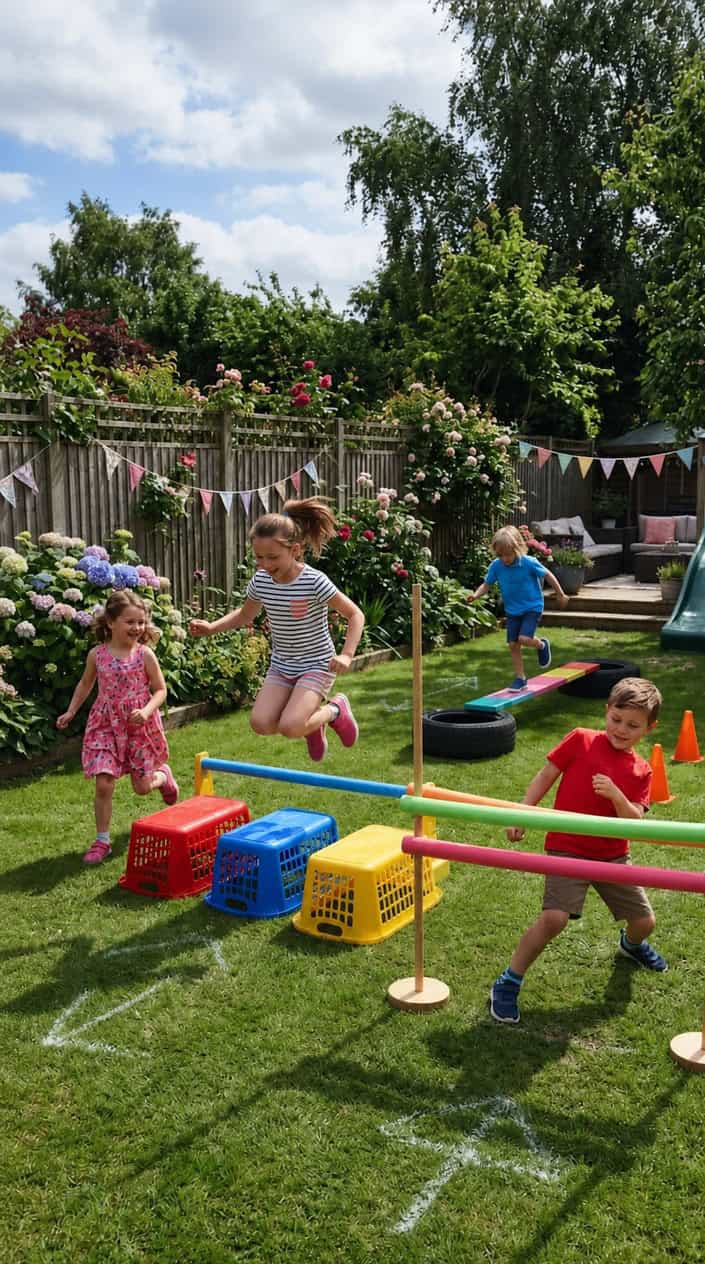
I like this because it gets kids moving without needing fancy gear, though it can get messy and takes a few minutes to set up. It’s worth it when they actually play for longer than five minutes.
Use laundry baskets, pool noodles, cones, and a jump rope to mark stations. I make simple rules—three jumps, crawl under a noodle, toss a beanbag—so the kids know what to do when attention wanders. Let them rearrange the course between runs; giving them control keeps it fresh and noisy.
Expect socks, grass stains, and someone trying to use a hula hoop as a steering wheel. Keep a small towel and Band-Aids handy, and don’t be shocked if the dog joins in.
2) Homemade Ice Cream in a Zip-Top Bag (kids shake and freeze)

This one’s worth it because kids love the drama of shaking, and you actually get dessert at the end. It is a bit messy and takes some prep—ice, salt, and a sink nearby are non-negotiable.
I have the kids help measure cream, sugar, and vanilla into a small zip-top bag, then seal it tight. We put that bag inside a larger bag filled with ice and rock salt, tape it closed, and let them shake for 5–10 minutes while I time them like it’s a game. It turns grainy at first, then smooths out into soft-serve if you keep shaking.
Expect cold hands and a few drips; have towels ready. If patience wears thin, pop the bag in the freezer for 10 minutes to finish. Pro tip: Use gloves or a towel so tiny fists don’t freeze mid-shake.
3) Neighborhood Scavenger Hunt with Photograph Challenges

I like this because it turns aimless wandering into a mission, though yes, it can get messy and someone will probably end up with a phone full of blurry pictures. It takes a little prep to pick items and set rules, but kids get excited by the camera and the chance to “collect” things without touching them.
Tell the kids the list and give each a phone or a camera. Keep items concrete — a red door, a dog on a walk, a flower with a bee — and set a time limit so attention stays sharp. Walk together when they ask for help framing shots and praise effort over perfection.
Heads-up: you’ll be sorting through a stack of duplicates afterward. Also expect negotiations about what counts as a match, so be ready with a tie-breaker like the funniest pose.
4) Living Room Fort Festival (blankets, string lights, snack station)

This is the kind of indoor chaos that actually feels worth it. It takes a little prep — gathering blankets, chairs, and lights — and yes, the couch cushions will be displaced for a day.
I start by draping sheets over chairs and a table, then weave string lights inside so it looks cozy, not cave-like. I set up a snack station on a tray with spill-proof cups and napkins; kids can raid it without my hovering. We add a flashlight, a stack of picture books, and a playlist of quiet songs to keep energy from bouncing off the walls.
Expect crumbs and a route of Lego casualties when you clean up. It’s loud and glorious for a few hours, and I remind myself that folding blankets beats breaking up a sibling argument.
5) Mini Backyard Garden in Recycled Containers
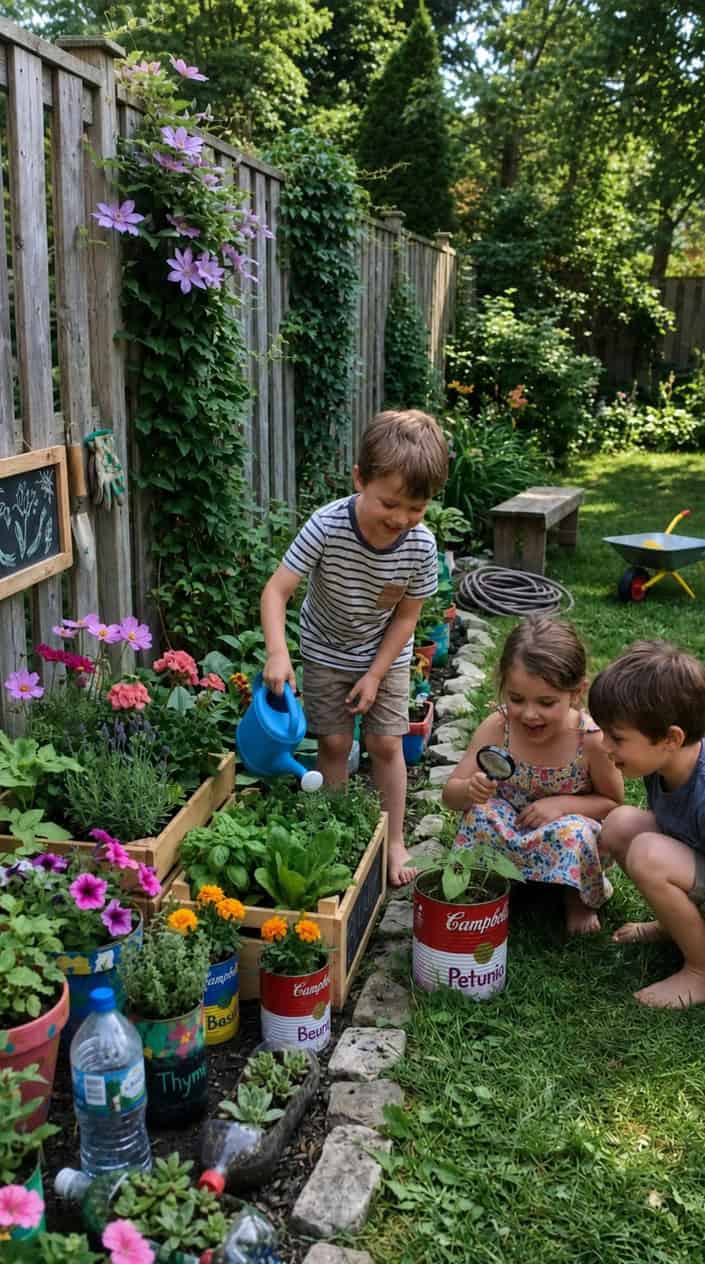
I like this because it gives kids a hands-on project that actually grows something they can eat or touch, though it gets messy and needs some prep, like soil and seeds. It keeps them busy for weeks, and they learn cause and effect without me hovering.
Start by collecting clean containers—yogurt cups, milk jugs, shoe boxes with liners—and poke drainage holes. Let kids fill them with potting mix, plant easy seeds like radishes or basil, and label with markers. Water together on the porch; small kids love carrying tiny watering cans and checking daily.
Expect dirt on knees and a few plants that don’t survive. It’s low-cost and satisfying, but you’ll need to replant sometimes and rescue seedlings from curious neighborhood squirrels.
6) Backyard Movie Night with Blankets and a Projector
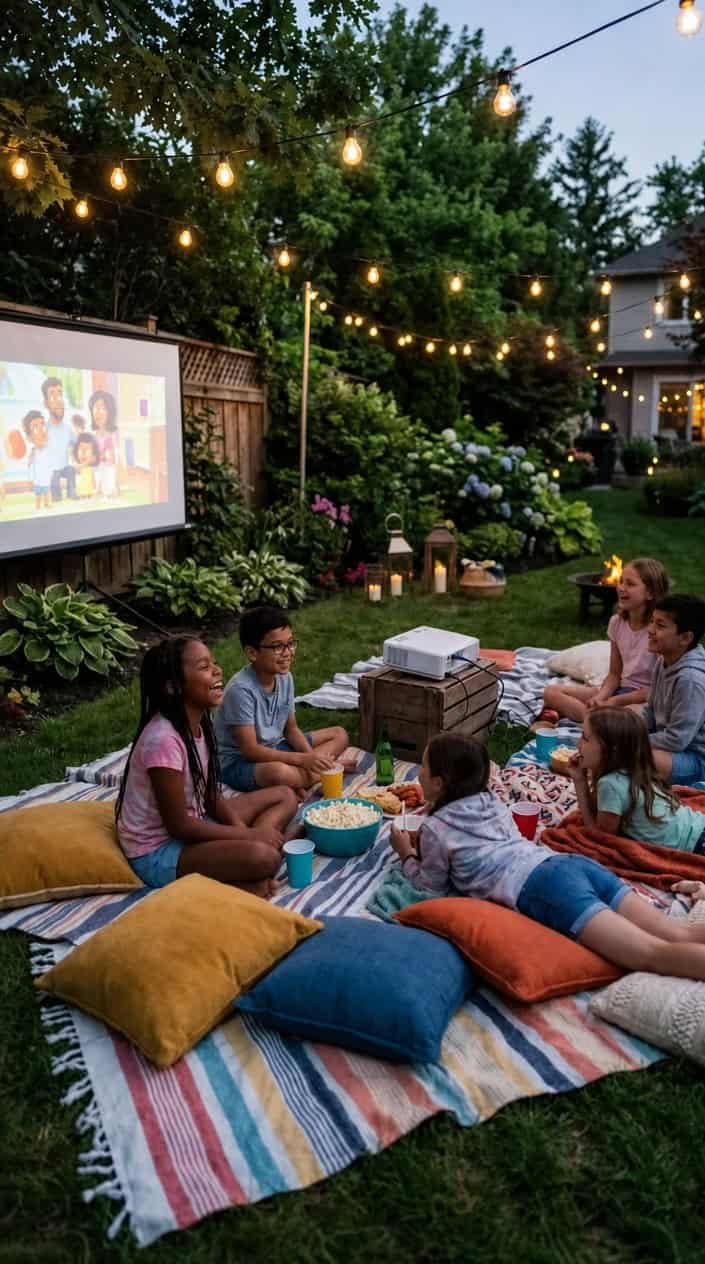
I love a backyard movie night because it feels fancy but doesn’t actually require much talent. It does need a bit of setup, and it can get messy with popcorn everywhere, but kids sit still longer than they do for dinner sometimes.
Pick a clear wall or hang a white sheet, set the projector on a low table, and test sound before the sun sets. Bring out quilts and pillows, hand each kid a small bucket for snacks so they don’t spill everything, and keep a flashlight nearby for bathroom trips. I usually pick a short movie and pause once for water breaks — fewer meltdowns.
Heads-up: expect to chase mosquitoes and pick popcorn from the grass the next day. It’s worth it when they whisper during the movie, but don’t pretend it’s tidy afterward.
7) Kid-Led Storytime Podcast (record using a phone)
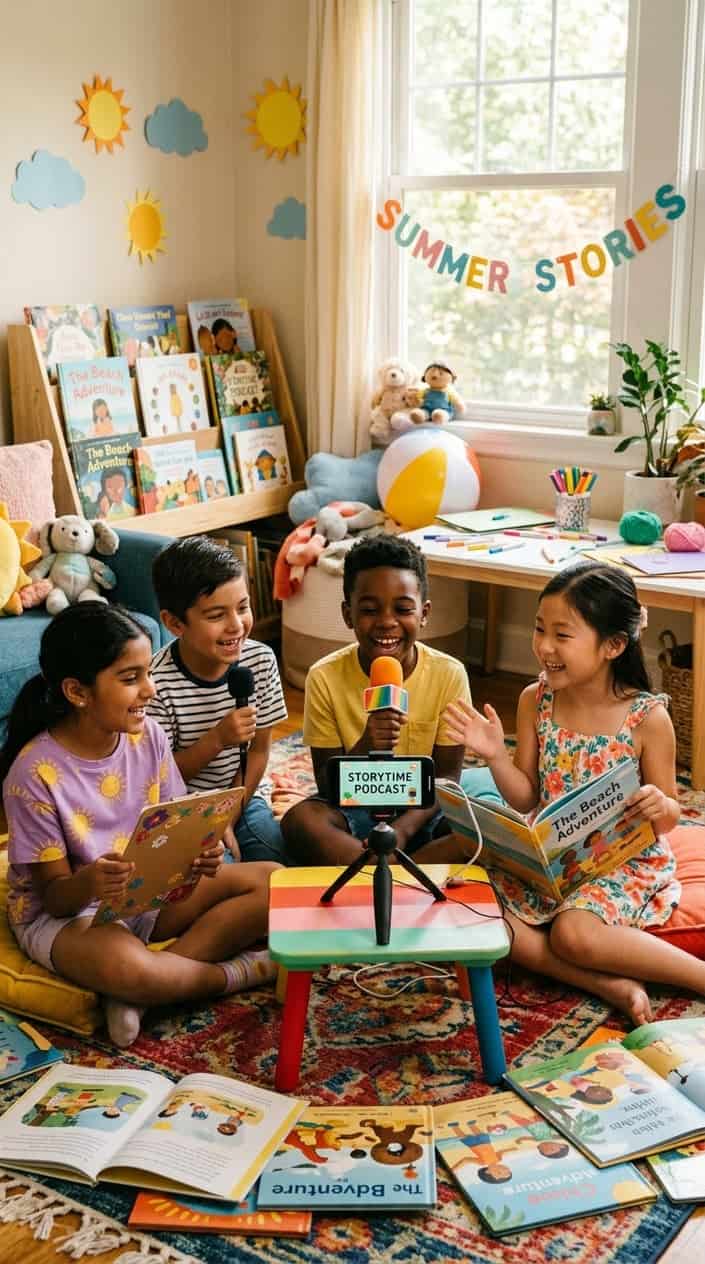
I love this because kids take charge and surprise you with plots you never saw coming. It can get noisy and messy, and you’ll need a quiet corner and a charged phone.
Have kids pick a story idea, assign roles, and rehearse for five minutes. I hit record on my phone, ask them to speak into the mic, and guide them with simple prompts when they stall. Keep episodes short — three to seven minutes — so they stay focused and don’t start arguing about sound effects.
Edit on the phone if you want, but raw recordings have charm and cut prep time. Warning: expect lots of giggles, repeated lines, and a few off-topic tangents.
8) Water Balloon Piñata (suspended for safer splat)
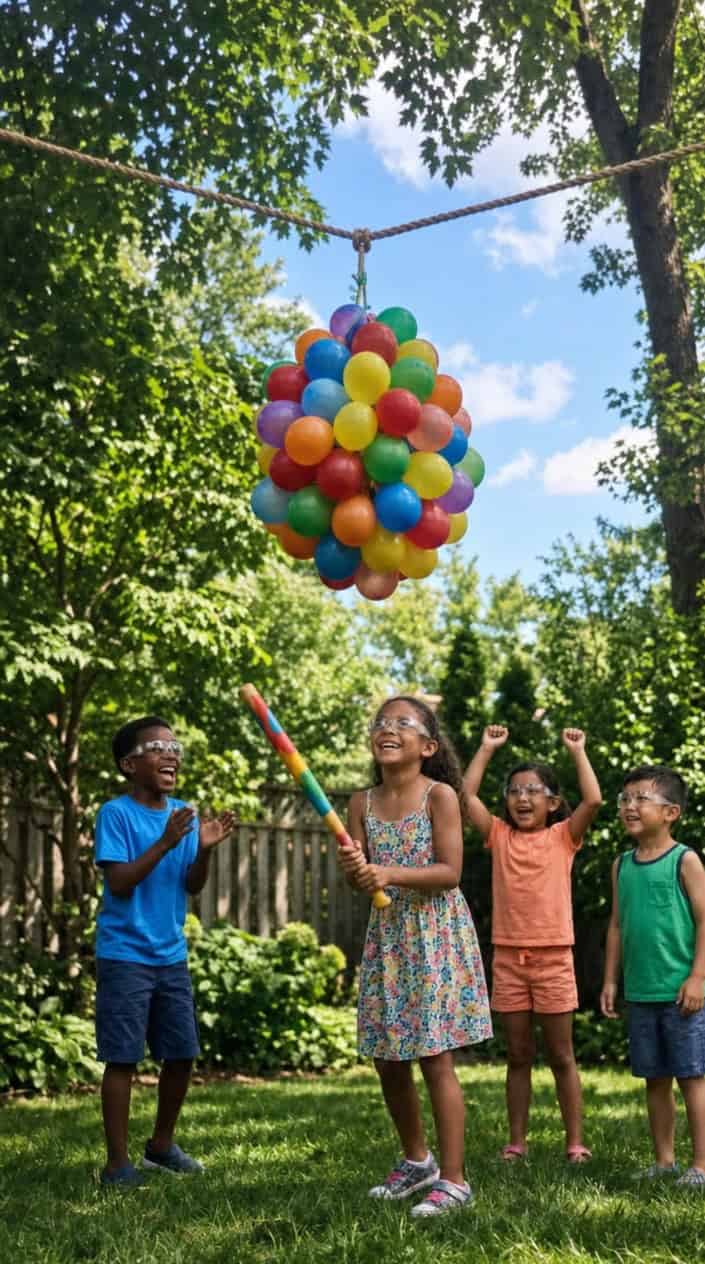
This one is loud, wet, and exactly as messy as it sounds, so it’s worth it when kids need a high-energy blast. It takes a bit of prep and a place to hang the rope, but you don’t need perfect aim to get big laughs.
I fill small balloons, knot them, and tape them to a length of rope or string that I can hang between two trees or a ladder. Kids take turns blindfolded or not, using a plastic bat or fly swatter; when a balloon pops, the water splashes down instead of blasting the ground. Rotate hitters fast because attention fades once someone scores a big splash.
Heads-up: someone will insist on doing it barefoot despite the pebbles, and you’ll end up doing more towel laundry than you planned. Keep a change of clothes and a towel within arm’s reach.
9) Nature Journal with Pressed Leaves and Sketches

I like this because it keeps kids curious and gives them a calm activity when screens get annoying. It takes some prep — grab a cheap notebook, wax paper, and heavy books — and yes, it can get a bit messy.
Take short neighborhood walks and let kids pick one or two leaves, flowers, or pine needles. Back home, press items between wax paper and heavy books for a few days, then tape or glue them into the journal. Encourage quick sketches and one-sentence notes about where they found each piece or how it smelled.
Kids will scribble, rip, or mix up pages; that’s normal. If they lose interest, switch to sticker labels or let them dictate captions while you write. Trust me: it’s worth the clutter, but keep a towel handy.
10) Printable Board Game Design Session (kids invent rules)

I love this because it turns screen time into something they actually made, though it can get messy with markers and tape. It takes a bit of prep — print blank boards or use poster paper — but kids enjoy being the boss of the rules.
Give them templates, tokens (buttons, coins), and a timer. Ask questions: how do you win? What makes a space special? I let arguments play out for a few minutes, then step in to help simplify the rules so the game actually ends.
Expect rule changes mid-play and chewed-up pieces. My honest tip: photograph the rule sheet after a good run so you don’t lose the version they liked.
11) Easy Outdoor Science: Baking Soda Volcanoes
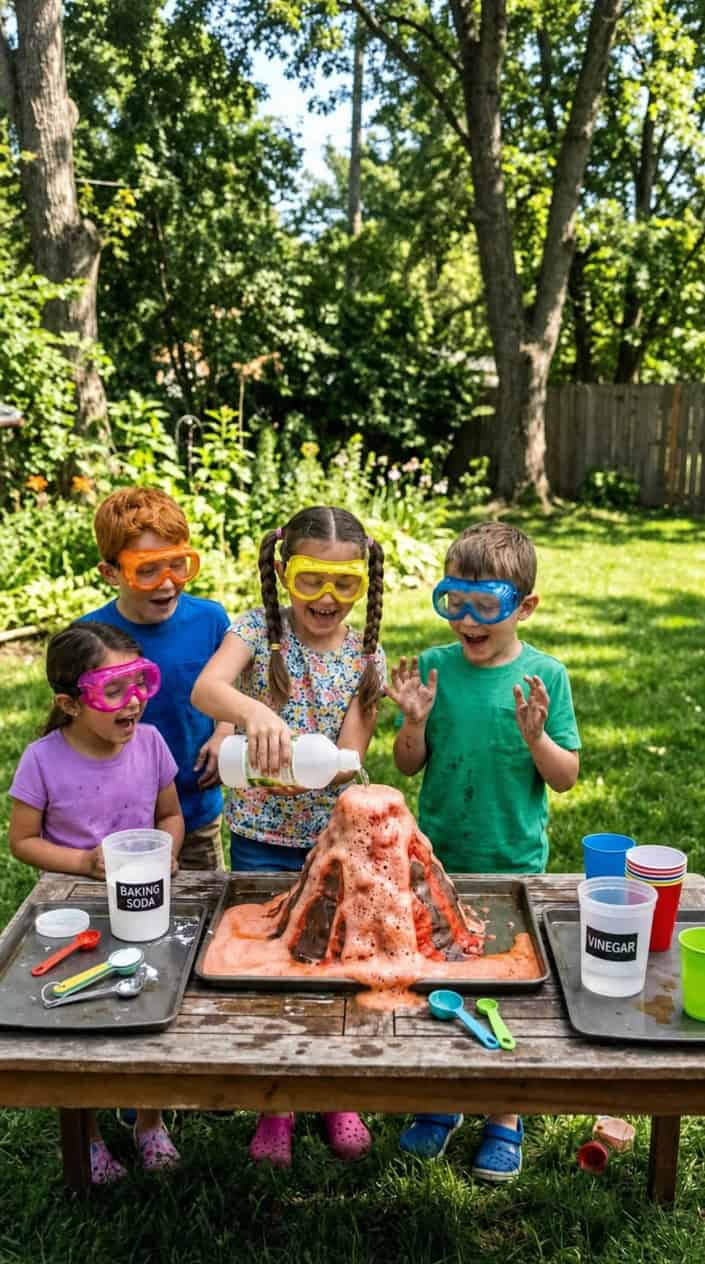
I like this because it turns a cheap kitchen stash into loud, silly science that kids actually pay attention to. It’s messy and needs outdoor space, but the wow is real, and they’ll keep asking to “erupt” it again.
I set up a small mound of dirt or a play-dough cone and tuck a film cup inside for the baking soda. Kids pour vinegar mixed with food coloring while I hold the cup steady; the fizz is an easy way to explain acid and base without a lecture. Expect spills on grass and a few sticky fingers — I keep a hose and wipes nearby.
If you want less mess, use a tray to catch runoff or swap vinegar for club soda for smaller bubbles. Warning: once they see one eruption, they’ll want to do ten, so hide the baking soda if you need a break.
12) Family-friendly Geocaching Adventure
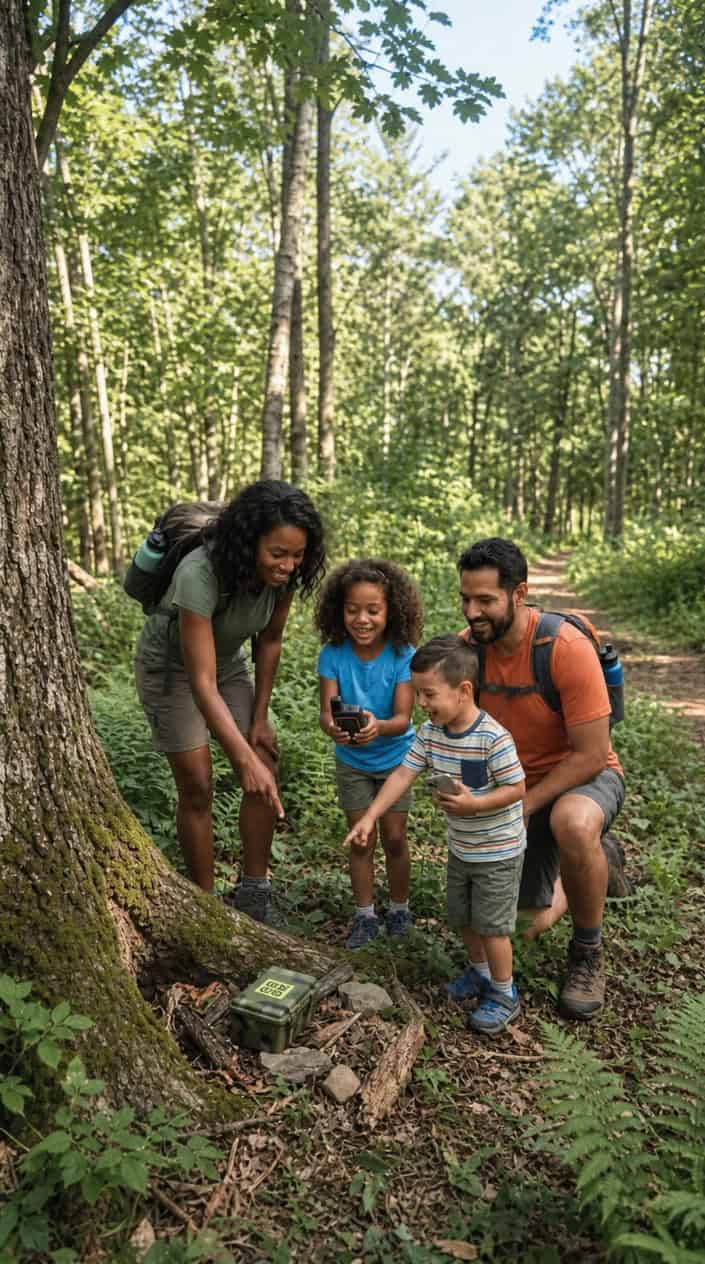
I like geocaching because it gets us moving without pretending fresh air alone will entertain my kids. It can be messy, and you’ll need a phone with GPS, a free app, and patience when the cache isn’t exactly where the map says.
Start by picking an easy cache near a park or library so the kids don’t get frustrated. Let each child hold the phone and call out directions; small prizes in the cache make the hunt feel like a win. Expect to dig through leaves, poke around shrubs, and reroute when the coordinates are off by a few yards.
Bring hand wipes and a small stash of trinkets for swapping. It’s free, but also a bit of a scavenger planet where nothing is perfectly labeled — which is half the charm and half the chaos.
13) Sidewalk Chalk Mural Competition

I love this because it gets kids focused and creative without screens, though it can get messy and you’ll need water and a towel nearby. It’s worth the prep—pick a theme, tape off squares, and set a time limit so attention spans don’t wander.
I divide our driveway into panels with painter’s tape and give each kid a small palette of chalk colors. I set a two-round format: warm-up sketch, then a timed final panel. Small prizes keep them motivated, like choosing the music for car rides.
Be honest: chalk dust ends up everywhere, and rain ruins masterpieces fast. It’s cheap, loud, and a little chaotic, but kids actually finish projects instead of abandoning them five minutes in.
14) DIY Tie-Dye T-Shirts with Rubber Bands
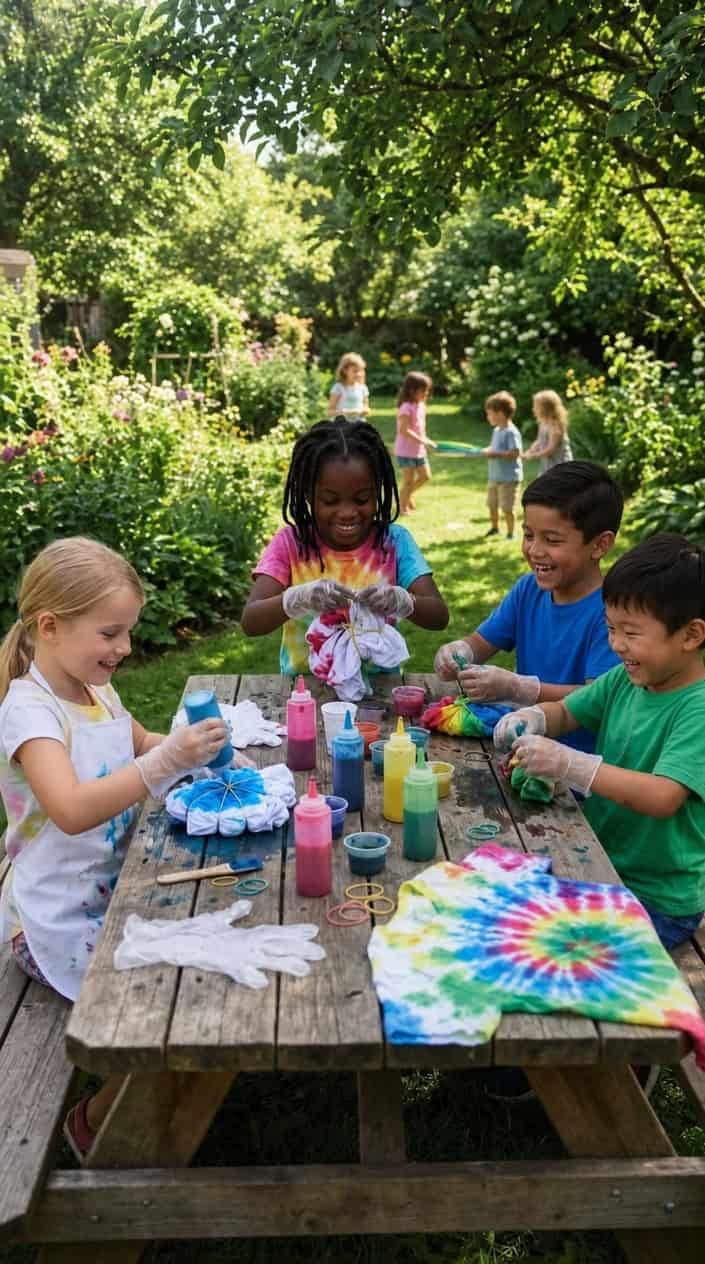
I like tie-dye because it’s simple, cheap, and kids get a huge kick out of watching colors spread. Full disclosure: it’s messy and needs a sink nearby, but that chaos usually equals good attention for 20–30 minutes.
Start with white cotton shirts, rubber bands, and squeeze bottles of dye. Show kids how to twist and band shirts — spirals, stripes, or random knots — then squirt dye into sections. Let shirts sit in plastic bags for 6–8 hours, rinse until water runs clear, and wash separately once.
Expect dyed hands and a few surprise color combos. I keep an old towel and gloves on hand, and I never let anyone wear the shirt until it’s rinsed, or you’ll get a tie-dye fashion crime scene.
15) Paper Plate Puppet Theater and Scriptwriting
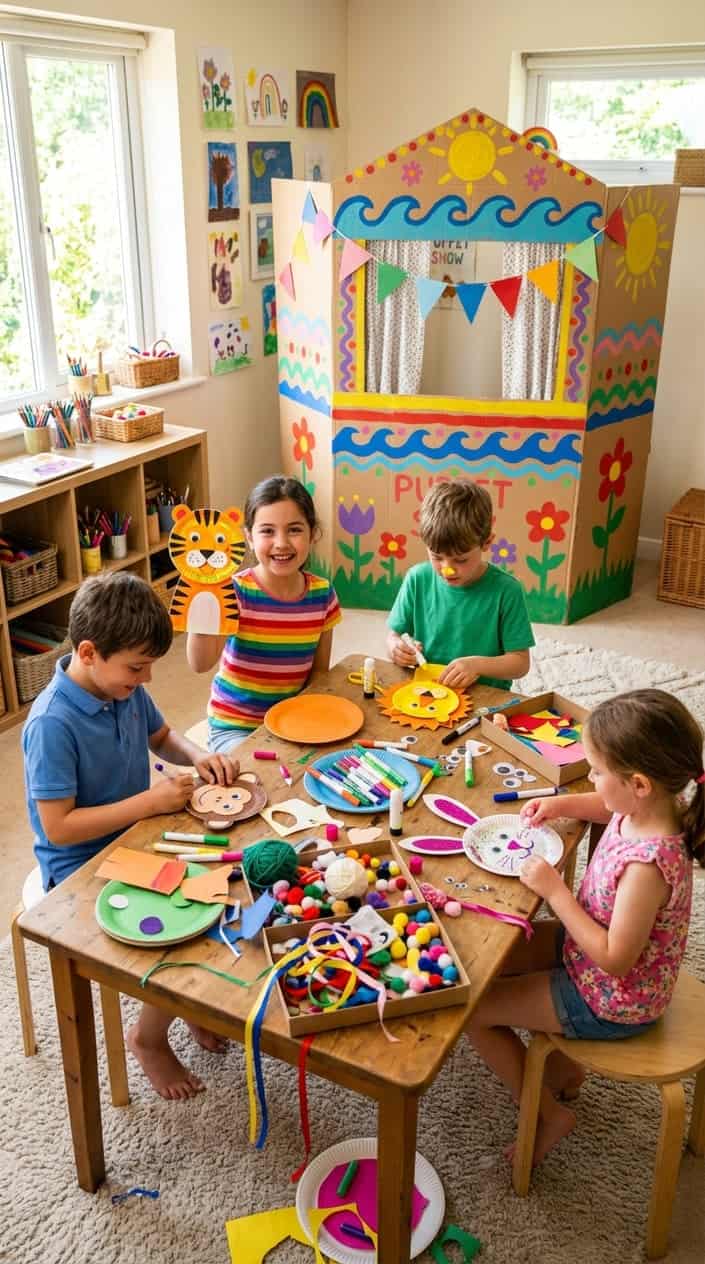
I like this because it turns cardboard and paper plates into a tiny stage that keeps kids busy for a long stretch — though, yes, it gets a little messy, and you’ll find glitter where you didn’t know it could go. It teaches speaking, listening, and a bit of storytelling without needing fancy supplies.
Set up a shoebox or a low table as the stage and give each child paper plates, popsicle sticks, markers, and glue. Ask them to make characters and then write a short script together: one line each, simple goals, and an obstacle. Let them rehearse, trade voices, and perform for stuffed animals or a patient sibling.
Expect dramatic rewrites and loud giggles. It takes time to get even a one-minute play to flow, but that’s fine — the sillier the rewrite, the more they’re learning.
16) Cereal Necklace Craft and Snack Math Game

I like this because it doubles as a craft and a quick learning game, though it does get fruity and sticky on the floor. You’ll need string, cereal with holes (like Cheerios), and a washable marker; prep takes five minutes and cleanup is short if you eat the extras.
Have kids thread patterns or color-sorted sequences, then count, add, or trade cereal pieces to practice math. My girls loved racing to make a two-digit number with red and yellow loops; expect dropped beads and a few eaten pieces mid-count.
Warning: the dog finds this irresistible, so close the kitchen door, or you’ll be sweeping up Cheerios for days.
17) Homemade Slime Lab (add-ins like glitter or beads)

I like slime because it keeps my kids busy for longer than a single show, and it’s cheap to set up, though it is gloriously messy and needs a prep spot. You’ll want a plastic tablecloth, small mixing bowls, and clear rules about where slime stays.
Mix glue, a bit of water, and contact-solution or borax solution to make slime; add food coloring, glitter, or craft beads once it firms up. Kids love testing textures — stretchy, bouncy, crunchy — and you can supervise swapping add-ins so nothing gets swallowed.
Plan for cleanup: keep baby wipes and a bin for used beads nearby. Warning: glitter breeds in carpet like a tiny glitter cult, so I only allow glitter-slime at the kitchen table.
Don't lose this article. Enter your email below, and I'll send it to you right now. Plus a little encouragement and inspiration from me, straight to your inbox.
18) Backyard Astronomy Night with a Star App

I love dragging the kids outside after dinner and pointing out something that isn’t a bug or a neighbor’s sprinkler. It feels fancy without leaving the yard, though it does take a little prep and patience.
Pick a clear night, bring lawn chairs or blankets, and let a star app do the heavy lifting. I open the app, aim my phone skyward, and the kids squeal when a dot becomes “Mars” or “the Big Dipper.” Keep the session short—ten to twenty minutes works best before someone asks for snacks.
Use the app to find bright planets or the International Space Station flyovers; the live maps help kids see movement, not just static dots. Expect interruptions—dogs, doors, and sibling bickering—but the kids stay engaged because they can point and name things themselves.
Honest tip: phone screens can ruin night vision, so dim the display or use a red filter mode. Also, bring bug spray.
19) Kid-Friendly Cooking Class: Mini Pizzas

I love doing this because kids feel proud of making food, and it actually fills a meal gap—yes, it’s messy, and you’ll need to prep ingredients. I set out sauce, cheese, and toppings in small bowls so kids can choose without raiding the whole fridge.
Use English muffins, pita, or pre-made dough to keep cook time short and safe. Let each child assemble their own pizza while I handle the oven. Talk through simple rules like “one hand for toppings, one hand for the plate” to cut down on chaos.
Expect flour on the counter and pepperoni in weird places; that’s part of it. If you want less cleanup, bake on parchment paper or use a toaster oven for one-at-a-time control. Trust me—they eat more when they make it themselves, even the picky ones.
20) Neighborhood Little Free Library Project
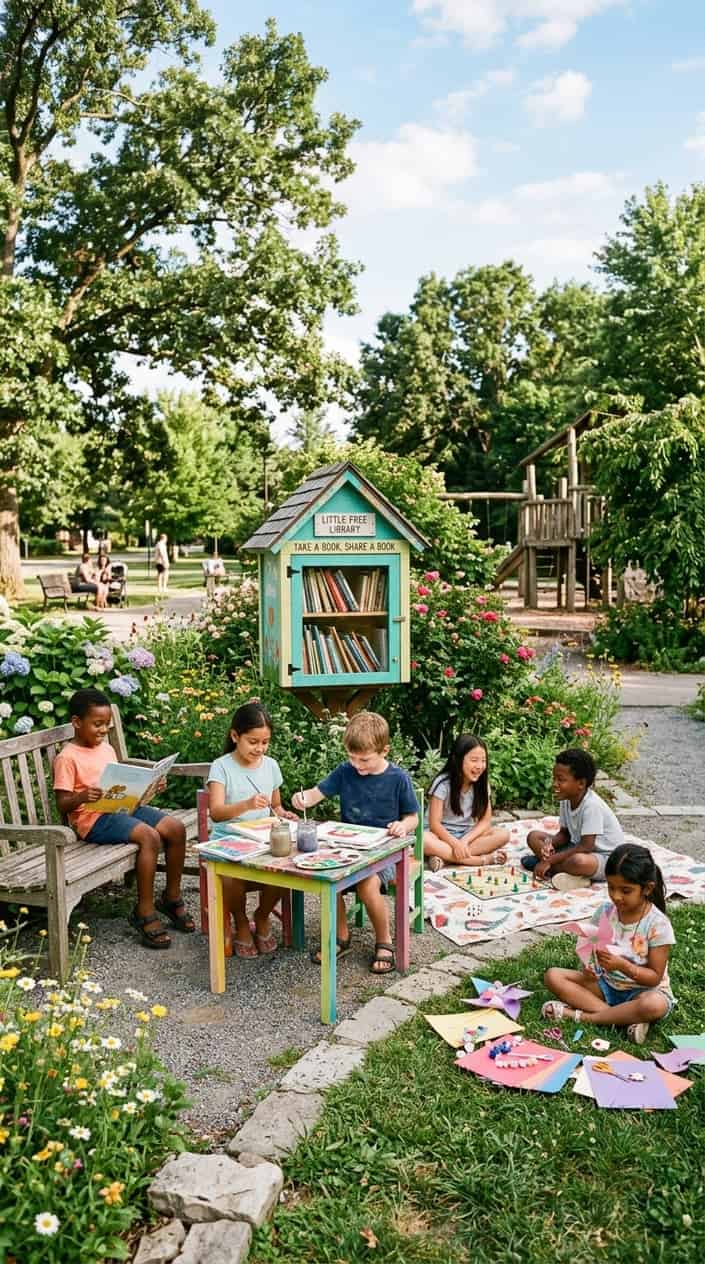
I like this because it gets kids reading, crafting, and chatting with neighbors — though yes, it takes some prep and can get a little messy with paint. It’s worth it when a kid carries a book back and forth like it’s a treasure.
Start by finding a small shelf or repurposing a cookie tin or old birdhouse. Have kids paint it, decorate with stickers, and pick a weatherproof spot by the sidewalk. I always supervise hammering and help seal the paint so it lasts through rain and sticky fingers.
Teach kids to “take one, leave one” and rotate books weekly. Expect a few soggy picture books and someone using it as a doll house—both normal. Tip: keep a small basket of extras inside your porch so kids can refill without me panicking.
21) Upcycled Toy Rescue: Paint and Patch Workshop
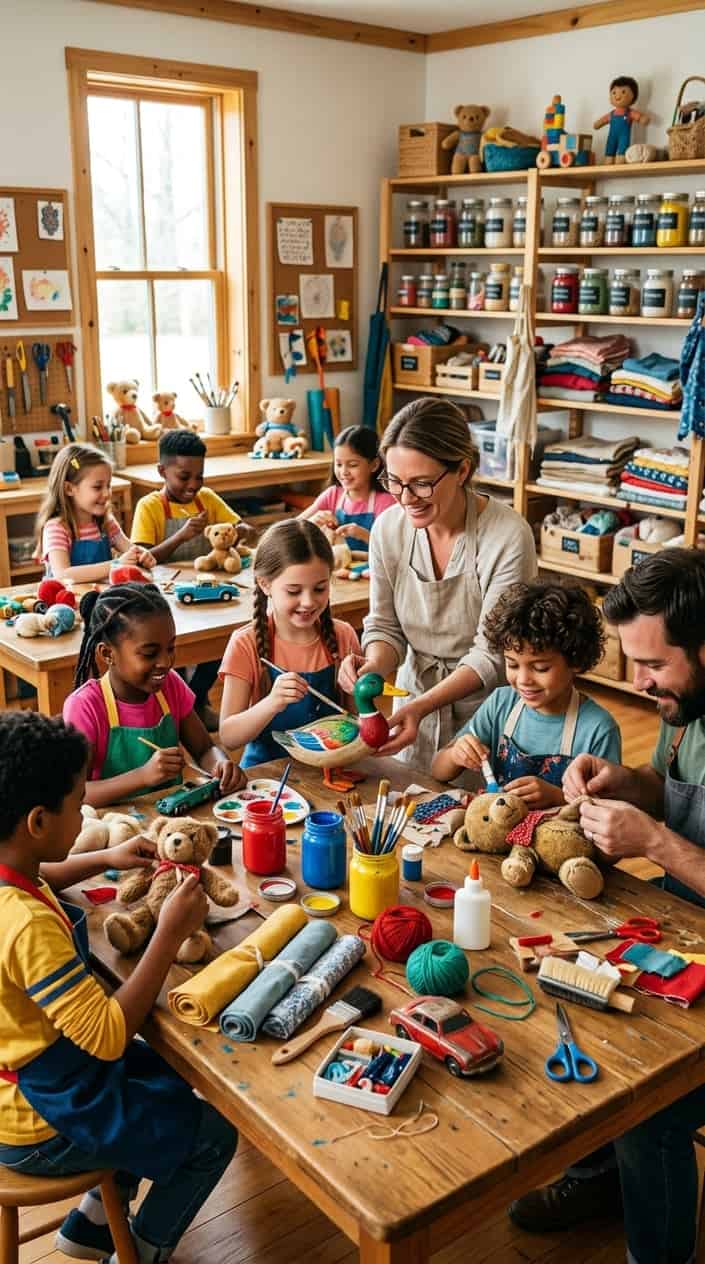
I love this because it turns sad, broken toys into something kids can fix and feel proud of, though it gets messy and needs adult supervision. You’ll need old toys, non-toxic paints, glue, fabric scraps, and a tarp — plan for paint on clothes and a few ruined brushes.
Set up stations: one for cleaning and sorting, one for painting, and one for sewing or gluing parts back on. Let kids choose colors and simple repairs; I give my daughters small jobs like holding a piece while I stitch or mixing paint so they stay engaged. Work in short bursts so attention and mess stay manageable.
Be honest: some toys won’t survive, and that’s okay. Keep a “practice” toy for testing glue or color so they don’t ruin something they love.
22) Shadow Puppet Show with Flashlight and Cutouts

I love this when evening rolls around, and kids still have energy; it’s low-cost but needs a little prep and can get messy with paper scraps. It’s worth it because it calms them while keeping their imaginations alive.
Cut simple shapes from cardstock or foam—animals, houses, hands—and tape them to popsicle sticks or pencils. Turn off the lights, aim a bright flashlight at a blank wall, and show them how moving the cutouts changes the shadows. Let them call the story and improvise nonsense plots; it keeps even my picky reader engaged.
Expect them to want to rip everything apart after five minutes. Keep an extra flashlight and a cookie sheet handy for quick stage repairs.
23) Weekly Family Book Club with Hot Cocoa Ritual

I started a weekly book club to get my kids reading without it feeling like homework. It’s a bit messy — expect spilled cocoa and mismatched pajamas — but it gets books on the calendar.
Pick short chapter books or picture books and read one chapter or story a week. Let each kid pick snacks twice a month and teach them to summarize a bit; even my seven-year-old can tell us a favorite line. We meet in the living room, sip hot cocoa (marshmallows optional), and trade quick thoughts before bed.
This routine works because it’s low-pressure and predictable, so kids know what to expect. Heads-up: someone will always want extra marshmallows.
24) Cardboard Castle Building and Decoration

I love this because cardboard is free, and kids turn boxes into whole kingdoms, even if it gets a bit messy. It takes prep — gather boxes, tape, paint, and patience — but the payoff is hours of play.
I set up a work station with scissors, masking tape, and washable paint, and let my girls plan towers and doors. I cut windows and help with taller joints while they handle decorating with markers and stickers. It’s great for imagination and problem-solving, though expect stray paint on the dog.
Be ready to supervise sharp scissors and heavy tape. Also, the castles rarely survive a week, so plan for a fun build day and a quick cleanup evening.
25) No-Equipment Yoga for Kids (one-page routine)

I like yoga because it calms my kids without needing anything but a bit of floor space, though it can turn into a tickle fight fast. It’s worth it when you need a quiet reset mid-afternoon or before bed.
I give them a one-page routine we can do from memory: breathing, cat-cow, tree pose with a hand on my shoulder, and a gentle forward fold. I keep instructions short and show each move — kids copy better than they follow long directions. I make it playful: bear breath, then rocket arms for a pretend takeoff.
Expect some wiggling and sideways giggles. If someone bolts, I keep going so the calmer child still gets the benefit. Tip: Have a sticker reward for trying three poses in a row; bribery works and keeps peace.
26) Cold-Weather Science: Ice Excavation Treasure Hunt

I like this because it turns chilly weather into a hands-on science game, though it does take a little prep and gets wet and messy. Kids love the slow reveal, and you get a focused activity that can last way longer than a 10-minute meltdown.
Freeze small toys, coins, or nature finds in containers filled with water the night before. Give kids salt, small droppers, toy hammers or spoons, and a timer. They’ll learn about melting points and patience as they chip and melt their way to the prize, and you can guide questions: what melts faster, salt or warm water?
Be ready for drips and sticky fingers; I lay towels on the floor and wear an old shirt. If the kids lose interest, adding warm water in a squirt bottle revives the game fast.
27) Music-Making with Household Instruments (pots, spoons, rice shakers)
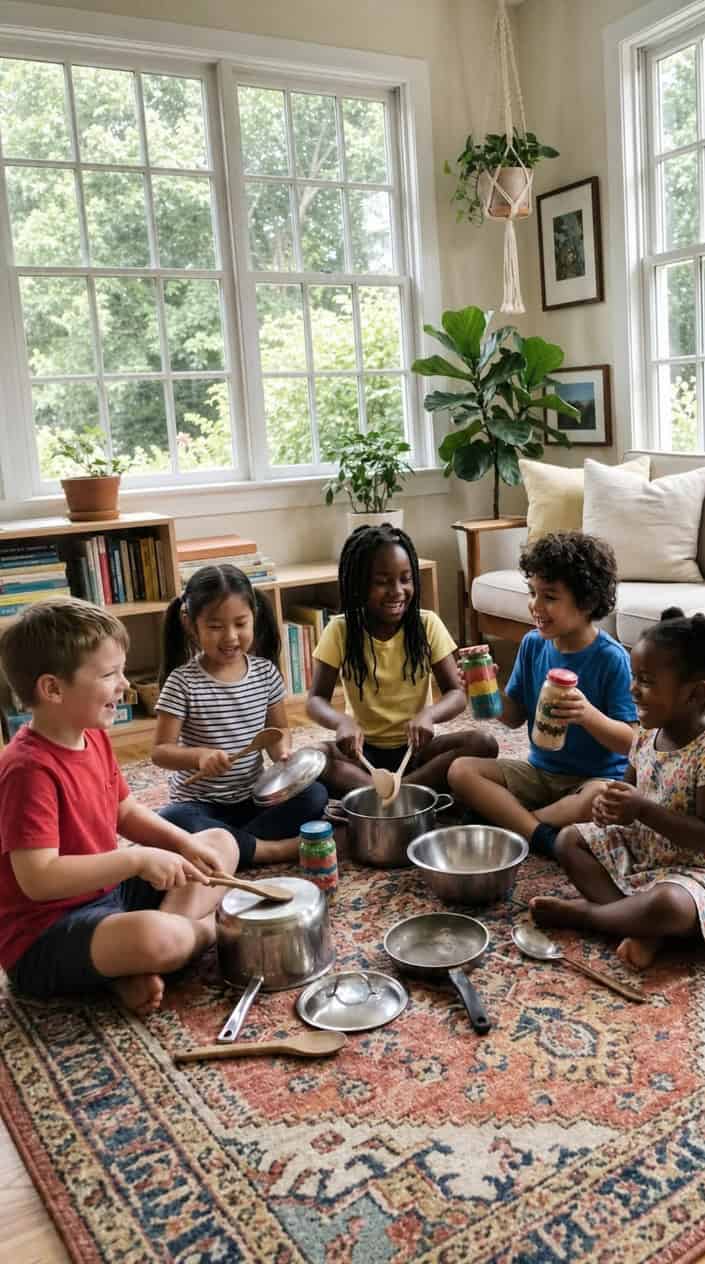
I like this because it gets kids making noise and moving without needing special gear, though it can get loud and messy. It’s quick to set up: grab pots, pans, wooden spoons, empty bottles with rice, and a metal bowl for a gong.
I show them simple beats first — one-two rest, faster, slower — and then we trade turns leading. Kids copy a pattern better than you’d think, and they love inventing names for “instruments.” Let them bang, but keep one quiet corner for breaks when my ears need mercy.
28) Photo Storybook: Kids Direct a Mini-Movie

I like this because it turns screen time into something creative, even if it gets a little messy and takes prep. You’ll need a phone or tablet, simple props, and patience for lots of takes.
Give kids a short plot — two to five scenes — and let them cast stuffed animals or siblings. I help by holding the camera, suggesting shot ideas, and nudging for quieter voices. Keep scenes short so attention holds; expect repeats and improv moments that are actually better than the plan.
Use a free app to string photos into a book or slideshow with captions. It’s low-pressure: kids feel in charge, and I get a photo keepsake. Warning: they’ll ask to watch it five times in a row.
29) Sensory Bin Creation (rice, pasta, themed scoops)

I love sensory bins because they keep my kids busy while I get a minute to breathe, though yes, it can be messy and needs prep. It’s worth it when they play quietly for half an hour.
Start with a shallow plastic bin and fill it with rice, dry pasta, or beans. Add small toys, scoops, cups, and a theme—a dinosaur dig with spoons works, or a beach scene with shells. Let the kids sort, scoop, pour, and bury things; they’ll invent rules as they go and fight over the best shovel.
Use a tray under the bin to catch spills and limit the space to one room. Expect spilled grains; I keep a hand broom nearby and call it “cleanup practice” so they help.
30) Bug Hotel Building and Observation Log
I like this because kids get to be scientists without leaving the yard, though it can get messy, and you’ll need boxes, twine, and a forgiving patch of dirt. It takes a bit of prep to gather sticks, pine cones, cardboard, and old plant pots, but that prep is half the fun.
I show my girls how to stack materials in a shallow box or hollow log, then we tuck in leaves and straw for cozy spots. We label sections with simple notes and draw what we see each day in a little observation log. Expect curious hands, collapsed stacks, and a few beetles that won’t pose.
Keep a magnifying glass and a pencil handy. Honest tip: they’ll lose interest fast unless you check bugs together, so schedule five-minute “hotel rounds” after snacks.
Let’s Talk About Expectations, Sanity, and Keeping It Real
Kids need a mix of plans and chill time. You don’t need Pinterest-perfect crafts or a minute-by-minute schedule to have a good summer. Small choices and calm rules go further than fancy setups.
How Much Structure Do Kids Really Need Over Summer?
I used to think summer needed a rigid plan like school. It doesn’t. Kids do better with simple routines: wake-up window, two activity blocks, and quiet reading time. That gives them freedom but keeps snack fights and tantrums to a minimum.
Tell kids which parts of the day are fixed and which are flexible. For example, outside play after lunch is a must, but they can pick between water play or chalk. Keep activities short—30–45 minutes works for most ages. If one option bombs, swap fast; don’t try to salvage every craft.
A loose routine saves my sanity. It’s not scheduling every minute—it’s clear limits so I can say no without drama.
Saying Yes to Simplifying (and Ditching Mom Guilt)
I say yes to fewer, better activities and no to over-planning. Choose three go-to projects: one messy (finger paints), one quiet (puzzle), and one active (backyard obstacle course). Rotate them so kids get novelty without me planning each day.
Prep once for the week: pack simple kits in bins—glue, paper, stickers in one; sidewalk chalk and cups in another. When a meltdown hits, offer two clear choices. This reduces endless negotiation and the guilt of not being “creative enough.”
Dropping perfect expectations frees me. Less Instagram-ready stuff, more actual play. My house might be a little messier, but I’m less frazzled.
When Even Pinterest Ideas Make Me Want a Nap
Pinterest crafts look amazing and fail spectacularly at my kitchen table. The glue dots won’t stick, the templates get torn, and the “easy” recipe needs 32 steps. I learned to test one craft before committing and to accept simpler versions.
Set a 20–minute try window. If the project isn’t working, call it “part one” and move on to play-dough or a game. Keep backup wins: stickers, crayons, or a favorite book. Tell older kids they can do the tricky parts while you supervise from a comfy chair.
My honest tip: skip anything needing exact tools or expensive materials. Pinterest is great for inspiration, not for running a full program.
Making the Most of Mess, Chaos, and the Occasional Totally Boring Day
This stuff is worth doing because kids learn and unwind through mess and downtime. Expect scraps, sticky hands, and a few too many ideas that flop — I plan for that and you should, too.
Letting Go of Perfection (Because the Crafts Usually Look Nothing Like the Pictures)
I admit I like Pinterest as much as anyone, but our crafts rarely match the glossy photos. I set up a washable table runner, cheap smocks, and a small “reject” bin for dried blobs so everyone can craft freely without me micromanaging every glitter flake.
Tell kids what matters: effort, a story about the project, or a silly name for their creature. Offer one clear step at a time — “paint the body, wait five minutes, add eyes” — instead of ten rules. Praise something specific, like color mixing or sticking on a button, not the finished look.
Quick aside: you’ll still get glitter everywhere. That’s fine. Keep a hand vacuum nearby and accept that some projects are just practice, not art shows.
Finding Hidden Wins in Surprise Down Time
When plans fall apart, I flip to low-prep wins that keep kids engaged without me barking instructions. I keep a “quiet box” with sticker sheets, simple puzzles, and reading flashcards for those foggy after-lunch moments. These items don’t need setup and give me a minute to sip lukewarm coffee.
I also use narrating: I describe what each child is doing in one sentence — “You’re stacking tower blocks like a tiny architect” — and then walk away. That small attention jumpstarts longer play. If they slump into real boredom, I suggest a two-minute challenge or a silly sound-off game to reboot energy.
Honest tip: Some days, the quiet box becomes solo screen time. That’s okay sometimes.