Welcome to this collection of delicious recipes! Each recipe has been carefully crafted with detailed instructions and ingredient lists to help you create amazing dishes.
Don't lose this article. Enter your email below, and I'll send it to you right now. Plus a little encouragement and inspiration from me, straight to your inbox.
Creamy Swedish Meatballs

Here’s the thing about Swedish meatballs—most recipes load up the sauce with flour, but this low-carb version gets its incredible creaminess from a combination of cream cheese and sour cream instead. The result?

Five simple dinners. One grocery list.
No recipe hunting, no messy shopping notes, no complicated chef projects. Just family dinners that fit real weeks.
An even richer, more velvety gravy that clings to every perfectly seasoned meatball. I actually like this version better than the traditional one, and my kids have never once noticed it’s missing the carbs.
The secret to super tender meatballs is using a mix of ground beef and pork (the pork adds moisture), and don’t skip the step of letting them rest in the pan after browning. That’s when they finish cooking through without getting tough.
I serve these over cauliflower mash or zucchini noodles, and honestly, with that creamy sauce cascading over everything, it feels like the ultimate cozy dinner. The whole thing comes together in about 30 minutes, which makes it perfect for those nights when you want something special but don’t have hours to spend in the kitchen.
You’ll love how the warm spices—nutmeg, allspice, and a touch of garlic—make your kitchen smell absolutely amazing. Plus, these actually taste even better the next day, so I always make extra for lunches.
Ingredients
Method
- In a large bowl, combine 1 pound of ground beef, ½ pound of ground pork, 1 beaten egg, ¼ cup of almond flour, ½ teaspoon of nutmeg, ½ teaspoon of allspice, 1 teaspoon of garlic powder, 1 teaspoon of salt, and ½ teaspoon of black pepper.
- Mix gently with your hands until just combined (don't overmix or the meatballs will be tough).
- Roll the mixture into 1½-inch meatballs (you should get about 20-24).
- Heat 2 tablespoons of butter in a large skillet over medium-high heat.
- Brown the meatballs in batches, turning to sear all sides, about 6-8 minutes total. They don't need to be cooked through yet.
- Remove meatballs to a plate and reduce heat to medium.
- Add 4 oz of cream cheese and 1 cup of beef broth to the pan, whisking until the cream cheese melts.
- Stir in heavy cream, Dijon and Worcestershire. Keep the sour cream aside.
- Return meatballs and simmer gently for 10-12 minutes, until centers reach 160°F. Take off the heat and stir in sour cream; do not boil after adding it.
- Taste and adjust seasoning with salt and pepper as needed.
- Garnish with fresh parsley and serve over cauliflower mash or zucchini noodles.
Notes
Bacon-Wrapped Air Fryer Chicken

If you’ve been wondering what to do with that air fryer gathering dust on your counter, this is it. Wrapping chicken breasts in bacon isn’t just about making everything taste like bacon (though that’s definitely a bonus)—it actually keeps the chicken incredibly moist while it cooks.
The air fryer circulates heat so efficiently that the bacon gets crispy while the chicken stays juicy, and you don’t have to deal with a grease-splattered oven.
The trick is to pound the chicken breasts to an even thickness before wrapping them. I know it seems like an extra step, but it means everything cooks at the same rate, so you don’t end up with dry edges and undercooked centers.
I like to tuck fresh herbs like rosemary or thyme under the bacon, and sometimes I’ll add a smear of cream cheese for extra indulgence. The whole thing takes maybe 20 minutes from start to finish, and cleanup is a breeze.
My family requests this at least twice a month now. It pairs beautifully with roasted Brussels sprouts or a simple green salad, and it feels fancy enough for company but easy enough for a Tuesday night when you’re running on fumes.
Ingredients
Method
- Place 4 boneless, skinless chicken breasts between two sheets of plastic wrap and pound to an even ½-inch thickness.
- Season all four breasts with the total garlic powder, paprika, salt and pepper.
- Optional: spread 1 tablespoon of cream cheese on each breast and add fresh herbs like rosemary or thyme.
- Wrap each breast with 2 thin bacon slices without overlapping heavily; tuck the ends underneath.
- Preheat your air fryer to 380°F for 3 minutes.
- Place the bacon-wrapped chicken in the air fryer basket in a single layer (work in batches if needed).
- Air fry for 18-22 minutes, flipping halfway through, until the internal temperature reaches 165°F and the bacon is crispy.
- If the bacon needs extra crisping, increase temperature to 400°F for the last 2-3 minutes.
- Let rest for 5 minutes before serving.
- Serve with your favorite low-carb sides like roasted vegetables or a fresh salad.
Notes
Zucchini Noodles with Lemon Garlic Shrimp
When you’re craving a light, fresh dinner that still feels satisfying, this is your answer. The key to perfect zucchini noodles is getting rid of excess moisture—nobody wants a watery puddle on their plate.
I spiralize the zucchini, then toss the noodles with a little salt and let them sit in a colander for about 10 minutes. Pat them dry before cooking, and you’ll get tender-crisp noodles that hold their shape beautifully.
The shrimp cook in literally five minutes, which is why I save this recipe for those nights when I’m racing against bedtime routines. The lemon garlic sauce is just butter, fresh lemon juice, lots of garlic, and a pinch of red pepper flakes—simple ingredients that create something that tastes like it came from a restaurant.
Don’t skimp on the garlic here; I use at least four cloves because that’s what makes this dish sing.
What I love most is how bright and clean everything tastes. It’s comfort food that doesn’t weigh you down, and the kids actually eat their “noodles” without complaining.
Finish it with fresh parsley and a squeeze of extra lemon, and you’ve got dinner that feels both indulgent and virtuous at the same time.
Zucchini Noodles with Lemon Garlic Shrimp
Ingredients
Method
- Spiralize 4 medium zucchini into noodles using a spiralizer or julienne peeler.
- Place the zucchini noodles in a colander, toss with ½ teaspoon of salt, and let sit for 10 minutes to release moisture.
- Pat the noodles completely dry with paper towels or a clean kitchen towel.
- Pat 1 pound of large shrimp (peeled and deveined) dry with paper towels and season with salt and pepper.
- Heat 2 tablespoons of butter in a large skillet over medium-high heat.
- Add the shrimp in a single layer and cook for 2 minutes per side until pink and opaque. Remove to a plate.
- In the same skillet, add 2 more tablespoons of butter and 4 cloves of minced garlic. Sauté for 30 seconds until fragrant.
- Add the zucchini noodles and toss for 2-3 minutes until just tender but still slightly crisp.
- Return the shrimp to the pan and add the juice of 1 lemon, ¼ teaspoon of red pepper flakes, and salt to taste.
- Toss everything together for 1 minute to heat through.
- Remove from heat and add parsley and Parmesan if using. Shrimp should be firm and opaque throughout.
Notes
Breakfast Stuffed Peppers

Who says breakfast has to stay at breakfast time? These stuffed peppers bring all those morning comfort food vibes to your dinner table, but without the carb-heavy toast or hash browns.
I love using a mix of bell pepper colors—reds, yellows, and oranges—because they’re naturally sweeter than green peppers and they make the table look absolutely gorgeous. The secret here is pre-cooking your peppers just slightly in the microwave for about 2 minutes before stuffing them.
This ensures they’re perfectly tender when everything else is done, not crunchy or still raw in spots.
The filling is where the magic happens: scrambled eggs mixed with cooked breakfast sausage, a generous handful of shredded cheddar, and maybe some diced tomatoes if you’re feeling fancy. I always crack my eggs directly into the sausage pan after it’s cooked and drained—fewer dishes, and the eggs pick up all those lovely browned bits from the meat.
Some nights I’ll add jalapeños for the adults and keep a couple plain for the kids.
What really seals the deal is broiling these for the last 2-3 minutes to get that bubbly, golden cheese on top. It transforms them from “weird dinner” to “Mom, can we have these again?” territory.
They reheat beautifully too, so I often make extra peppers and have an easy lunch ready for the next day.
Ingredients
Method
- Preheat your oven to 350°F.
- Cut 4 bell peppers in half lengthwise and remove seeds and membranes.
- Place the pepper halves in a microwave-safe dish with 2 tablespoons of water, cover, and microwave for 2 minutes to soften slightly.
- In a large skillet over medium heat, cook 1 pound of breakfast sausage, breaking it into crumbles, until browned and cooked through (about 6-8 minutes). Ground pork must reach 160°F.
- Drain excess fat, leaving about 1 tablespoon in the pan.
- Reduce heat to medium-low and add 8 beaten eggs directly to the sausage in the pan.
- Scramble the eggs with the sausage until just cooked through but still slightly soft (they'll cook more in the oven).
- Remove from heat and stir in 1 cup of shredded cheddar cheese, ½ cup of diced tomatoes (optional), salt, and pepper.
- Arrange the pepper halves in a baking dish and fill each with the egg and sausage mixture.
- Top the eight halves with the remaining 1/2 cup cheddar.
- Bake for 15-20 minutes until peppers are tender and the filling reaches 165°F.
- For extra golden cheese, broil for 2-3 minutes at the end.
- Garnish with sliced green onions or fresh herbs before serving.
Notes
Thirty Cloves Garlic Chicken
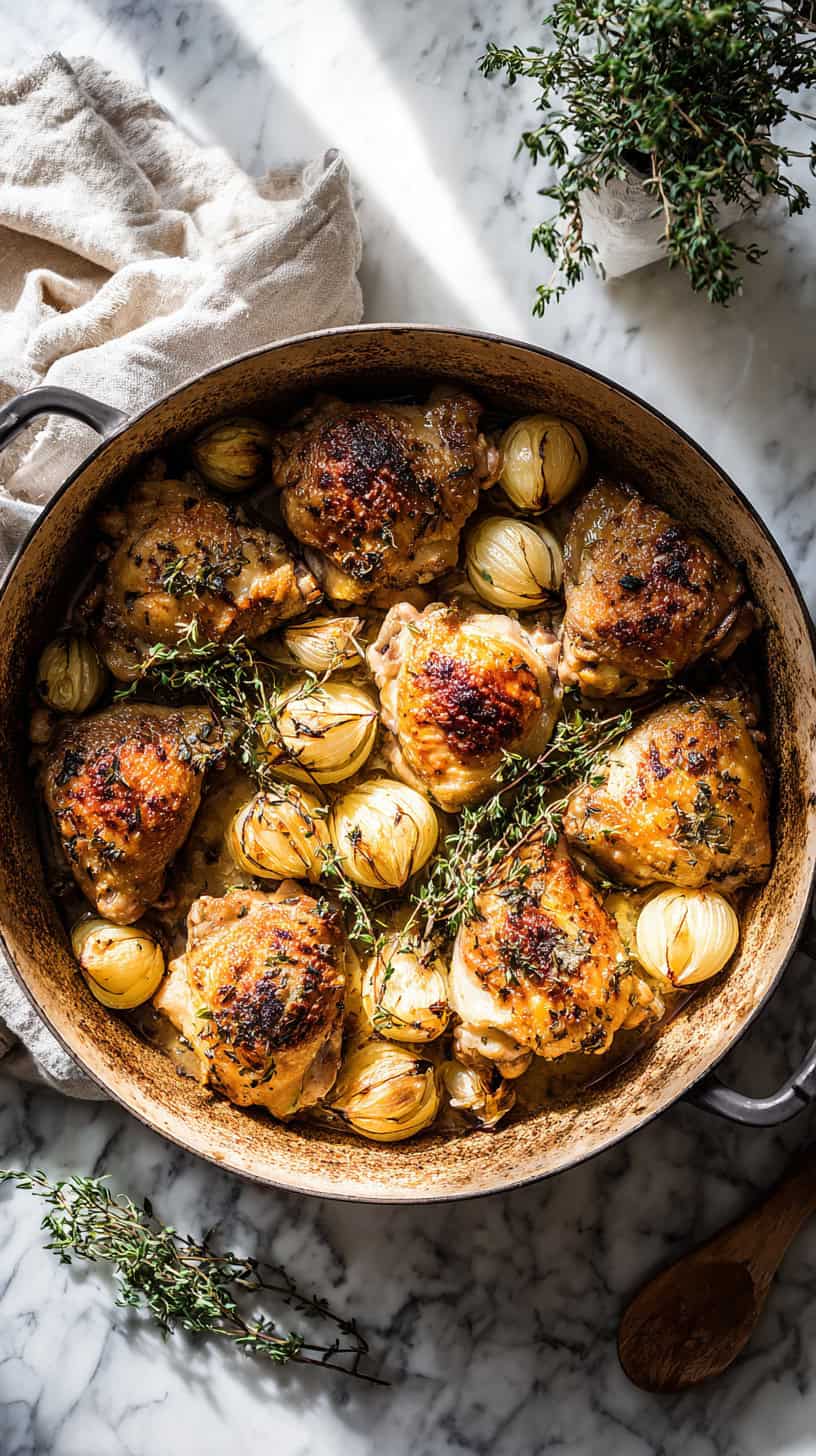
I know what you’re thinking—thirty cloves sounds absolutely insane. But here’s the thing: when you roast garlic low and slow like this, it becomes sweet, mellow, and almost buttery.
Nothing like the sharp, pungent bite of raw garlic. This dish has been my secret weapon for impressing guests while doing practically nothing.
The garlic cloves roast right alongside the chicken thighs in a covered Dutch oven, and by the time everything’s done, you can spoon up the softened peeled garlic cloves like the most luxurious, savory jam you’ve ever tasted.
The technique is dead simple: sear your chicken thighs skin-side down in a hot pan until they’re deeply golden (don’t rush this part—that’s where the flavor lives), toss in your peeled garlic cloves, add some white wine or chicken broth, fresh thyme, and let the oven do all the work. I always use bone-in, skin-on thighs because they stay incredibly moist and the skin browns during searing, then softens in the covered pot.
After about 40 minutes at 375°F, you’ll have fall-apart tender chicken and those gorgeous caramelized garlic cloves.
Serve this with a big green salad or some roasted green beans, and use the garlicky pan sauce to drizzle over everything. My kids actually fight over who gets to spread the roasted garlic cloves on their chicken.
It’s become one of those “special dinner” requests in our house, even though it’s one of the easiest things I make all week.
Thirty Cloves Garlic Chicken
Ingredients
Method
- Preheat your oven to 375°F.
- Pat the 6 chicken thighs dry and season with 1/2 teaspoon salt and 1/4 teaspoon pepper.
- Heat 2 tablespoons of olive oil in a large oven-safe Dutch oven or heavy skillet over medium-high heat.
- Place the chicken thighs skin-side down in the hot pan and sear for 6-8 minutes without moving them, until the skin is deeply golden and crispy.
- Flip the chicken and cook for another 3-4 minutes. Remove to a plate.
- Reduce heat to medium and add 30 whole peeled garlic cloves to the pan (yes, really!).
- Sauté the garlic for 2-3 minutes, stirring occasionally, until lightly golden and fragrant.
- Add ½ cup of white wine or chicken broth and scrape up any browned bits from the bottom of the pan.
- Add the 4 thyme sprigs, bay leaf, remaining 1/2 teaspoon salt and remaining 1/4 teaspoon pepper.
- Return the chicken thighs to the pan, skin-side up, nestling them among the garlic cloves.
- Cover the Dutch oven with a lid and transfer to the oven.
- Roast for 35-40 minutes until the chicken reaches an internal temperature of 165°F and is fall-apart tender.
- Remove from oven and let rest for 5 minutes.
- Discard bay leaf and thyme stems. Serve chicken with peeled garlic cloves and pan juices.
Notes
Creamy Chicken Enchiladas
Traditional enchiladas wrapped in corn tortillas are delicious, but they don’t exactly fit the low-carb bill. My solution?
Skip the tortillas entirely and make this as a layered casserole situation that’s even easier than rolling individual enchiladas. Think enchilada lasagna, but way better.
I use rotisserie chicken (because life’s too short), mix it with cream cheese, sour cream, green chiles, and plenty of cumin, then layer it all with two kinds of cheese. The bottom gets bubbly and golden, the top gets crispy in spots, and absolutely nobody misses the tortillas.
The real game-changer is adding a can of diced green chiles and using both a red and green enchilada sauce—sometimes called “Christmas style” in New Mexico. The combination gives you this incredible depth of flavor that one-note enchiladas just can’t match.
I also stir some cilantro into the chicken mixture before layering because it adds freshness that cuts through all that creamy richness. Don’t skip the lime wedges for serving; that bright acidity is essential.
This casserole feeds a crowd easily and actually tastes better the next day after all the flavors have had time to get to know each other. I make it in a 9×13 pan and it disappears fast, even with my pickiest eater going back for seconds.
Top with avocado, fresh cilantro, and a dollop of sour cream, and you’ve got a dinner that feels indulgent without derailing anyone’s eating goals.
Ingredients
Method
- Preheat your oven to 350°F and grease a 9×13-inch baking dish.
- Shred 4 cups of cooked chicken (rotisserie chicken works great).
- In a large bowl, mix the shredded chicken with 8 oz of softened cream cheese, 1 cup of sour cream, 1 can (4 oz) of diced green chiles, 2 teaspoons of cumin, 1 teaspoon of garlic powder, and 1/2 teaspoon of salt.
- Stir in ¼ cup of chopped fresh cilantro and 1 cup of shredded Mexican cheese blend.
- Spread ½ cup of red enchilada sauce on the bottom of the prepared baking dish.
- Spread half of the chicken mixture in an even layer over the sauce.
- Drizzle ½ cup of green enchilada sauce over the chicken layer.
- Sprinkle with 1 cup of shredded cheese.
- Repeat layers: remaining chicken mixture, ½ cup red enchilada sauce, ½ cup green enchilada sauce.
- Top with 2 cups of shredded Mexican cheese blend.
- Cover with foil and bake for 30 minutes.
- Remove foil and bake for an additional 10-15 minutes until the cheese is bubbly and golden. The center must reach 165°F.
- Let rest for 10 minutes before serving.
- Serve with the optional avocado and lime wedges.
Notes
Stuffed Bell Peppers Skillet

If you love classic stuffed peppers but don’t love the hour-long wait time, this skillet version is about to become your weeknight hero. Instead of tediously hollowing out peppers and standing them upright in a baking dish, you’re simply chopping everything up and cooking it all together in one pan.
The result? All those same comforting flavors you crave—savory ground beef, tender peppers, melted cheese—ready in about 25 minutes flat.
The secret to getting this right is cutting your bell peppers into roughly one-inch pieces and adding them at just the right moment. Too early and they turn to mush; too late and they’re crunchy.
You want them to have that perfect tender-crisp bite that makes you forget you’re skipping the rice entirely. I like using a mix of red and green peppers for that classic stuffed pepper look, but honestly, grab whatever’s on sale.
What really sells this dish is the cheese situation. Instead of just sprinkling it on top, stir half the cheese right into the skillet so it gets all melty and incorporated, then add the rest on top for that irresistible golden, bubbly finish.
Your family won’t even realize they’re eating low-carb—they’ll just be too busy going back for seconds.
Stuffed Bell Peppers Skillet
Ingredients
Method
- Heat 1 tablespoon of olive oil in a large skillet over medium-high heat.
- Add 1½ pounds of ground beef and cook, breaking it into crumbles, until browned (about 6-8 minutes). Drain excess fat. Ground beef must reach 160°F.
- Add 1 diced onion and cook for 3-4 minutes until softened.
- Stir in 3 cloves of minced garlic and cook for 30 seconds until fragrant.
- Add 3 bell peppers (any color), cut into 1-inch pieces, and cook for 5-6 minutes until tender-crisp.
- Stir in 1 can (14.5 oz) of diced tomatoes (with juices), 1 can (8 oz) of tomato sauce, 2 teaspoons of Italian seasoning, 1 teaspoon of paprika, 1 teaspoon of salt, and ½ teaspoon of black pepper.
- Reduce heat to medium-low and simmer for 8-10 minutes until the sauce has thickened slightly.
- Stir in 1 cup of shredded mozzarella or cheddar cheese until melted and incorporated.
- Sprinkle an additional 1 cup of cheese on top, cover the skillet, and let sit for 2-3 minutes until melted.
- Garnish with optional parsley and serve.
Notes
Chicken Egg Roll in a Bowl

This deconstructed egg roll situation is what happens when you want all the flavors of takeout without the carb crash or the deep fryer mess. It’s basically everything you love about egg rolls—that ginger-garlic-soy combination, the crunch of cabbage, the savory ground chicken—all tossed together in a skillet.
I discovered this recipe during a particularly frantic weeknight, and now it’s in our regular rotation because it comes together faster than the delivery guy could get to our house.
The game-changer here is getting a really good sear on your ground chicken before adding anything else. Don’t stir it constantly—let it sit and develop that golden-brown color that adds so much depth.
Then comes the cabbage, which seems like a ridiculous amount when you first add it, but trust me, it cooks down to perfection. The key is using a bag of coleslaw mix (the kind with cabbage and carrots already shredded) because who has time to shred a whole cabbage on a Tuesday?
What makes this recipe truly special is the sauce ratio. Too much and it’s soggy, too little and it’s bland.
You want just enough sesame oil and soy sauce to coat everything without pooling at the bottom of the bowl. Finish with sliced green onions and a sprinkle of sesame seeds, and suddenly your “thrown-together weeknight dinner” looks like something from a restaurant.
My kids actually request this over actual takeout now.
Chicken Egg Roll in a Bowl
Ingredients
Method
- Heat 1 tablespoon of untoasted sesame oil in a large skillet or wok over medium-high heat.
- Add 1 pound of ground chicken and cook, breaking it into crumbles, for 5-7 minutes until browned and cooked through. Ground chicken must reach 165°F.
- Push the chicken to the sides of the pan and add 3 cloves of minced garlic and 1 tablespoon of grated fresh ginger to the center. Cook for 30 seconds until fragrant.
- Add 1 bag (14 oz) of coleslaw mix (or 6 cups of shredded cabbage and carrots) to the pan.
- Stir-fry for 5-7 minutes until the cabbage is wilted but still has some crunch.
- In a small bowl, whisk together 3 tablespoons of soy sauce (or coconut aminos), 1 tablespoon of rice vinegar, 1 teaspoon of toasted sesame oil, and ½ teaspoon of red pepper flakes.
- Pour the sauce over the chicken and cabbage mixture and toss to coat evenly.
- Cook for another 2-3 minutes, stirring frequently, until everything is well combined and heated through.
- Taste and adjust seasoning with additional soy sauce or salt as needed.
- Remove from heat and garnish with sliced green onions and sesame seeds.
- Serve immediately in bowls.
Notes
Zucchini Boats

Zucchini boats are having a moment, and for good reason—they’re like edible bowls that count as vegetables. The beauty of this recipe is that it feels indulgent and complete, almost like you’re eating a loaded baked potato, but you’re really just eating a hollowed-out zucchini packed with all the good stuff.
I’ve tried every zucchini boat variation out there, and this version with Italian sausage, marinara, and mozzarella is the one that actually gets my picky eaters excited.
The trick to perfect zucchini boats is in the prep. You want medium-to-large zucchini (not the baseball bat-sized ones from your neighbor’s garden), and you need to scoop out enough flesh to create a real “boat” without making the walls so thin they collapse.
Save that scooped-out zucchini flesh and chop it up to mix into your filling—waste not, want not, and it adds extra veggies without anyone noticing. Also, and this is crucial, pre-bake the empty zucchini boats for about 10 minutes before filling them.
This prevents that dreaded watery puddle situation that can happen when zucchini releases moisture.
When you’re stuffing these babies, really pack that filling in there. Don’t be shy!
Mound it up over the top if you need to. The filling will settle as it bakes, and a generously stuffed zucchini boat is what makes this feel like a real meal instead of diet food.
That final layer of bubbly, golden cheese on top is non-negotiable—it’s what transforms humble zucchini into legitimate comfort food that happens to be low-carb.
Ingredients
Method
- Preheat your oven to 375°F.
- Cut 4 large zucchini in half lengthwise and scoop out the flesh with a spoon, leaving about ¼-inch thick walls. Chop the scooped-out flesh and set aside.
- Place the zucchini boats in a broiler-safe baking dish and pre-bake for 10 minutes. Remove and set aside.
- While zucchini pre-bakes, heat 1 tablespoon of olive oil in a large skillet over medium heat.
- Add 1 pound of Italian sausage (removed from casings) and cook, breaking it into crumbles, until browned (about 6-8 minutes). Ground pork must reach 160°F.
- Add chopped zucchini flesh and onion; cook for 6-8 minutes until released water evaporates. Add garlic and cook 30 seconds.
- Stir in 1 cup of marinara sauce, 1 teaspoon of Italian seasoning, salt, and pepper. Simmer for 2-3 minutes.
- Remove from heat and stir in ½ cup of shredded mozzarella cheese.
- Generously stuff each zucchini boat with the sausage mixture, mounding it on top.
- Top with the remaining 1 cup mozzarella.
- Bake for 20-25 minutes until the zucchini is tender and the cheese is melted and bubbly. The sausage filling must reach 165°F.
- Optional: broil for 2-3 minutes at the end for extra golden cheese.
- Garnish with fresh basil or parsley before serving.
Notes
Philly Cheesesteak Casserole

This casserole captures everything you love about a classic Philly cheesesteak—the tender beef, caramelized peppers and onions, and that gloriously gooey cheese—without the carb-heavy hoagie roll. I started making this on busy weeknights when my family was craving something hearty, and it quickly became our most-requested dinner.
The secret is getting a really good sear on your beef and not rushing the peppers and onions; let them cook low and slow until they’re sweet and golden.
What really makes this work as a low-carb substitute is using cream cheese as a binder. It creates this rich, creamy base that holds everything together like the best casserole should, while adding that tangy flavor that complements the provolone perfectly.
I like to use ribeye or sirloin cut into thin strips—splurge a little here because the meat is truly the star. And here’s my favorite trick: add a splash of Worcestershire sauce and a sprinkle of garlic powder to really amp up that steakhouse flavor.
Your family won’t even miss the bread, I promise. This comes out bubbly and golden on top, with all those melted cheese pockets throughout.
Serve it with a simple side salad, and you’ve got a complete meal that feels indulgent but keeps you on track with your low-carb goals.
Philly Cheesesteak Casserole
Ingredients
Method
- Preheat your oven to 350°F and grease a 9×13-inch baking dish.
- Heat 2 tablespoons of olive oil in a large skillet over medium-high heat.
- Add 1½ pounds of ribeye or sirloin steak (thinly sliced) and cook for 3-4 minutes until browned. Season with salt and pepper. Remove to a plate.
- In the same skillet, add 1 sliced green bell pepper, 1 sliced red bell pepper, and 1 sliced onion. Cook for 8-10 minutes over medium heat until caramelized and tender.
- Add 3 cloves of minced garlic and cook for 30 seconds until fragrant.
- Return the steak to the pan and add 1 tablespoon of Worcestershire sauce. Stir to combine.
- In a medium bowl, mix together 8 oz of softened cream cheese, ½ cup of sour cream, ½ cup of beef broth, 1 teaspoon of garlic powder, salt, and pepper until smooth.
- Pour the cream cheese mixture over the steak and vegetables, stirring to coat everything evenly.
- Transfer the mixture to the prepared baking dish and spread evenly.
- Top with 8 slices of provolone cheese, covering the entire surface.
- Bake for 20-25 minutes until the cheese is melted and bubbly. The casserole center must reach 165°F.
- Optional: broil for 2-3 minutes for extra golden cheese.
- Let rest for 5 minutes before serving. Serve with a side salad.
Notes
Creamy Swiss Cheese Chicken

If you’ve never tried the combination of chicken, mushrooms, and Swiss cheese in a cream sauce, you’re in for such a treat. This recipe reminds me of the classic chicken cordon bleu, but it’s so much easier to pull together on a weeknight.
No pounding, rolling, or breading required—just simple pan-seared chicken breasts smothered in the most luxurious sauce. The key is using good-quality Swiss cheese (not the pre-sliced stuff) and real heavy cream.
It makes all the difference in creating that restaurant-quality sauce right in your own kitchen.
The mushrooms are non-negotiable for me here. As they cook down with butter and garlic, they release this earthy, savory liquid that becomes the foundation of your sauce.
I always use baby bellas because they have more flavor than white button mushrooms, but use whatever you have on hand. Make sure your chicken is completely dry before you sear it—pat it with paper towels—so you get that beautiful golden crust that keeps the meat juicy and adds texture to the dish.
This is the kind of dinner that looks and tastes fancy enough for company but comes together in about 30 minutes. The sauce is so good that I sometimes make extra just to have leftovers—it’s amazing over zucchini noodles or steamed broccoli the next day.
Your family will think you spent hours in the kitchen, but we’ll keep the easy secret between us.
Creamy Swiss Cheese Chicken
Ingredients
Method
- Pound chicken to an even 1/2-inch thickness; pat dry and season with salt, pepper and garlic powder.
- Heat 2 tablespoons of butter in a large skillet over medium-high heat.
- Add the chicken breasts and cook for 5-6 minutes per side until golden brown and cooked through (internal temperature of 165°F). Remove to a plate.
- In the same skillet, add 1 more tablespoon of butter and 8 oz of sliced baby bella mushrooms.
- Cook the mushrooms for 5-6 minutes until browned and tender.
- Add 3 cloves of minced garlic and cook for 30 seconds until fragrant.
- Pour in ½ cup of chicken broth and scrape up any browned bits from the bottom of the pan.
- Reduce heat to medium and stir in 1 cup of heavy cream, 1 teaspoon of Dijon mustard, and ½ teaspoon of dried thyme.
- Simmer for 3-4 minutes until the sauce begins to thicken.
- Remove the pan from heat and stir in Swiss cheese a handful at a time until smooth.
- Return the chicken breasts to the pan, spooning the sauce over the top.
- Warm gently for 2-3 minutes without boiling.
- Taste and adjust seasoning with salt and pepper as needed.
- Garnish with optional parsley and serve.
Notes
Cauliflower Fried Rice

I’ll be honest—I was skeptical about cauliflower rice when I first tried it, but this fried rice version completely won me over. The trick is getting the cauliflower as dry as possible before you start cooking.
I actually spread mine on a clean kitchen towel and let it sit for 10 minutes to remove excess moisture, then give it a good pat down. This one step is what prevents that mushy, steamed cauliflower texture and gives you those crispy, separate “grains” that make fried rice so addictive.
Trust me on this—it’s the difference between okay and absolutely crave-worthy.
Use a large skillet or wok on high heat, and don’t overcrowd the pan. I cook my cauliflower rice in two batches if needed because you want it to get those slightly charred edges that add so much flavor.
The traditional fried rice technique still applies here: push everything to the sides to scramble your eggs in the center, use day-old vegetables if you have them (they’re drier and fry better), and add your soy sauce at the very end so it sizzles and coats everything evenly. I love adding whatever protein we have on hand—leftover rotisserie chicken, shrimp, or even diced ham.
My kids actually prefer this to regular fried rice now, which I never thought I’d say. It’s lighter and doesn’t leave you feeling weighed down, but it still has all that savory, slightly sweet, umami-packed flavor you want.
Plus, it comes together in about 15 minutes once your prep is done, making it perfect for those nights when everyone’s starving and you need dinner fast.
Ingredients
Method
- Measure 4 cups fresh cauliflower rice.
- Spread the cauliflower rice on a clean kitchen towel and let sit for 10 minutes to absorb moisture, then pat dry thoroughly.
- Heat 1 tablespoon of untoasted sesame oil in a large skillet or wok over high heat.
- Add the cauliflower rice and stir-fry for 5-7 minutes without stirring constantly, allowing it to get slightly charred. Remove to a bowl.
- Add the remaining tablespoon untoasted sesame oil and the cooked chicken; stir-fry for 2-3 minutes. Transfer the chicken to the bowl with the cauliflower.
- Add the neutral oil and scramble the eggs until set; transfer to the bowl.
- Add 1 cup of frozen peas and carrots, ½ cup of diced onion, and 2 cloves of minced garlic to the pan. Stir-fry for 2-3 minutes.
- Return the cauliflower rice, protein, and eggs to the pan.
- Add 3 tablespoons of soy sauce (or coconut aminos), 1 teaspoon of sesame oil, ½ teaspoon of ginger powder, and toss everything together for 2-3 minutes. Heat the completed dish to 165°F.
- Taste and adjust seasoning with additional soy sauce or salt as needed.
- Garnish with sliced green onions and sesame seeds before serving.
Notes
General Tso’s Chicken

You know that takeout craving that hits on a busy weeknight? This low-carb General Tso’s delivers all that sweet, spicy, sticky goodness without the carb-heavy breading or sugary sauce.
Instead of coating the chicken in cornstarch, we’re using a light dusting of almond flour and getting it perfectly crispy in a hot skillet. The real magic is in the sauce—we’re swapping out the sugar for a blend of low-carb sweetener and a touch of orange zest that gives you that authentic citrusy punch.
The secret to restaurant-quality results at home is getting your pan screaming hot before the chicken goes in. Don’t crowd the pan, mama—work in batches if you need to.
That high heat creates those beautiful caramelized edges that make this dish irresistible. I like to double the sauce recipe because my family practically drinks it over cauliflower rice.
What you’ll love most is how this comes together in about 20 minutes, faster than waiting for delivery. The chicken stays tender and juicy inside with that satisfying crispy exterior, and the sauce clings to every piece.
Serve it over riced cauliflower or shirataki noodles, and I promise nobody at your table will miss the original.
Ingredients
Method
- Cut 1½ pounds of boneless, skinless chicken thighs into 1-inch pieces and pat dry.
- In a shallow bowl, mix ½ cup of almond flour with ½ teaspoon of salt and ¼ teaspoon of black pepper.
- Toss the chicken pieces in the almond flour mixture until lightly coated.
- Heat 2 tablespoons of avocado oil in a large skillet over medium-high heat.
- Working in batches, cook the chicken for 3-4 minutes per side until golden and crispy. Remove to a plate.
- In a small bowl, whisk together 3 tablespoons of soy sauce (or coconut aminos), 2 tablespoons of rice vinegar, 2 tablespoons of low-carb sweetener (like erythritol), 1 tablespoon of tomato paste, 1 teaspoon of sesame oil, ½ teaspoon of ginger powder, and the zest of 1 orange.
- Lower heat to medium-low, add garlic, ginger and pepper flakes, and stir for 30 seconds. Add 2 tablespoons water if the pan is dry.
- Pour in the sauce mixture and bring to a simmer.
- Return the chicken to the pan and toss to coat in the sauce.
- Toss and simmer for 2-3 minutes until chicken reaches 165°F and sauce lightly coats it; almond flour gives a tender coating, not a crisp starch crust.
- Garnish with sesame seeds and sliced green onions.
- Serve over cauliflower rice or shirataki noodles.
Notes
Air Fryer Meatballs

These air fryer meatballs have become my ultimate meal prep MVP. Here’s the thing—I’ve swapped out breadcrumbs for finely grated parmesan and a bit of almond flour, which not only keeps them low-carb but actually makes them more flavorful and moist than traditional meatballs.
The cheese melts into the meat as it cooks, creating these little pockets of savory goodness. I usually make a double batch on Sunday and use them throughout the week in everything from zoodle marinara to meatball subs on keto bread.
The air fryer is a total game-changer here because you get that perfectly browned exterior without having to stand over a hot skillet or heat up your whole oven. Just pop them in at 380°F for about 12 minutes, giving the basket a shake halfway through.
They come out evenly cooked with none of that greasy mess. Pro tip: slightly wet your hands when rolling the meatballs—it prevents sticking and helps you work faster.
What makes these especially family-friendly is how versatile they are. My picky eater will devour them plain with a little marinara for dipping, while I’ll toss mine in a creamy Swedish-style sauce or add them to a Italian wedding soup.
They freeze beautifully too, so you’ve always got a protein-packed dinner solution ready to go.
Ingredients
Method
- In a large bowl, combine 1 pound of ground beef, ½ pound of ground pork (or use all beef), 1 beaten egg, ½ cup of grated Parmesan cheese, ¼ cup of almond flour, 3 cloves of minced garlic, 2 teaspoons of Italian seasoning, 1 teaspoon of salt, and ½ teaspoon of black pepper.
- Mix gently with your hands until just combined (don't overmix).
- Wet your hands slightly and roll the mixture into 1½-inch meatballs (you should get about 20-24).
- Preheat your air fryer to 380°F for 3 minutes.
- Spray the air fryer basket with cooking spray.
- Place the meatballs in a single layer in the basket, leaving space between each (work in batches if needed).
- Air fry for 10-12 minutes, shaking the basket halfway through, until the meatballs are browned and reach an internal temperature of 160°F.
- Remove and let rest for 2-3 minutes.
- Serve with the warmed marinara if using.
- Store leftovers in an airtight container in the fridge for up to 4 days, or freeze for up to 3 months.
Notes
Coconut Chicken with Spices

This coconut chicken is my answer to those nights when you want something that feels a little special without a lot of fuss. We’re talking tender chicken thighs simmered in a fragrant coconut milk sauce with warm spices like turmeric, cumin, and coriander.
The full-fat coconut milk creates this luxurious, creamy sauce that’s naturally low-carb and so satisfying. I love using chicken thighs here because they stay incredibly juicy and actually get more flavorful as they cook in that spiced coconut goodness.
The technique that really elevates this dish is toasting your spices for just 30 seconds in the pan before adding the coconut milk. It wakes up those flavors and fills your kitchen with the most amazing aroma—your family will come running before dinner’s even ready.
Don’t skip the fresh ginger either; it adds a bright, zingy note that balances the richness of the coconut milk perfectly. I like to add a handful of baby spinach at the end, which wilts right into the sauce and sneaks in some extra nutrition.
Don't lose this article. Enter your email below, and I'll send it to you right now. Plus a little encouragement and inspiration from me, straight to your inbox.
Serve this over cauliflower rice or shirataki rice, and make sure you’ve got plenty of that sauce to spoon over everything. It’s the kind of dinner that tastes like you’ve been cooking all day but actually comes together in under 30 minutes.
Leftovers are even better the next day when all those spices have had time to meld together.
Coconut Chicken with Spices
Ingredients
Method
- Pat 1½ pounds of boneless, skinless chicken thighs dry and cut into bite-sized pieces. Season with salt and pepper.
- Heat 1 tablespoon of coconut oil in a large skillet over medium-high heat.
- Add the chicken pieces and cook for 5-6 minutes until browned on all sides. Remove to a plate.
- In the same skillet, reduce heat to medium and add 1 diced onion. Cook for 3-4 minutes until softened.
- Add 3 cloves of minced garlic, 1 tablespoon of grated fresh ginger, 1 teaspoon of turmeric, 1 teaspoon of cumin, 1 teaspoon of coriander, and ½ teaspoon of paprika.
- Toast the spices for 30 seconds, stirring constantly, until fragrant.
- Pour in 1 can (13.5 oz) of full-fat coconut milk and stir to combine.
- Return the chicken to the pan and bring to a simmer.
- Reduce heat to low and simmer for 12-15 minutes until the chicken is cooked through and the sauce has thickened. Check chicken reaches 165°F.
- Stir in 2 cups of fresh baby spinach and cook for 1-2 minutes until wilted.
- Taste and adjust seasoning with salt, pepper, or a squeeze of lime juice.
- Garnish with optional cilantro and lime.
Notes
Sous Vide Salmon

If you’ve been intimidated by sous vide cooking, salmon is honestly the perfect place to start. This method takes all the guesswork out of getting that restaurant-quality, butter-soft texture every single time.
You just seal the salmon in a bag with a little butter, lemon, and fresh dill, cook it in a 150°F water bath for approximately 45-60 minutes, checking that the thickest center reaches 145°F before serving. No hovering over the stove, no dry, overcooked edges—just perfectly tender fish that practically melts on your fork.
The real game-changer here is that you can prep this in the morning, keep it in the fridge, and then just drop it in the sous vide when you get home from carpool. While it’s cooking hands-free, you’ve got time to throw together a quick side salad or roast some asparagus.
The salmon comes out with this incredible silky texture that my kids actually request now, and it’s packed with protein and healthy fats with zero carbs.
One pro tip: after the sous vide bath, give the salmon a quick 30-second sear in a hot pan, skin-side down. That little bit of crispy skin contrast against the tender fish makes it feel extra special, like something you’d order out for.
It’s become our go-to weeknight dinner when we want something that feels fancy but requires basically zero effort.
Ingredients
Method
- Heat a sous-vide water bath to 150°F. Use fully thawed salmon fillets no thicker than 1 inch.
- Season salmon with salt, pepper and garlic powder. Place each fillet in a heat-rated food-safe sous-vide bag with 1 tablespoon butter, 2 lemon slices and one dill sprig.
- Seal using the bag manufacturer's method. Keep fillets in a single layer; submerge completely with the seal above water for zipper bags.
- Cook for 45-60 minutes. Open one bag carefully and check the thickest center reaches 145°F. If below 145°F, reseal and continue cooking, checking again before serving. Thickness and starting temperature affect time.
- Remove and pat dry. If desired, heat the oil in a skillet and sear skin-side down for 30-60 seconds. Serve immediately.
Notes
French Onion Chicken

This recipe takes everything we love about French onion soup—those deep, caramelized onions swimming in rich broth with melted Gruyère on top—and turns it into a hearty, low-carb dinner that’ll actually fill everyone up. The secret is taking the time to properly caramelize the onions; we’re talking 30-40 minutes of slow cooking until they’re golden and sweet.
I know it sounds like forever, but you can literally just stir them every few minutes while you’re cleaning up the kitchen or helping with homework.
Once those onions are perfect, you nestle chicken thighs right into them (thighs stay so much juicier than breasts!), add some beef broth and a splash of dry white wine, and let everything simmer together. The chicken soaks up all those incredible flavors while staying tender and juicy.
Then comes the best part: you pile those sweet onions on top of each piece of chicken, cover with sliced Gruyère or Swiss cheese, and broil until it’s all bubbly and golden.
My family devours this dish, and honestly, no one even notices there’s no bread involved. If you want to stretch it further or need something to soak up that amazing sauce, serve it over cauliflower rice or zucchini noodles.
It reheats beautifully too, which means leftovers for lunch the next day—always a win in my book!
Ingredients
Method
- Heat 2 tablespoons of butter in a large oven-safe skillet over medium heat.
- Add 2 large onions (thinly sliced) and cook, stirring occasionally, for 30-40 minutes until deeply caramelized and golden brown. Season with salt and pepper.
- While onions cook, pat 6 boneless, skinless chicken thighs dry and season both sides with salt, pepper, and ½ teaspoon of garlic powder.
- Transfer caramelized onions to a bowl. Increase heat to medium-high.
- Sear chicken in batches for 4-5 minutes per side until browned; return onions after searing.
- Add 1 cup of beef broth and ¼ cup of dry white wine (or more broth) to the pan, scraping up any browned bits.
- Add 2 sprigs of fresh thyme and bring to a simmer.
- Reduce heat to low, cover, and simmer for 15-20 minutes until the chicken is cooked through (internal temperature of 165°F).
- Preheat your broiler to high.
- Pile the caramelized onions on top of each chicken thigh.
- Top each thigh with one slice of Swiss cheese.
- Place the skillet under the broiler for 2-3 minutes until the cheese is melted, bubbly, and golden.
- Serve immediately, spooning the pan sauce over everything. Pair with cauliflower rice or zucchini noodles.
Notes
Vietnamese Pork Chops

These Vietnamese-style pork chops are a total flavor bomb that’ll shake up your usual dinner rotation. The marinade is where all the magic happens: fish sauce, lime juice, garlic, a touch of sweetener (I use monk fruit to keep it low-carb), and lemongrass if you can find it.
The fish sauce might seem like a weird ingredient if you’re not familiar with it, but trust me—it adds this incredible savory, umami depth that makes these chops taste like they came from your favorite Vietnamese restaurant.
The key technique here is using thin-cut pork chops and marinating them for at least 2 hours, though overnight is even better if you can plan ahead. Thin chops mean they cook super quickly over high heat—we’re talking just 3-4 minutes per side on a grill pan or outdoor grill.
You get these beautiful charred edges while the inside stays juicy and tender, and that caramelization from the marinade creates the most amazing crust.
I love serving these with a quick cucumber salad and some lettuce cups for a fresh, light dinner that still feels really satisfying. The bright, tangy flavors are perfect for those nights when you’re tired of the same old chicken and want something different without having to learn a complicated new technique.
Plus, they’re naturally low-carb and high-protein, so you can feel good about what you’re feeding your crew.
Ingredients
Method
- In a medium bowl, whisk together 3 tablespoons of fish sauce, juice of 2 limes, 2 tablespoons of monk fruit sweetener (or your preferred low-carb sweetener), 3 cloves of minced garlic, 1 tablespoon of grated fresh ginger, 1 stalk of minced lemongrass (optional but recommended), and 1 tablespoon of avocado oil.
- Place 6 thin-cut pork chops (about ½-inch thick) in a large zip-top bag or shallow dish.
- Pour the marinade over the pork chops, making sure they're fully coated.
- Seal and refrigerate for at least 2 hours, or preferably overnight, turning occasionally.
- Keep refrigerated until the grill is ready.
- Heat a grill pan or outdoor grill to high heat.
- Remove the pork chops from the marinade, shaking off excess (discard the marinade).
- Grill the pork chops for 3-4 minutes per side until nicely charred and cooked through (internal temperature of 145°F).
- Let rest for 5 minutes before serving.
- Serve with vegetables of your choice.
Notes
Keto Broccoli Casserole

This isn’t your grandmother’s broccoli casserole—it’s way better, and there’s no condensed soup in sight. Instead, we’re building real flavor with sharp cheddar, cream cheese, and a secret weapon: a pinch of nutmeg that makes the whole dish taste richer without anyone being able to pinpoint why.
The key is to slightly undercook your broccoli before it goes into the oven. You want it bright green and still a bit crisp, because it’ll finish cooking in all that creamy, cheesy goodness.
Here’s the game-changer: Instead of breadcrumbs on top (goodbye, carbs!), we’re using crushed pork rinds mixed with melted butter and parmesan. I know it sounds weird if you’ve never tried it, but trust me—it bakes up golden and crispy with this amazing savory crunch that even the kids won’t question.
My picky eater asks for this casserole by name now.
The best part about this recipe is that it reheats beautifully, so you can make it ahead on Sunday and have an easy side dish all week long. It pairs perfectly with grilled chicken or steak, and honestly, I’ve been known to eat a bowl of it for lunch all by itself.
Portion sizes and ingredient brands affect the carbohydrate content; this recipe does not include calculated nutrition.
Ingredients
Method
- Preheat your oven to 350°F and grease a 9×13-inch baking dish.
- Cut 6 cups of broccoli florets into bite-sized pieces.
- Bring a large pot of salted water to a boil and blanch the broccoli for 2-3 minutes until bright green and slightly tender but still crisp.
- Drain and immediately transfer to an ice bath to stop cooking. Drain well and pat dry.
- In a large bowl, mix together 8 oz of softened cream cheese, 1 cup of sour cream, 2 cups of shredded sharp cheddar cheese, ½ cup of grated Parmesan, 3 cloves of minced garlic, ½ teaspoon of onion powder, a pinch of nutmeg, 1/2 teaspoon of salt, and ½ teaspoon of black pepper.
- Fold in the blanched broccoli until evenly coated.
- Transfer the mixture to the prepared baking dish and spread evenly.
- In a small bowl, crush 1 cup of pork rinds into fine crumbs and mix with 3 tablespoons of melted butter and ¼ cup of grated Parmesan.
- Sprinkle the pork rind topping evenly over the casserole.
- Bake for 25-30 minutes until bubbly around the edges and the topping is golden brown. The center must reach 165°F.
- Let rest for 5 minutes before serving.
- Refrigerate leftovers promptly; reheat to 165°F.
Notes
Baked Ratatouille and Goat Cheese

Forget everything you think you know about mushy vegetable casseroles. This baked ratatouille is a total showstopper that tastes like you spent hours in the kitchen, but the actual hands-on time is maybe 20 minutes.
The secret is slicing your vegetables super thin—think of those mandoline slicers gathering dust in your drawer—and arranging them in a pretty spiral pattern. Yes, it looks fancy, but more importantly, those thin slices cook evenly and develop these amazing caramelized edges that make the whole dish irresistible.
The goat cheese is what takes this from “nice vegetable dish” to “I need this recipe right now.” Dollops of tangy goat cheese get tucked between the vegetables before baking, and as everything cooks, the cheese melts into the tomato sauce and creates these pockets of creamy, rich flavor. If your family isn’t sold on goat cheese, fresh mozzarella works beautifully too—I’ve tested both extensively because my husband needed convincing.
What I love most is that this feels like a special occasion meal but uses simple vegetables you probably already have on hand: zucchini, eggplant, tomatoes, and bell peppers. It’s naturally low-carb, packed with nutrients, and the leftovers actually taste better the next day when all those flavors have had time to meld together.
Serve it as a main dish with a side salad, or pair it with grilled Italian sausage for the meat-eaters in your house.
Baked Ratatouille and Goat Cheese
Ingredients
Method
- Preheat your oven to 375°F.
- Spread 1½ cups of marinara or tomato sauce on the bottom of a 9×13-inch baking dish (or a large oval baking dish for prettier presentation).
- Using a mandoline or sharp knife, thinly slice 2 zucchini, 1 yellow squash, 1 small eggplant, and 3 Roma tomatoes into ⅛-inch thick rounds.
- Arrange the vegetable slices in alternating, overlapping rows in a spiral pattern over the sauce (zucchini, squash, eggplant, tomato, repeat).
- Tuck small dollops of goat cheese (about 4 oz total) between the vegetables throughout the dish.
- In a small bowl, whisk together 3 tablespoons of olive oil, 3 cloves of minced garlic, 1 teaspoon of dried thyme, 1 teaspoon of dried oregano, salt, and pepper.
- Drizzle the herb oil evenly over the vegetables.
- Cover the dish tightly with foil and bake for 40 minutes.
- Remove the foil and bake for an additional 20-25 minutes until the vegetables are tender and the edges are caramelized.
- Garnish with optional basil and serve.
- Serve as a main dish with a side salad, or pair with grilled Italian sausage.
Notes
Salmon Burgers with Ginger

These salmon burgers are nothing like those dry, fishy hockey pucks you might be imagining. The trick is using fresh salmon that you pulse in the food processor yourself—just a few quick pulses so you still have some texture, not salmon mush.
The fresh ginger is absolutely non-negotiable here; it cuts through the richness of the salmon and adds this bright, zingy flavor that makes these burgers completely addictive. I grate mine on a microplane, and you need less than you think—about a tablespoon goes a long way.
Instead of breadcrumbs as a binder, we’re using almond flour and an egg, which keeps these beautifully keto-friendly while still holding together perfectly on the grill or in a skillet. The real pro tip?
Let the patties chill in the fridge for at least 30 minutes before cooking. I know it’s tempting to skip this step when you’re hungry, but those few minutes of patience mean your burgers won’t fall apart when you flip them.
And please, please don’t overcook them—salmon burgers are best when they’re just cooked through and still moist in the center.
I serve these on butter lettuce “buns” with a quick sriracha mayo (just mix sriracha into mayo—that’s it), sliced cucumber, and avocado. My teenagers inhale these, and they have no idea they’re eating something healthy.
Serve with Brussels sprouts or cauliflower rice if you like; nutrition has not been calculated for this recipe.
Salmon Burgers with Ginger
Ingredients
Method
- Cut 1 pound of fresh salmon into chunks and pulse in a food processor 4-5 times until coarsely chopped (not pureed).
- Transfer to a large bowl and add 1 beaten egg, ⅓ cup of almond flour, 1 tablespoon of grated fresh ginger, 2 cloves of minced garlic, 2 tablespoons of chopped fresh cilantro, 1 tablespoon of soy sauce (or coconut aminos), ¼ teaspoon of salt, and ¼ teaspoon of black pepper.
- Mix gently with your hands until just combined.
- Form the mixture into 4 equal patties, about ¾-inch thick.
- Place the patties on a plate, cover, and refrigerate for at least 30 minutes to firm up.
- Heat 2 tablespoons of avocado oil in a large skillet over medium heat.
- Carefully add the salmon patties and cook for 4-5 minutes per side until golden brown and cooked through (internal temperature of 160°F).
- Don't flip too early or they may fall apart—let them develop a good crust first.
- While burgers cook, make sriracha mayo: mix ½ cup of mayonnaise with 1-2 tablespoons of sriracha (adjust to taste).
- Serve the burgers on butter lettuce "buns" topped with sriracha mayo, sliced cucumber, avocado, and extra cilantro.
- Serve promptly.
Notes
Tarragon Mushroom Sausage Frittata

This frittata takes the classic Italian egg dish and gives it a French twist with fresh tarragon—trust me, it’s a game-changer. The anise-like flavor of tarragon pairs beautifully with earthy mushrooms and savory sausage, creating layers of flavor you just don’t get from the usual Italian herb suspects.
I like to use a mix of mushrooms when I have them—cremini, shiitake, whatever’s in the fridge—because different varieties add complexity to every bite.
The secret to a perfectly fluffy frittata is starting it on the stovetop and finishing it under the broiler. You get those gorgeous golden edges and a custardy center that stays tender, not rubbery.
Don’t skip the step of letting your eggs sit at room temperature for about 15 minutes before cooking—cold eggs can shock the pan and make your frittata tough.
What I love most about this recipe is how it works for any meal. Serve it hot for dinner with a simple green salad, pack wedges in lunchboxes the next day, or even enjoy it cold as a protein-packed snack.
Serve in wedges; nutrition has not been calculated for this recipe.
Tarragon Mushroom Sausage Frittata
Ingredients
Method
- Preheat your oven to 375°F.
- Remove 8 oz of Italian sausage from casings and crumble into a 10-inch oven-safe skillet over medium heat.
- Cook for 5-6 minutes until browned and cooked through. Remove to a plate, leaving about 1 tablespoon of fat in the pan. Pork sausage must reach 160°F.
- Add 8 oz of sliced mushrooms (cremini, shiitake, or a mix) to the pan and cook for 5-6 minutes until golden and tender.
- Add 2 cloves of minced garlic and cook for 30 seconds until fragrant.
- In a large bowl, whisk together 10 large eggs, ¼ cup of heavy cream, 2 tablespoons of chopped fresh tarragon (or 2 teaspoons dried), ½ cup of grated Gruyère or Swiss cheese, ½ teaspoon of salt, and ¼ teaspoon of black pepper.
- Return the cooked sausage to the pan with the mushrooms and spread evenly.
- Pour the egg mixture over the sausage and mushrooms, gently stirring to distribute evenly.
- Cook on the stovetop for 2-3 minutes without stirring, just until the edges begin to set.
- Transfer the skillet to the oven and bake for 15-18 minutes until the center is just set and no longer jiggly. The center must reach 165°F because the dish contains sausage.
- Turn on the broiler and broil for 2-3 minutes until the top is golden brown.
- Let cool for 5 minutes, then slice into wedges and serve warm or at room temperature.
Notes
Turkey Tinga with Avocado Crema

If you’ve never made tinga before, you’re in for a treat—it’s a smoky, slightly spicy Mexican dish that traditionally uses shredded chicken, but I swap in ground turkey for a weeknight-friendly version that’s ready in half the time. The real magic happens with chipotle peppers in adobo sauce, which give you that deep, smoky heat without being overwhelming.
I always keep a can in my pantry because just a tablespoon or two transforms ordinary ground meat into something extraordinary.
The avocado crema is where this dish really shines for low-carb eating. Instead of piling your tinga onto tortillas (though no judgment if you want a small one!), that cool, creamy sauce acts as both a topping and a vehicle.
I like to serve this over cauliflower rice or alongside roasted peppers, letting the crema tie everything together. The trick to ultra-smooth crema is adding the lime juice gradually while blending—it helps emulsify everything into a restaurant-quality sauce.
This recipe has become my go-to when I’m craving Mexican food but want to keep things light. The turkey stays incredibly moist cooked with tomatoes and onions, and leftovers actually taste better the next day once all those flavors have had time to meld.
My kids don’t even miss the tortillas when there’s plenty of that tangy crema to drizzle over everything.
Turkey Tinga with Avocado Crema
Ingredients
Method
- Heat 1 tablespoon of olive oil in a large skillet over medium-high heat.
- Add 1½ pounds of ground turkey and cook, breaking it into crumbles, for 6-8 minutes until browned. Season with salt and pepper. Ground turkey must reach 165°F.
- Add 1 diced onion and cook for 3-4 minutes until softened.
- Stir in 3 of the garlic cloves, minced, 1 teaspoon of cumin, 1 teaspoon of smoked paprika, and ½ teaspoon of oregano. Cook for 30 seconds.
- Add 1 can (14.5 oz) of fire-roasted diced tomatoes, 1-2 tablespoons of chopped chipotle peppers in adobo sauce (adjust to heat preference), and ½ cup of chicken broth.
- Bring to a simmer, reduce heat to low, and cook for 15-20 minutes until the sauce has thickened and the flavors have melded.
- While the tinga simmers, make the avocado crema: In a blender or food processor, combine 2 ripe avocados, ½ cup of sour cream, juice of 1 lime, 2 tablespoons of chopped fresh cilantro, 1 clove of garlic, and ¼ teaspoon of salt.
- Blend until completely smooth, adding 1-2 tablespoons of water if needed to reach desired consistency.
- Taste the tinga and adjust seasoning with salt, pepper, or additional chipotle.
- Serve the turkey tinga over cauliflower rice or roasted bell peppers.
- Drizzle with avocado crema and serve.
Notes
Rosemary Pork Steaks with Courgettes

Pork steaks are seriously underrated—they’re cut from the shoulder, which means they have just enough marbling to stay juicy without being fatty, and they cost a fraction of what you’d pay for other cuts. The key is giving them a quick sear to develop that golden crust, then finishing them gently so they don’t dry out.
Fresh rosemary isn’t optional here; it penetrates the meat as it cooks and turns these humble steaks into something special enough for company.
I cook the courgettes (zucchini for my fellow Americans!) in the same pan after the pork rests, soaking up all those rosemary-infused drippings. Slice them on the bias into thick coins so they hold their shape and get nice caramelization without turning mushy.
A splash of white wine or chicken stock helps deglaze the pan and creates a light sauce that brings everything together—no heavy cream or carb-laden gravies needed.
What makes this dinner truly comforting is how the simple, bold flavors let the ingredients shine. There’s something deeply satisfying about a well-seasoned piece of meat with perfectly cooked vegetables, especially when you can have everything on the table in about 30 minutes.
It’s the kind of meal that feels indulgent but keeps you on track, and that’s the sweet spot we’re all looking for on busy weeknights.
Rosemary Pork Steaks with Courgettes
Ingredients
Method
- Pat 4 pork shoulder steaks (about 6 oz each) dry with paper towels and season both sides generously with salt, pepper, and 1 tablespoon of chopped fresh rosemary.
- Heat 2 tablespoons of olive oil in a large skillet over medium-high heat.
- Add the pork steaks and sear for 4-5 minutes per side until golden brown with an internal temperature of 145°F.
- Remove pork to a clean plate and rest at least 3 minutes. Work in batches when necessary; thin shoulder steaks remain firmer than long-braised shoulder.
- In the same skillet, reduce heat to medium and add 1 more tablespoon of olive oil.
- Add 3 medium zucchini (courgettes), sliced on the bias into ½-inch thick pieces.
- Cook for 3-4 minutes per side until golden and tender-crisp.
- Add 2 cloves of minced garlic and 1 teaspoon of fresh rosemary to the zucchini. Cook for 30 seconds.
- Deglaze the pan with ¼ cup of white wine or chicken broth, scraping up any browned bits.
- Let the liquid reduce by half, creating a light pan sauce.
- Season the zucchini with salt and pepper to taste.
- Serve the pork steaks topped with the rosemary zucchini and drizzled with the pan sauce.
- Garnish with additional fresh rosemary if desired.
Notes
One-Pot Coconut Fish Curry

This is the dinner I make when I want something that feels totally indulgent but comes together in about 20 minutes flat. The secret to keeping it low-carb without sacrificing that comfort-food vibe?
Full-fat coconut milk creates the most luxurious, creamy sauce that clings to tender chunks of white fish. I use cod or halibut, but honestly, even frozen tilapia works beautifully here—just make sure it’s completely thawed and patted dry before adding it to the pan.
The key technique that makes this curry restaurant-quality is blooming your curry paste in a little oil before adding the coconut milk. Just 30 seconds of sizzling that paste transforms the entire dish, releasing all those aromatic oils and creating layers of flavor you just can’t get by dumping everything in at once.
I always add a handful of baby spinach at the very end—it wilts down to nothing but adds a pop of color and sneaks in extra nutrients.
Serve this over cauliflower rice to keep it low-carb, and you’ve got a dinner that tastes like you ordered takeout but feels so much better. My kids love the mild, slightly sweet coconut flavor, and I love that it’s all made in one pot with minimal cleanup.
It’s become our go-to weeknight dinner when everyone’s exhausted but still craving something special.
One-Pot Coconut Fish Curry
Ingredients
Method
- Cut 1½ pounds of firm white fish (cod, halibut, or tilapia) into 2-inch chunks. Pat dry and season lightly with salt.
- Heat 1 tablespoon of coconut oil in a large, deep skillet or Dutch oven over medium heat.
- Add 2-3 tablespoons of red or green curry paste and cook for 30 seconds, stirring constantly, until fragrant and sizzling.
- Pour in 1 can (13.5 oz) of full-fat coconut milk and stir to combine with the curry paste.
- Add ½ cup of chicken or fish broth, 1 tablespoon of fish sauce, and 1 teaspoon of lime juice.
- Bring to a gentle simmer and cook for 3-4 minutes to let the flavors develop.
- Gently add the fish chunks to the curry sauce.
- Cover and simmer gently for 8-10 minutes until the fish is cooked through and flakes easily with a fork. The thickest fish pieces must reach 145°F.
- Stir in 2 cups of fresh baby spinach and cook for 1-2 minutes until wilted.
- Taste and adjust seasoning with additional fish sauce, lime juice, or salt as needed.
- Garnish with optional cilantro.
- Serve over cauliflower rice for a complete low-carb meal.
Notes
Keto Beef Stew

I’ll be honest—I was skeptical about making beef stew without potatoes. How could it possibly feel like the same cozy, stick-to-your-ribs meal?
But here’s what I discovered: radishes. Yes, radishes!
When you simmer them low and slow in beef broth, they completely lose that peppery bite and take on a tender, almost potato-like texture. The first time I served this to my husband, he genuinely didn’t notice the difference until I pointed it out.
The game-changer for rich, thick gravy without flour is using a combination of tomato paste and xanthan gum. I know xanthan gum sounds intimidating, but it’s just a tiny pinch whisked in at the end, and it gives you that perfect stew consistency without any weird aftertaste.
Don’t skip browning the beef in batches—I know it’s tempting when you’re in a hurry, but that caramelization is where all the deep, savory flavor comes from. Those browned bits stuck to the bottom of the pot?
That’s liquid gold once you deglaze.
This stew actually tastes even better the next day, which makes it perfect for meal prep or Sunday dinner with leftovers for the week. The meat gets more tender, and all those flavors really meld together.
I like to make a huge batch in my Dutch oven and freeze half for those nights when I just cannot deal with cooking from scratch.
Ingredients
Method
- Cut 2 pounds of beef chuck into 1½-inch cubes and pat completely dry. Season generously with salt and pepper.
- Heat 2 tablespoons of olive oil in a large Dutch oven over medium-high heat.
- Working in batches, brown the beef on all sides, about 8-10 minutes total per batch. Don't overcrowd the pan. Remove to a plate.
- Add 1 diced onion to the pot and cook for 3-4 minutes until softened, scraping up the browned bits.
- Add 4 cloves of minced garlic and cook for 30 seconds.
- Stir in 2 tablespoons of tomato paste and cook for 1 minute.
- Pour in 4 cups of beef broth, 1 cup of red wine (or more broth), 2 bay leaves, 1 tablespoon of Worcestershire sauce, 1 teaspoon of dried thyme, and 1 teaspoon of paprika.
- Return the beef to the pot and bring to a boil.
- Reduce heat to low, cover and simmer gently for 1 1/2-2 hours, until the beef is nearly fork-tender. Add a little water if needed to keep it mostly submerged.
- Add 8-10 radishes (quartered), 3 stalks of diced celery, and 2 cups of chopped green beans.
- Simmer uncovered another 30-45 minutes until beef and vegetables are tender; add time if the chuck is still chewy.
- If using xanthan gum, sprinkle very gradually while whisking a ladle of broth; stir it back into the stew and simmer 2 minutes.
- Remove bay leaves, taste, and adjust seasoning. Serve hot, garnished with fresh parsley.
Notes
Cheesy Broccoli Cheddar Spaghetti Squash

This recipe was born out of a desperate craving for broccoli cheddar soup but wanting something more substantial that could actually count as dinner. The genius here is treating roasted spaghetti squash like pasta—those tender strands become the perfect vehicle for a ridiculously creamy, cheese-loaded sauce.
I use a combination of sharp cheddar and cream cheese because the cream cheese melts into this velvety base while the sharp cheddar brings all the flavor. It’s basically a cheesy broccoli casserole that doesn’t feel heavy or guilt-inducing.
Here’s my biggest tip: don’t overcook the spaghetti squash. You want it tender enough to shred easily but still with a little bit of bite—about 35-40 minutes at 400°F, cut-side down.
If it gets too soft, it turns watery and won’t hold up to the sauce. I like to roast the squash ahead of time (even the night before) so when dinner rolls around, I’m just making a quick cheese sauce and tossing everything together.
The broccoli gets stirred in during the last few minutes, so it stays bright green and slightly crisp.
My kids, who normally turn their noses up at anything green, actually request this dish. I think it’s because there’s so much cheese involved that the vegetables feel like a bonus rather than the main event.
It reheats beautifully in the microwave, making it perfect for packed lunches too. Trust me, this is comfort food that happens to be healthy—not healthy food pretending to be comfort food.
Cheesy Broccoli Cheddar Spaghetti Squash
Ingredients
Method
- Preheat your oven to 400°F and line a baking sheet with parchment paper.
- Cut 1 large spaghetti squash in half lengthwise and scoop out the seeds.
- Brush the cut sides with olive oil and season with salt and pepper.
- Place cut-side down on the baking sheet and roast for 35-40 minutes until tender when pierced with a fork.
- Let cool for 10 minutes, then use a fork to scrape out the strands into a large bowl. Set aside.
- While the squash cooks, steam or blanch 3 cups of broccoli florets for 3-4 minutes until bright green and tender-crisp. Drain well.
- In a large saucepan over medium heat, melt 4 tablespoons of butter.
- Add cream cheese and cream; whisk over low heat until smooth.
- Remove from heat and stir in cheddar, Parmesan, garlic powder, onion powder, salt and pepper.
- Stir until cheese melts; warm gently if necessary without boiling.
- Add the spaghetti squash strands and broccoli to the cheese sauce and toss to coat evenly.
- Cook for 2-3 minutes until everything is heated through.
- Serve immediately with black pepper to taste.
Notes
Pork Chops with Apples
This is one of those magical one-pan dinners that makes you look like a culinary genius without breaking a sweat. The secret is using bone-in pork chops—they stay juicier than boneless, and the bone adds extra flavor as everything simmers together.
I like to use tart Granny Smith apples because they hold their shape and don’t turn to mush, plus their tang balances beautifully against the savory pork.
Here’s the game-changer: sear those chops hard in a screaming hot skillet before adding anything else. That golden crust is where all the flavor lives, and it creates those beautiful brown bits on the bottom of the pan that become the base of your sauce.
After the apples and onions go in, they’ll release their juices and deglaze all that goodness right into the dish. The whole thing comes together in about 30 minutes, but it tastes like you’ve been fussing over it all day.
Your family is going to love how the apples get tender and slightly caramelized while soaking up all those savory pan juices. It’s comfort food that happens to be naturally low-carb, and the combination of sweet and savory makes even picky eaters ask for seconds.
Serve it with cauliflower mash or roasted Brussels sprouts for a complete fall-worthy meal any time of year.
Ingredients
Method
- Pat 4 bone-in pork chops (about 1-inch thick) dry with paper towels and season both sides generously with salt, pepper, and ½ teaspoon of dried thyme.
- Heat 2 tablespoons of butter in a large skillet over medium-high heat.
- Add the pork chops and sear for 4-5 minutes per side until golden brown and cooked through (internal temperature of 145°F). Remove to a plate. Rest off heat at least 3 minutes while preparing the apples.
- In the same skillet, add 1 more tablespoon of butter and 1 sliced onion. Cook for 4-5 minutes until softened.
- Add 2 Granny Smith apples (cored and sliced into wedges) and cook for 3-4 minutes until slightly softened.
- Add 2 cloves of minced garlic and cook for 30 seconds.
- Pour in ½ cup of chicken broth and ¼ cup of apple cider vinegar, scraping up any browned bits from the bottom of the pan.
- Add ½ teaspoon of dried sage and a pinch of cinnamon.
- Bring to a simmer and cook for 3-4 minutes until the sauce reduces slightly and the apples are tender.
- Return the pork chops to the pan, spooning the apples and sauce over the top.
- Simmer for 2-3 minutes to heat through and let the flavors meld.
- Serve the pork chops topped with the apple-onion mixture and pan sauce.
- Pair with cauliflower mash or roasted Brussels sprouts.
Notes
Grilled Pork Tenderloin

Pork tenderloin is seriously underrated for weeknight dinners, and grilling it takes it from “just okay” to absolutely incredible. The key is a quick marinade—even just 30 minutes makes a huge difference—and not overcooking it.
This cut is so lean that it can go from perfectly juicy to dry in just a few minutes, so investing in a meat thermometer is totally worth it. Pull it off the grill at 145°F and let it rest, and you’ll have the most tender, flavorful pork you’ve ever made at home.
I love using a simple marinade with olive oil, garlic, fresh herbs, and a touch of Dijon mustard. The mustard isn’t just for flavor—it actually helps the herbs stick to the meat and creates this gorgeous crust when it hits the grill.
Another trick: let the tenderloin come to room temperature for about 20 minutes before grilling. It cooks more evenly that way, so you won’t end up with dried-out ends and a raw middle.
What makes this such a winner is how elegant it looks when you slice it on a platter, but how ridiculously easy it actually is to make. It’s perfect for those nights when you want something special without the stress, and the leftovers (if there are any!) make amazing salad toppers for lunch the next day.
Plus, grilling means minimal cleanup, which is always a win in my book.
Ingredients
Method
- In a small bowl, whisk together ¼ cup of olive oil, 3 cloves of minced garlic, 2 tablespoons of Dijon mustard, 1 tablespoon of fresh rosemary (or 1 teaspoon dried), 1 tablespoon of fresh thyme (or 1 teaspoon dried), juice of 1 lemon, 1 teaspoon of salt, and ½ teaspoon of black pepper.
- Place 2 pork tenderloins (about 1-1½ pounds each) in a large zip-top bag or shallow dish.
- Pour the marinade over the pork, turning to coat evenly.
- Seal and refrigerate for at least 30 minutes, or up to 4 hours for maximum flavor.
- Keep the pork refrigerated while preheating the grill.
- Preheat your grill to medium-high heat (about 400°F).
- Remove the pork from the marinade, shaking off excess (discard the marinade).
- Grill the tenderloins for 15-20 minutes, turning every 5 minutes, until all sides are nicely charred and the internal temperature reaches 145°F.
- Remove from grill when the thickest center reaches 145°F; tent loosely and rest for 10 minutes.
- Slice the pork into ½-inch thick medallions.
- Serve with your favorite low-carb sides like roasted vegetables or a fresh salad.
- Drizzle with any accumulated juices from the resting plate.
Notes
Marry Me Chicken

If you haven’t heard of Marry Me Chicken yet, let me introduce you to your new favorite dinner. Legend has it that this dish is so good, people have proposed after eating it—and honestly, I believe it.
The magic happens in that creamy sun-dried tomato sauce with garlic, Italian herbs, and a generous handful of Parmesan. It’s rich, indulgent, and tastes like something you’d order at a fancy restaurant, but it comes together in one skillet in about 30 minutes flat.
The secret to making this low-carb version work is using heavy cream instead of flour-thickened sauces. The cream reduces naturally as it simmers with the chicken, getting thick and luscious all on its own.
I always use chicken thighs instead of breasts because they stay so much juicier and have more flavor, plus they’re harder to overcook. Sear the smooth side first until they’re gorgeously golden, then flip and let them finish cooking in that incredible sauce.
This is the kind of dinner that makes everyone at the table go quiet for the first few bites because they’re too busy enjoying it to talk. The sun-dried tomatoes add these little bursts of intense flavor, and the sauce is so good you’ll want to spoon it over everything on your plate.
Serve it with zucchini noodles or roasted broccoli to soak up every last drop, and don’t be surprised if someone actually proposes. Or at least asks you to make it again tomorrow night.
Ingredients
Method
- Pat 6 boneless, skinless chicken thighs dry with paper towels and season both sides with salt, pepper, ½ teaspoon of garlic powder, and ½ teaspoon of Italian seasoning.
- Heat 2 tablespoons of olive oil in a large oven-safe skillet over medium-high heat.
- Add the chicken thighs and sear for 5-6 minutes per side until golden brown. Remove to a plate.
- In the same skillet, reduce heat to medium and add 3 cloves of minced garlic. Sauté for 30 seconds until fragrant.
- Add ½ cup of sun-dried tomatoes (chopped, oil-packed and drained) and cook for 1 minute.
- Pour in 1½ cups of heavy cream, ½ cup of chicken broth, and ½ cup of grated Parmesan cheese.
- Stir in 1 teaspoon of Italian seasoning, ½ teaspoon of red pepper flakes, and ½ teaspoon of paprika.
- Bring to a simmer, stirring frequently, until the sauce begins to thicken (about 3-4 minutes).
- Return the chicken thighs to the pan, nestling them into the sauce.
- Reduce heat to low and simmer for 10-12 minutes until the chicken is cooked through (internal temperature of 165°F) and the sauce has thickened.
- Taste and adjust seasoning with salt and pepper as needed.
- Garnish with optional basil.
- Serve over zucchini noodles, cauliflower rice, or roasted broccoli to soak up that incredible sauce.