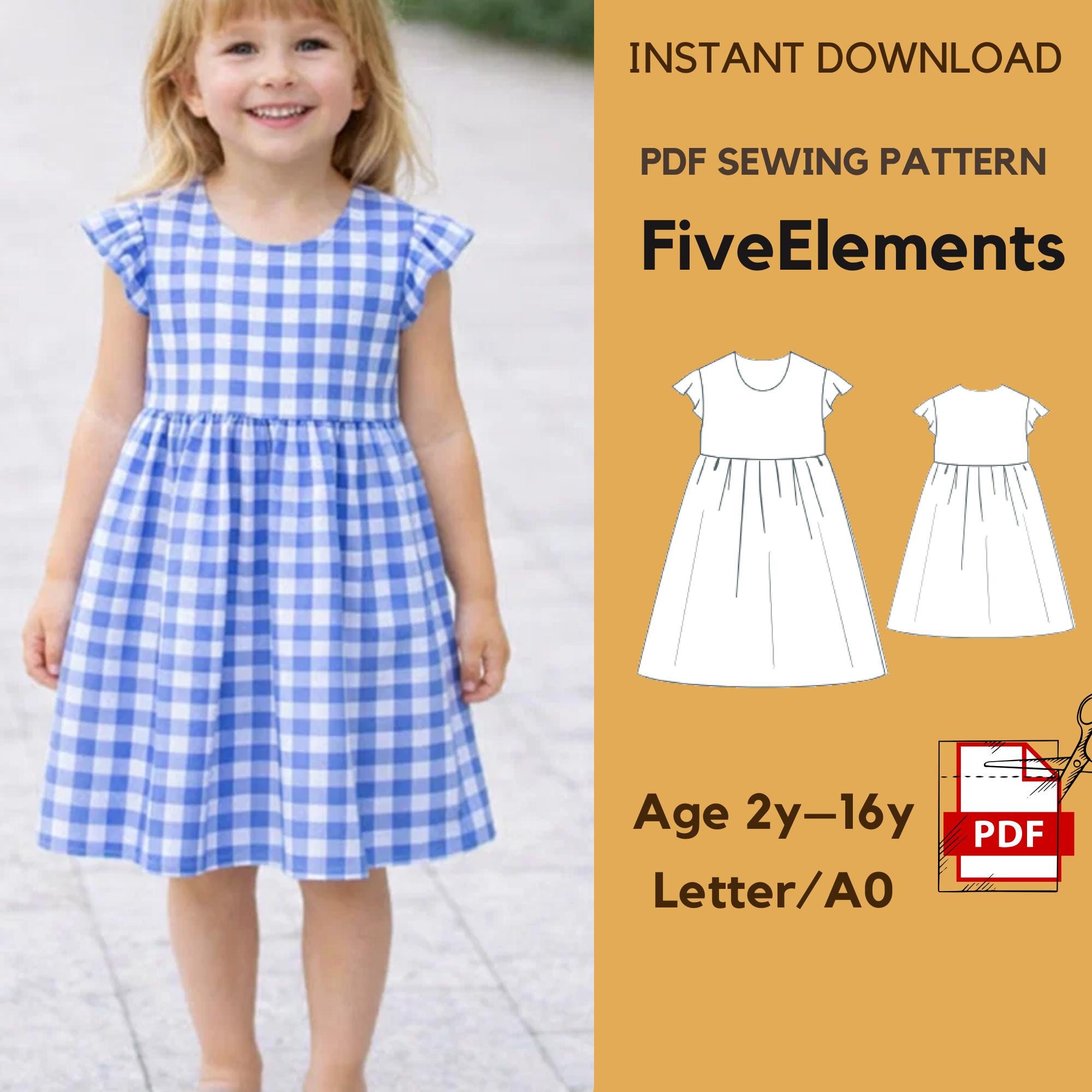
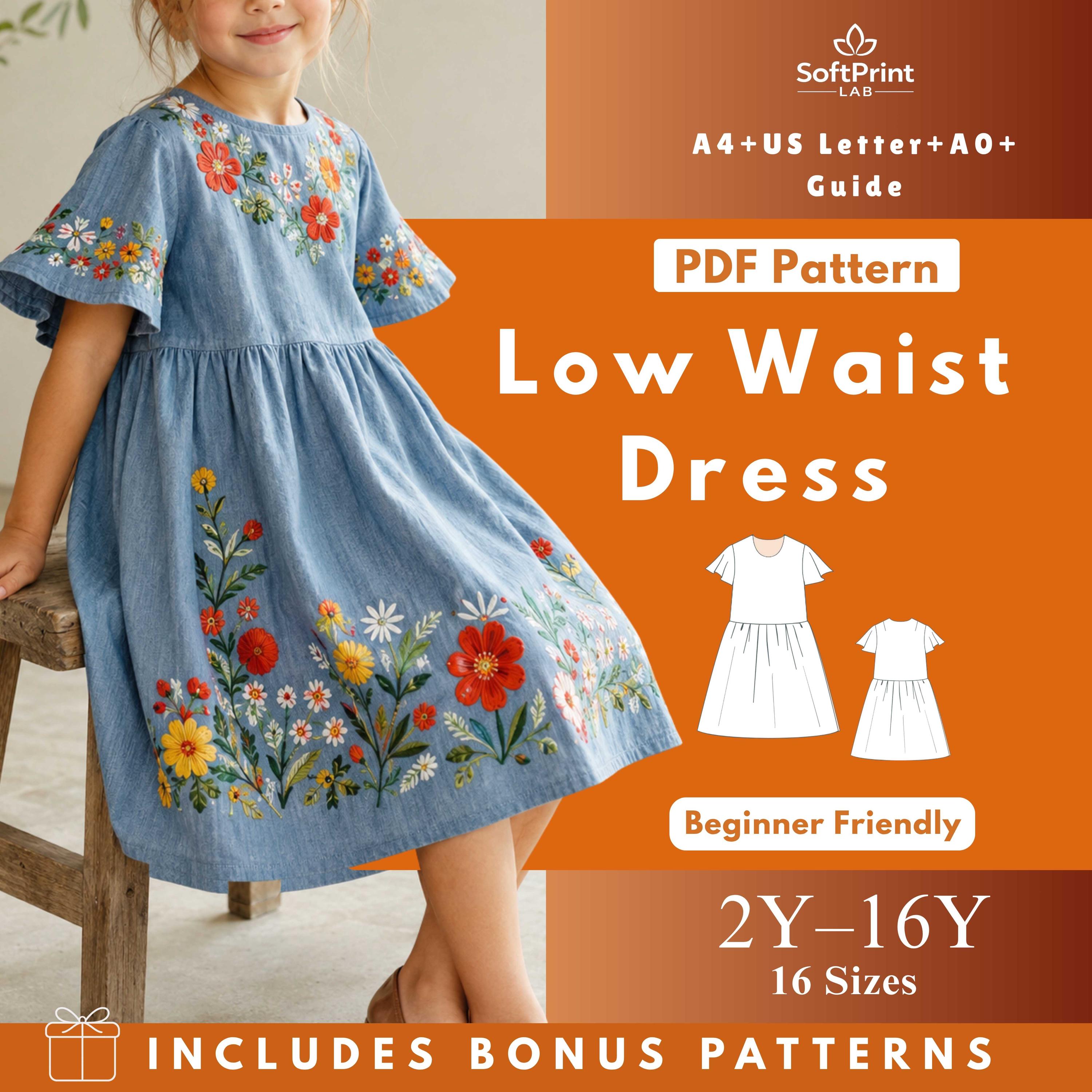
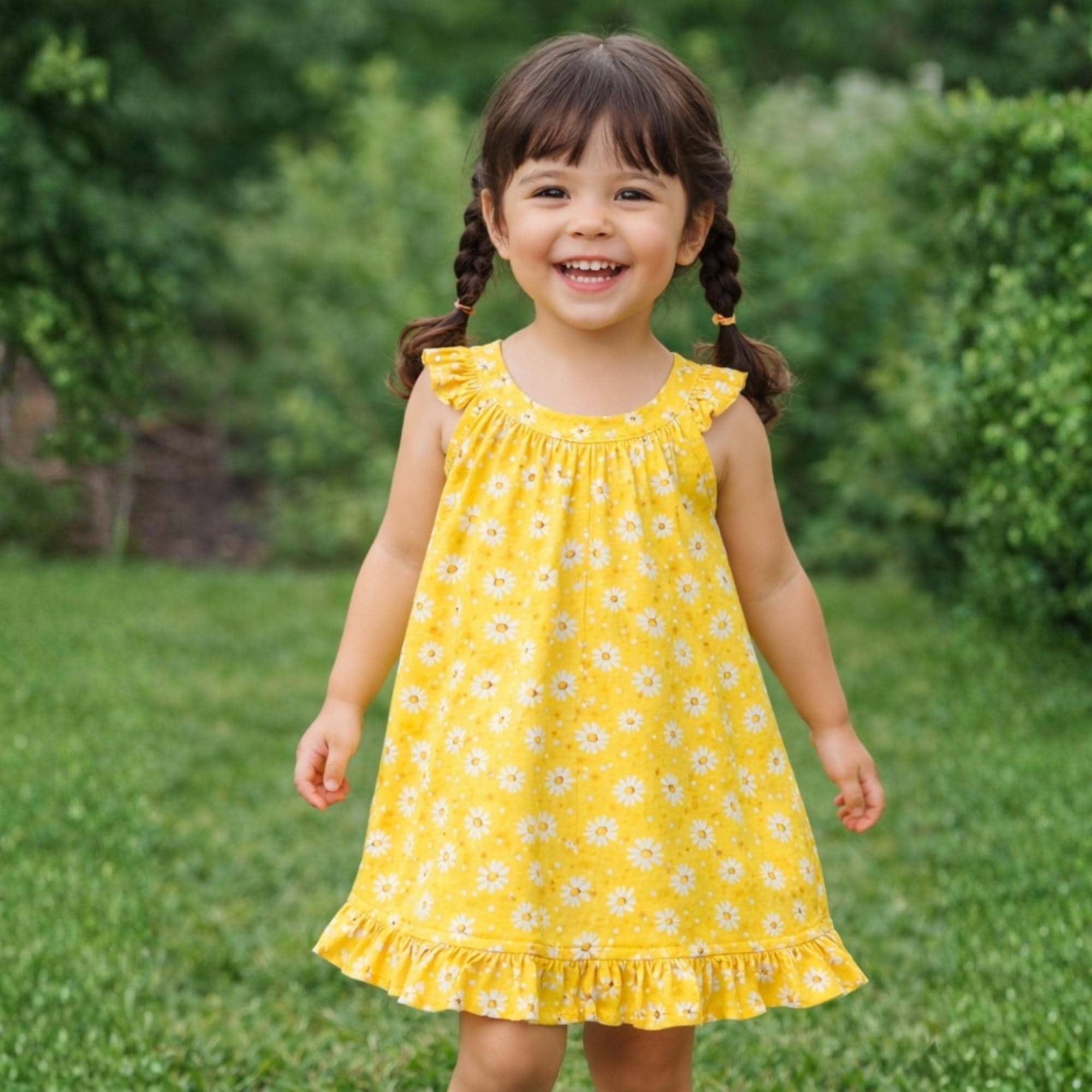
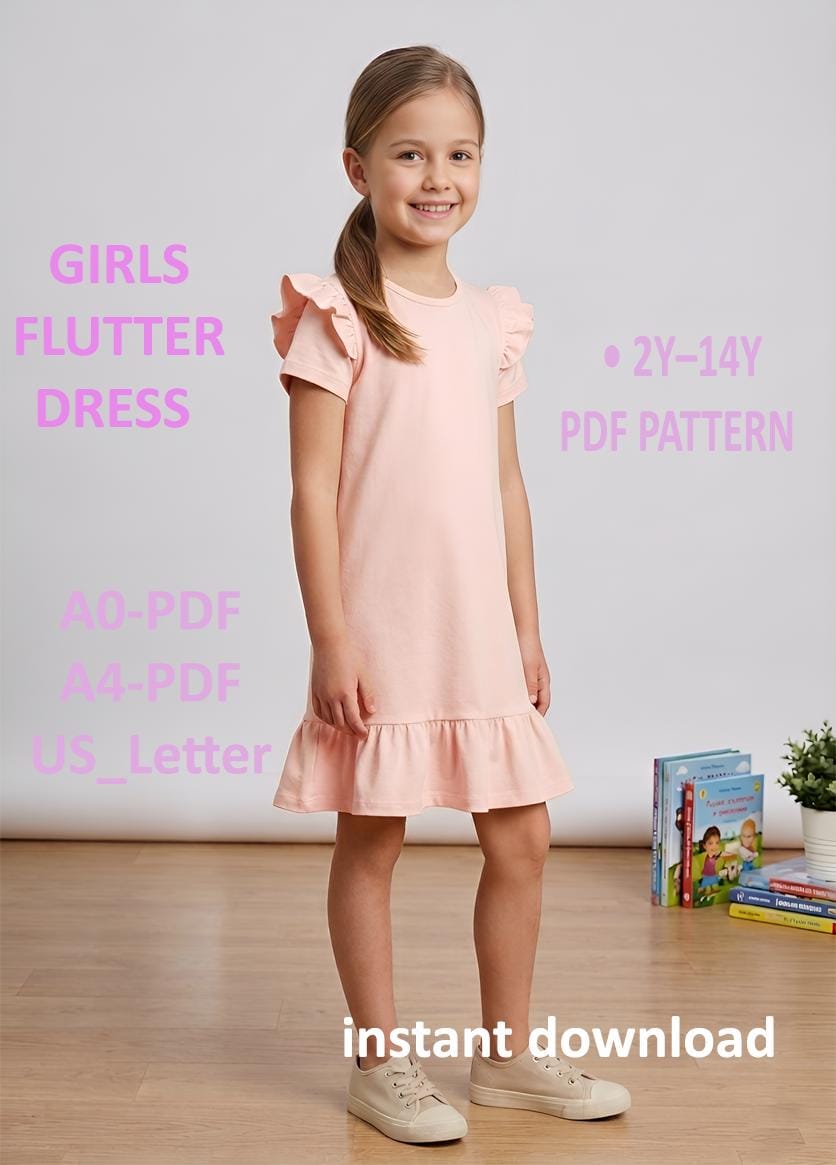
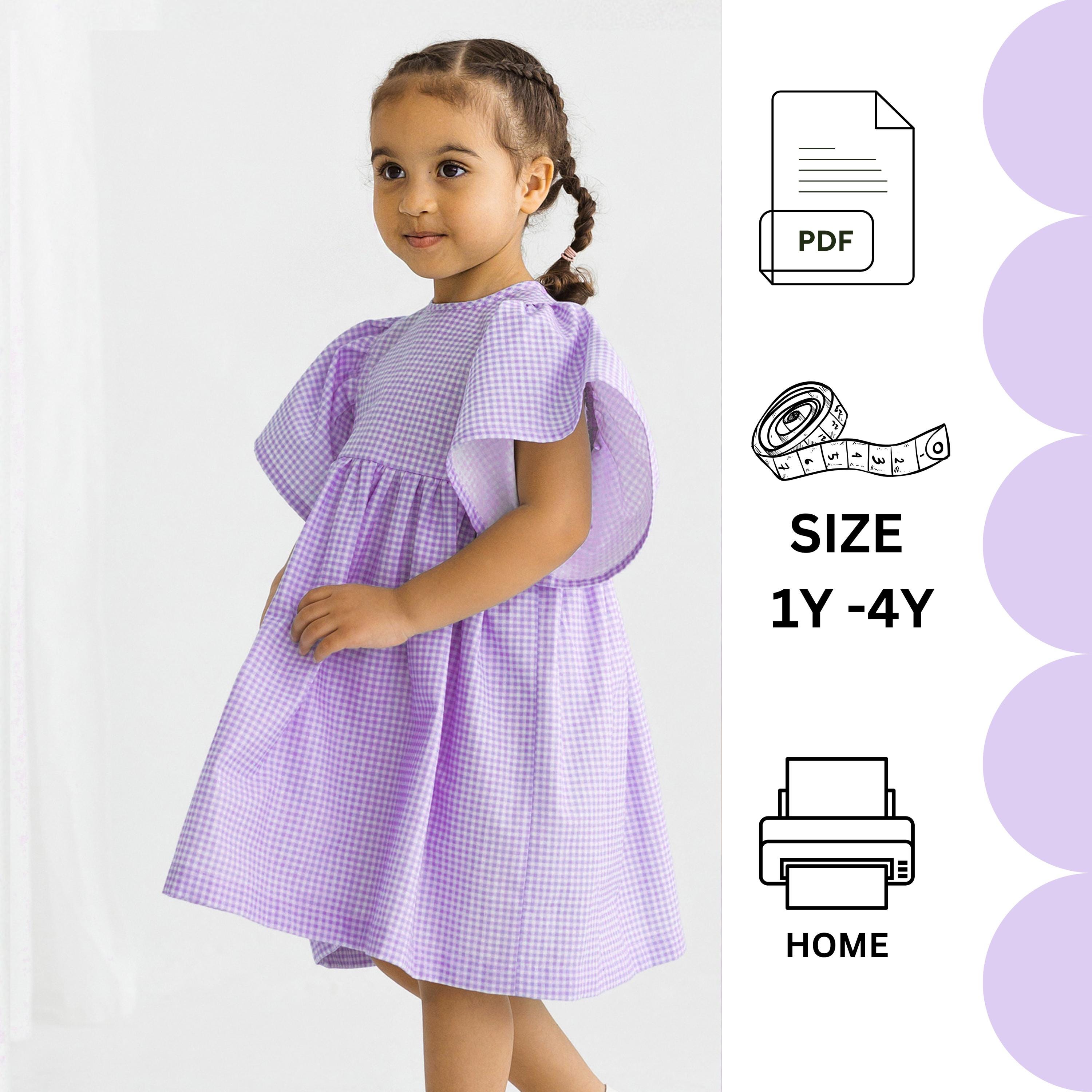
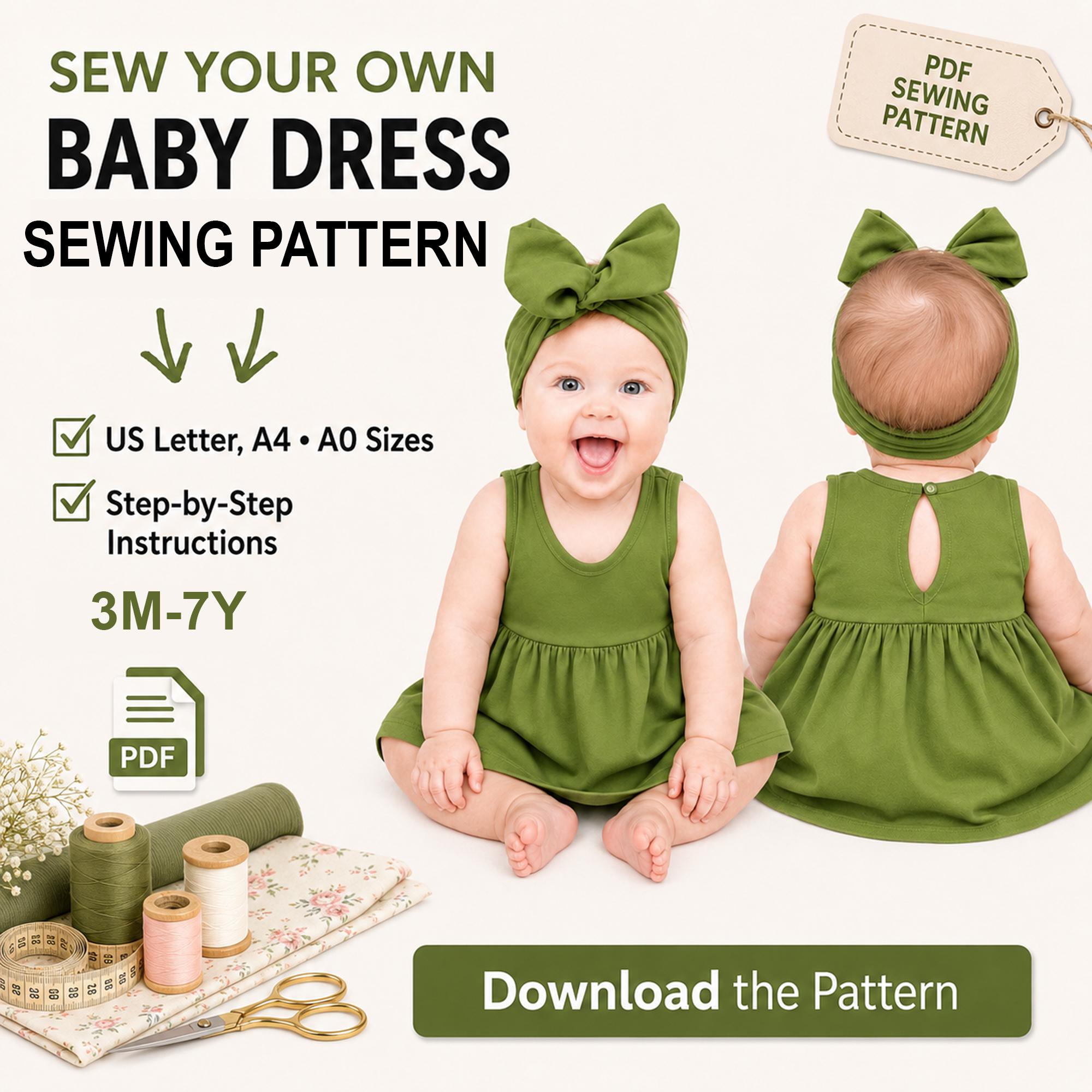
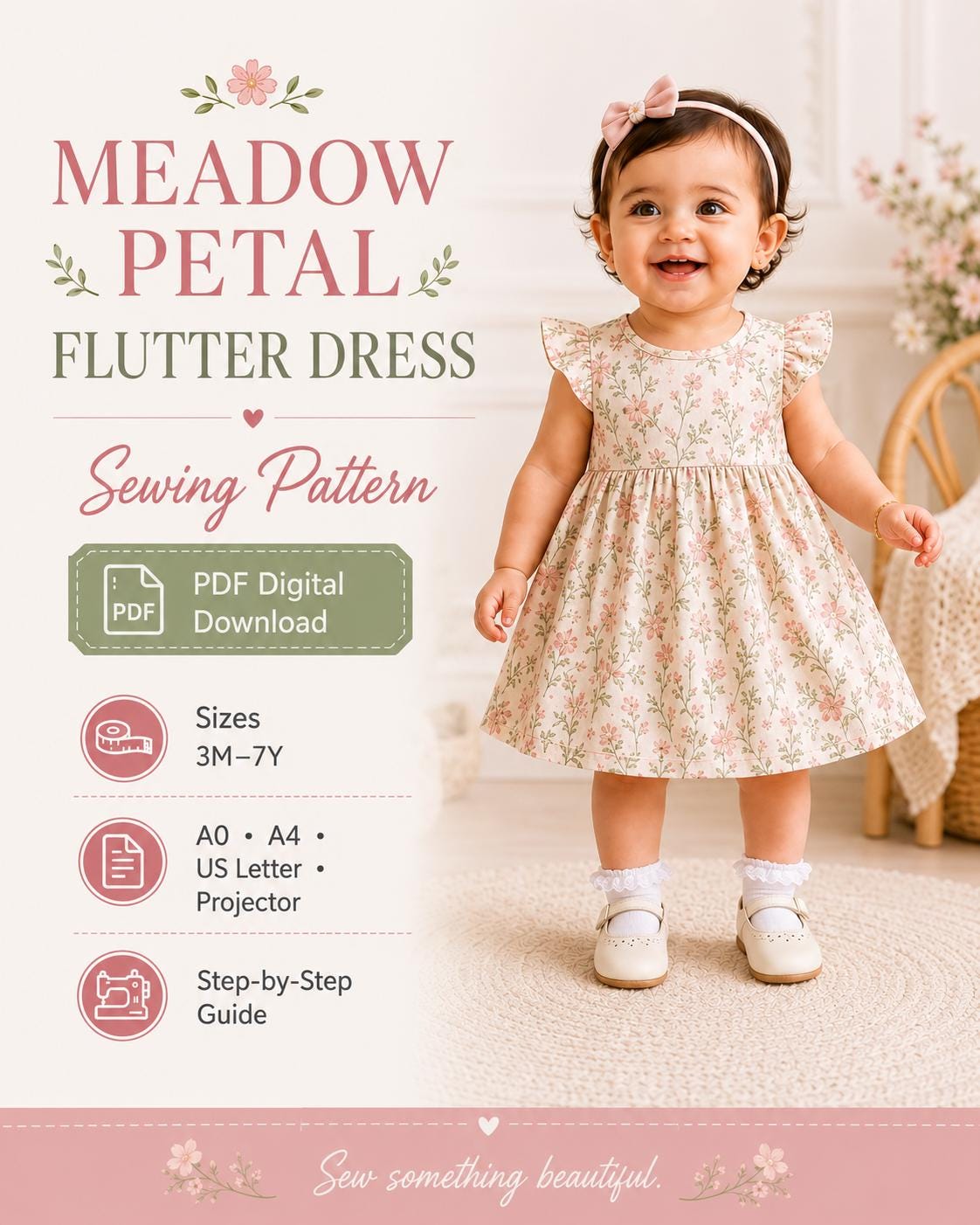
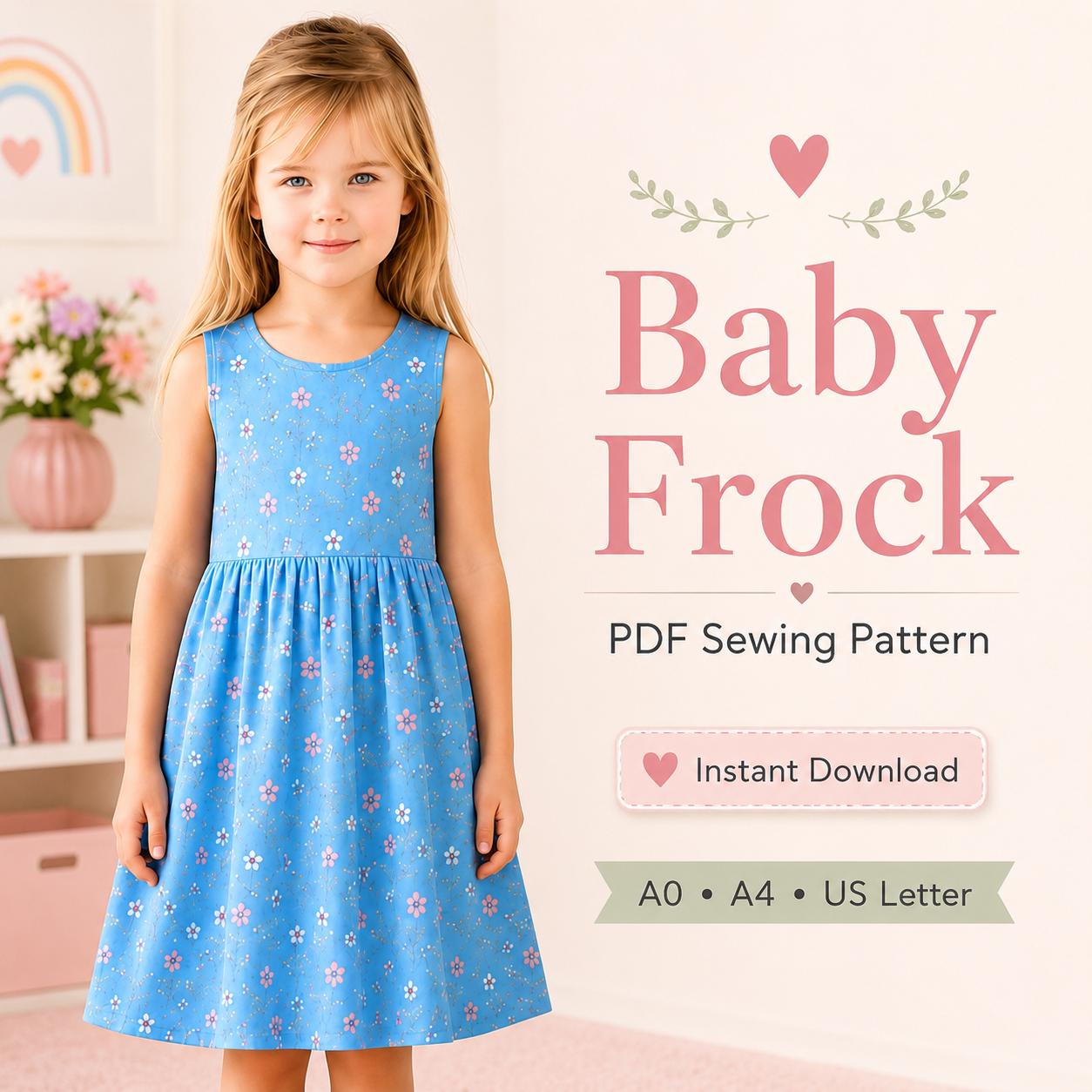
As I dig through the kid’s clothes, it strikes me that the dress I want isn’t going to take all day. These 14 patterns are for the people whose sewing plans have to fit in around soccer runs and snack breaks. I have made the time crunch work so you can choose one that will be finished before the kids head to bed.
Don't lose this article. Enter your email below, and I'll send it to you right now. Plus a little encouragement and inspiration from me, straight to your inbox.

I have simple, straightforward patterns that give the impression that you didn’t rush. I’ll walk you through fabric recommendations, construction hacks, and the sewing shortcuts that help you fit sewing into a real day… actual interruptions… a you-need-a-snack kind of day.
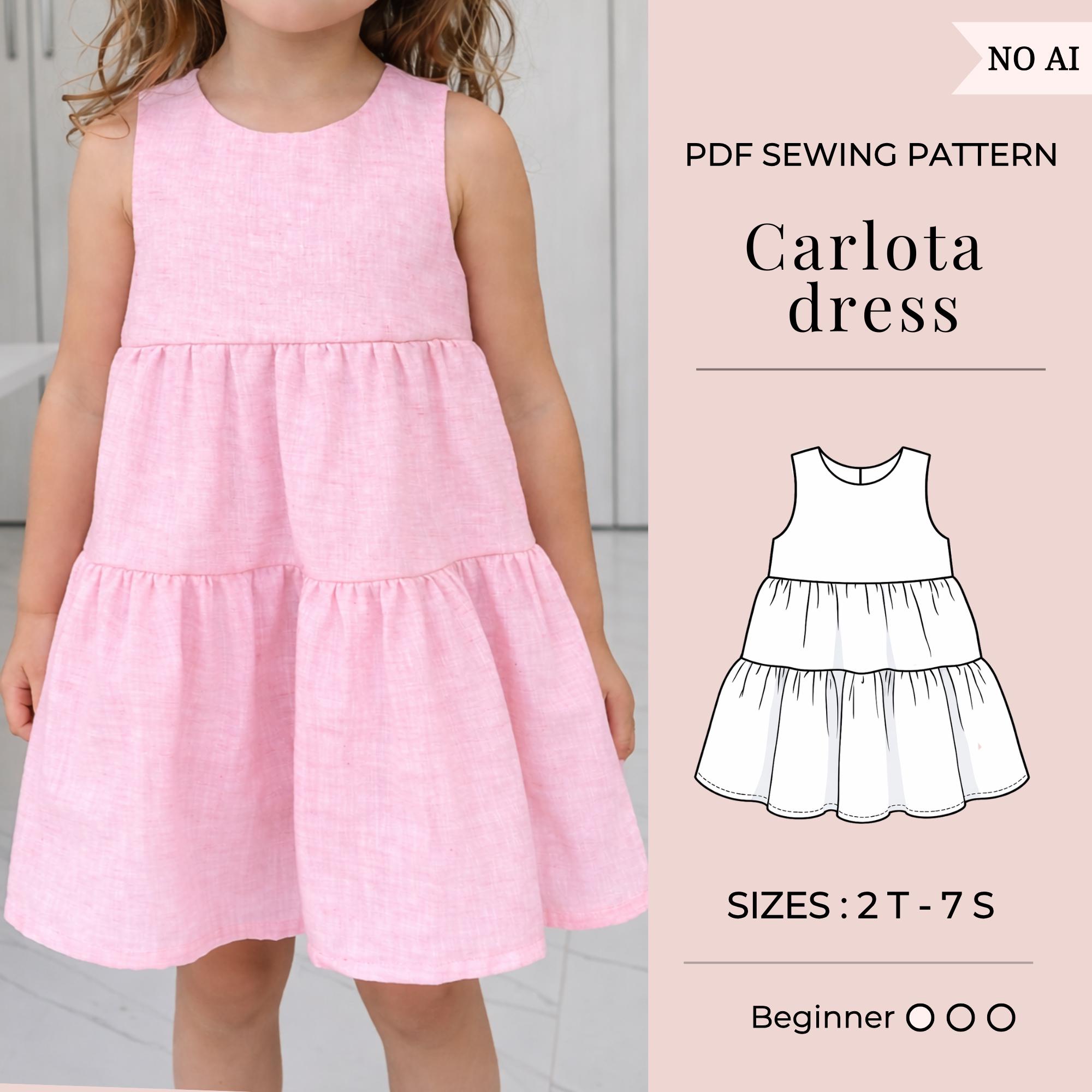
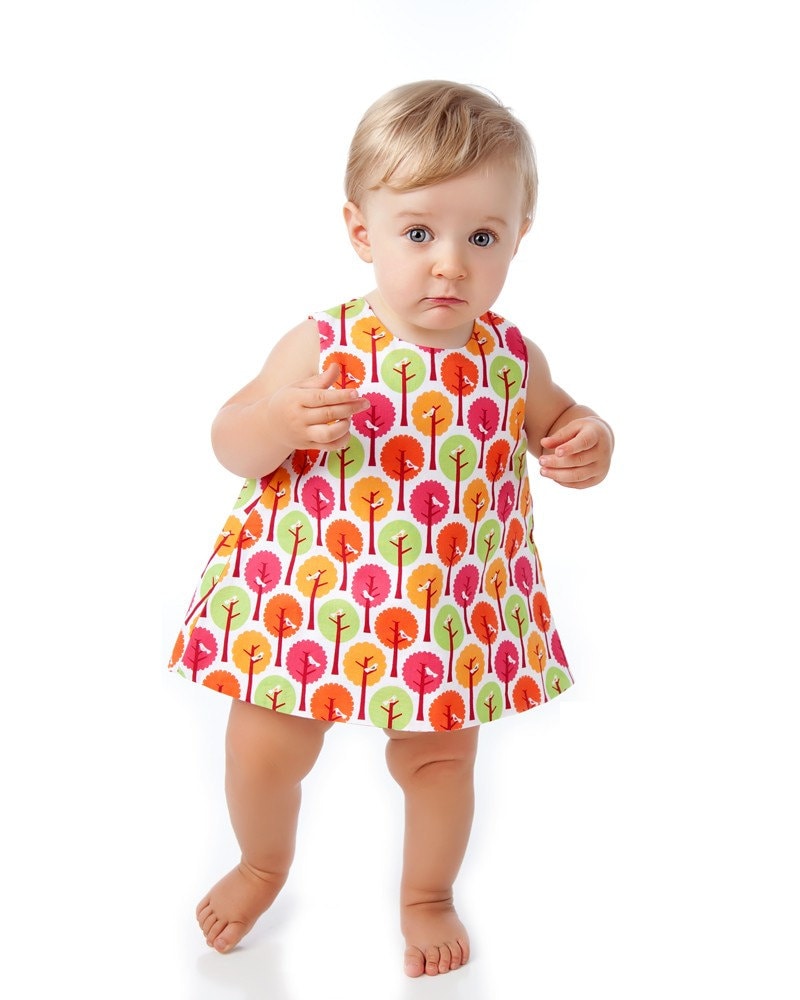
1) Quick Sundress: Simple Gathered Skirt with Button-Back Bodice

In my opinion, the baseline for all sewing patterns is how fast they look completed and how quickly they can get sewn together. This one passes my test. The bodice is simple, the skirt gathers in a jiffy, and the button back means no fiddly, tricky closures to deal with. It’s easy level stuff – a couple of straight seams and some buttonholes. One of these should be doable even during your naps.
The only thing I can complain about is that small buttons can be a pain to sew, so toddlers might need to have them replaced with snaps. Cotton lawn or quilting cotton is best for holding gathers and pressing them sharply. For a little hack, try using pre-made bias tape for the armholes. Designed for sizes 2 to 8, it should be possible to make two while the baby is napping.
2) T-Shirt Dress Hack: Turn a Favorite Tee into a Knit Dress

If I need a dress that is simple and easy to wear, then this is my first choice. I also love that it looks like I put in a lot of effort. The concept is simple – find a t-shirt, cut it open on both sides, add a side panel or a gathered skirt, and then hem it. This type of dress is mostly straight stitches, so I would guess a beginner could finish this in under an hour.
When it comes to the fabric, cotton jersey and cotton-spandex blends work best. If you like quietly swearing at your machines, avoid slippery poly knits. For sizing, go for a tee that fits the chest, and if she runs around a lot, add about 2 to 4 inches at the hips with panels. One honest warning: if the t-shirt has a print that is centered on the chest, it can shift when you add the skirt, so think about the placement before you cut. Use fusible knit stay tape at the shoulder seams to minimize stretching while you sew, and finish with a twin needle hem to achieve a more professional look.
SINGER Twin Stretch Sewing Machine Needle
Check Price3) Pinafore Jumper: The Best Layer You’ll Make This Fall

The best thing about this construction is how easy it is: boxy front, straps, straight back, and minimal fitting. I can throw one together quickly in between playdates. This design is most suited to be a fall or spring layer over t-shirts and long-sleeved shirts. After kids outgrow the toddler stage, they are able to put it on by themselves, which seems like a small miracle.
The straps are the only possible issue. They could twist or sit funny on a wiggling child. I go wider on the straps and sew a small buttonhole for adjustments. Cotton, linen blends, or chambray will hold shape and not need ironing every five minutes. Size up for extra room for layers, size down for a neater appearance. Just leave off the facings, and use bias tape to bind the armholes. It’s faster, and the edges will still look nice.
4) Circle Skirt Twirl Dress: Elastic Waist, Maximum Drama

While construction may be easy, the goal is for the result to carry impact. In the example above, the skirt is a simple circle skirt, while the bodice features an elastic waist, no closures, and mostly straight seams. The construction skill required is minimal, and the project can be completed in the time frame of a single afternoon.
The only real constraint is the fabric. Circle skirts consume a lot of material, so consider a lightweight cotton or rayon to keep the bulk down and the cost low. For better drape and, more importantly, superior twirlability when I’m making these for five-year-olds, I often bias-cut the skirt. The pattern scales nicely from toddler to elementary school with just a change in waist and length. To keep the waist tidy and the bathroom drama to a minimum, sew the elastic into a narrow casing and topstitch instead of making buttonholes.
“The circle skirt is the one pattern my daughter has actually requested by name. That’s not nothing.”
5) Peasant Dress: Elastic Neckline and Puff Sleeves

This may seem simple, but I love the look of it being more dressy. The elastic neck and puffy sleeves are nice and gentle on a fidgety kid, and I can finish one in one uninterrupted laundry cycle.
The sewing skills needed for this project are quite basic and include constructing straight seams, making elastic casings, and gathering. The only potential issue I see is that the elastic might twist in the casing unless there is some sort of end securing method used. I usually secure elastic at the shoulder seams prior to closing the casing. That extra minute spent avoids a complete rework on the project. To ensure good drape, I always choose lightweight cotton, lawn, or rayon, and this way the sleeves won’t cause overheating during recess. When sizing up for both my girls, I usually add extra width to the skirt — this accommodates a variety of shapes quickly without having to reprint an entire pattern.
6) Raglan Sleeve Dress: Fewer Pieces, Great for Scrap Fabric

For the shoulders, raglan sleeves eliminate the shoulder seam. This means almost all the fitting fuss disappears. If you cut a little crooked, it can be even more forgiving. (That’s my usual state at nap time). There are also fewer pattern pieces, which means faster cutting. Overall, it’s just perfect for using leftover knit scraps from old T-shirts.
I like to do a contrasting sleeve from a scrap because it looks intentional and stretches the fabric stash further. Plan for knits that stretch easily: cotton jersey or bamboo knits work well. Sizes grade easily by length, and you can add a gathered skirt or keep a straight hem, depending on how much twirl there is on the request list that week. The only real complaint is that if you aren’t careful, knits stretch while sewing, so I use a ballpoint needle and a walking foot so that the seams don’t go wavy.
AMZTKDIY Walking Foot Attachment for Brother Machines
Check Price7) Tiered Maxi Dress: Basically Rectangles, Basically Foolproof

When I need to do something that requires minimal brain power, I go for this tiered maxi. It’s just made up of rectangles, and I could even do it in an afternoon while sleep-deprived, and still feel like I accomplished something.
The adjustable bodice, the roomy tiers, and the forgiving waist allow you to wear this dress for months, especially if you size up. Yes, the instructions are simple enough for any beginner to figure out, but you will spend quite a while gathering the seams. Fiddly? Yes, but don’t worry, it’s much more meditative than it is technical. When choosing fabric for the tiers, use a light cotton lawn, cotton voile, or light jersey. This way, the fabric will hang really well and won’t add bulk to the waist. I recommend you take the shortcut option of zigzag finishing instead of little rolled hems. It will save you time and once the dress is on a moving child, the difference will be completely invisible.
Since the late 19th century, tiered dresses have been a staple in children’s fashion since the fit can be easily adjusted as the child grows. It was typical for the bottom tier to be extended by a few inches and then the dress could be worn for a full year of growth.
8) Bias-Bound Dress: Clean Necklines Without the Facing Headache

When I need a simple, fast clee neckline, this pattern is my go-to. Using bias tape to finish the neck and armholes is a time saver because there are no fabric facings to sew and understitch. It also saves bulk, which is a plus when working with lightweight cottons and linens.
The math part is really not that big: measure bias strips, press, and sew them on. It’s pretty easy, but be careful with the corners, as little stretching can make the tape wavy after it’s been sewn, and that can be difficult to fix. For easily pressing and good behavior, I like 100% quilting cotton or soft chambray. For sizing, it usually runs true to age, but if your child is tall or wider than their peers, grade down 1-2 sizes. For longer runs, buying bias tape looks nice and saves about an hour.
9) Mock Wrap Dress: The Wrap Look Without Wrestling with Ties

Don't lose this article. Enter your email below, and I'll send it to you right now. Plus a little encouragement and inspiration from me, straight to your inbox.
Wrap dresses for kids can be dangerous, as kids can run with the ties and get hurt. This mock wrap dress version looks like a wrap dress, but with no running hazards. I like to find dresses that are easy to play in, but still nice enough for school picture day. That’s why this dress is designed to be simple – the faux overlap front and hidden snap at the waist keep everything neat and tidy for play.
Skill level is easy-intermediate. The overlaps / front gaps need careful alignment, or it ruins the whole effect. That can be fixed quickly with a small stay stitch or interfaced facing. Use lightweight cotton, rayon, or linen blends so the wrap lies flat and can breathe. I size up one if my kid tends to hate snug sleeves. Sew the snap onto a small reinforcement patch so it doesn’t pull out after a few washes — that’s worth the extra two minutes every single time.
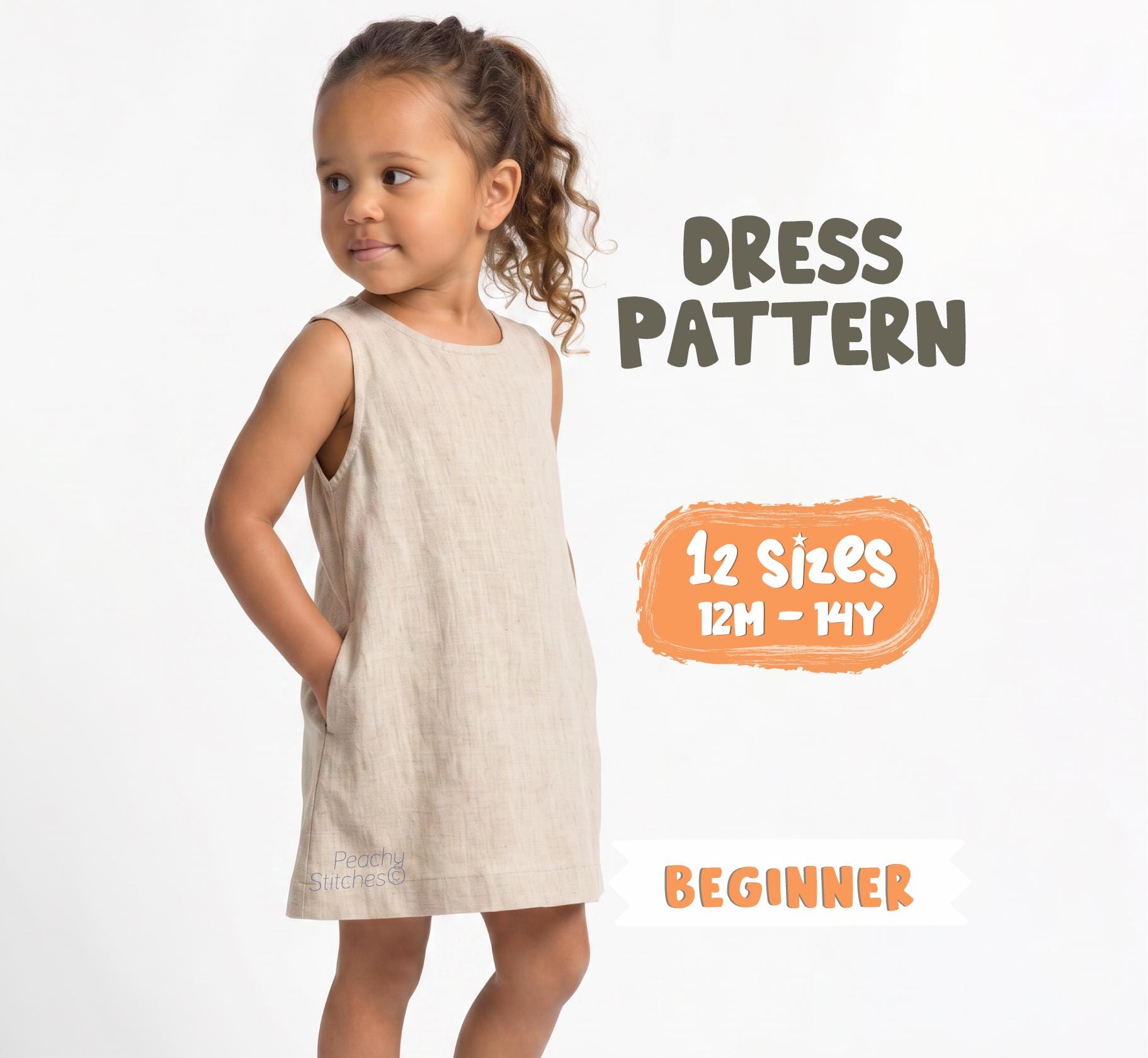
10) Shift Dress with Pockets: Boxy, Fast, and Has Pockets

Pockets! In a kids’ dress! I shouldn’t have to sell this harder than that! The boxy cut gives room for climbing without ripping seams, and the drop-in pockets grab rocks, snacks, and whatever else kids feel the need to collect!
The sewing instructions I have provided are extremely simple and are tailored to the level of a beginner who is comfortable sewing straight lines and doing some simple finishing techniques. The only downside is that because of the boxy shape, the garment may look a bit shapeless on taller children. To give more shape to the outfit, I sometimes add a simple tie at the back or suggest the sleeves are rolled. Outfit fabrics like quilting cotton or lightweight linen will give structure to the top, but stretch cotton will give a softer drape, which some children may prefer if they like to wear loose-fitting clothes. Remember to press the seams as you go along and rudder stitch the opening of the pocket to keep it closed, as that step alone will make the sewing project look more professional.
11) Skater Dress with Bodice Lining: Quick Finishing, Neat Result

This pattern is especially worth it for the bodice lining. It finishes super quickly, looks clean on the inside, and it saves a lot of hand sewing. With some simple gathers at the skirt and a clean neckline, it’s an effortless sew that I can squeeze in during other jobs. The lining does add a tiny bit of bulk to the armholes which is the only downside, but I fix that by clipping the curves carefully before turning.
Choose lightweight cotton or rayon for the bodice of the dress and stiffer cotton lawn for the skirt and lining. If your little girl falls between sizes, it is advisable to go up a size since the waistband is elastic and provides extra room without looking too baggy. Sew the bodice lining, turn it, and then only tack the lining at the shoulder seams. This will keep the inside very tidy, and you will not need to do any tricky understitching. For a confident beginner, the sewing time is approximately 1.5 to 2 hours, and this is actually manageable during a long school day.
12) Button-Front Shirt Dress: Grown-Up Tailoring, Kid-Speed Construction

This pattern gives the impression of mature tailoring while still feeling like a small design miracle. The button front allows for easy dressing, while the straight seams minimize fuss. The lightweight shirting cotton or linen blend is ideal, as it will remain wrinkle-free, so you don’t have to worry about ironing every single morning.
Construction consists of a skirt, collar, button bands, and a simple or straight hem. The only time-consuming detail is button placement, so I’ll use snaps for toddlers or just sew extra-wide buttonholes to speed up that step. Most indie patterns have this from toddler to tween-sized on the same sheet. To save some time, only interface the collar stand instead of the whole collar, and your dress will hold its shape just fine through a full school week. I actually consider it finished when I pair it with some sandals or sneakers.
13) Sweater-Knit Hoodie Dress: Cozy, No Hemming Required

This is a great project for all ages. Just attach a tube skirt to a hoodie bodice. You don’t even need to hem the skirt because the fabric won’t fray. All you need is a stretch needle and a zig-zag machine or a serger. No fitting is required, which is a bonus. This is great for school days and cool weekends when kids want to wear soft clothes, and you need to have them dressed in something that isn’t technically pajamas.
If you don’t take steps to keep your knits from stretching, they’ll sag at the shoulder seam. I like using a bit of clear elastic, or I just stay-stitch the neck to avoid sagging due to washing or wearing. Make sure to use a medium-weight sweater knit or French terry for the bodice so that the skirt hangs well from the waistband without adding bulk. An A-line cut on the skirt will give play space, and it’s quicker to bind sleeve cuffs instead of hemming, and it looks better. If you expect a lot of growth, size up!
Hoodie dresses for kids have been holding strong because they solve a real problem: keeping kids warm without layering a separate hoodie that inevitably gets lost at school. Sewing your own means you control the length, the pocket placement, and whether it survives the wash.
14) Convertible Dress-Skirt: Two Looks, One Pattern, Very Clever

This pattern is super quick to sew up and offers a two-in-one look, which is so satisfying! It has a simple bodice and skirt, where you can snap tabs at the waist. When unsnapped, the top becomes a short tunic, and the bottom becomes a full-length skirt. It’s an easy to medium level sewing difficulty. You will have to set some snaps, but the rest of the construction is just straight seams.
In the summer, it is great for layering in the cooler months. If you want more stretch and an easier pull-on, opt for a lightweight knit. Minimal topstitching is likely to keep the tabs flat — not too tricky, but something to factor in when estimating your time. Most indie patterns run from toddler to around age 8. Rather than hand-sewing, use metal snap pliers. They’re faster, more resistant to playground wear, and your hands will appreciate it.
Time-Saving Sewing Tips for Moms Who Sew in Stolen Minutes

Making use of fabric choices that make sense, smart shortcuts, and a plan that is semi-realistic for keeping the kids occupied is what really helps make sewing fit into the little bits of time during carpool and nap times.
Cutting Corners (The Good Kind)
You can skip facings and zippers by choosing dresses with pull-on necklines and elastic waists! You will also be working with knit fabrics that don’t fray, so finishing your inner seam just takes a quick serge or zigzag stitch. When using printed fabrics, one-way prints can mean 10-20 minutes of extra work per dress (and those minutes add up). To avoid this, simply stack your fabric, pin through the whole stack, and cut with a rotary cutter.
A few habits that I have committed to before starting a sewing project are pressing seams before sewing, trimming seam allowances to reduce bulk, and turning seams. Also, I have to say, a walking foot is absolutely worth it. It makes topstitching so much easier because it stays even and level on the first try. As a final note and to be completely honest, a few of these tricks do make hems a bit less crisp; however, I try to save clothes that will be photographed for my kids’ play clothes or practice pieces.
Keeping Kids Occupied While You Sew
I made a sewing sidekick station with a rotating tray of crayons and stickers, a quiet puzzle, and some other things that I switch out every few days. I work in bursts of 20-30 minutes that I time with a show or snack, and that’s about how long I expect to have real concentration for before someone comes and needs something.
When I’m cutting fabric, my older daughter likes to pass me pins from a magnetic dish or help by sorting buttons. These little tasks keep her engaged and provide me 15-30 minutes of uninterrupted time. Keep realistic expectations: toddlers are going to interrupt you, and they need to be kept away from scissors, pins, and seams. Projects are better completed, rather than trying to get them done in a specific time and being perfect.
Choosing Fabrics That Survive Real Life

I have three main goals. I want the clothes to be easy to wash, not tear easily, and be cute enough to last through a weekend of playing at the park, eating pasta, and getting glue all over everything. Here’s what I use and how I do it so my dresses spend more time on the kids and less time in the washer.
Best Materials for Quick Projects
I prefer cotton poplin and quilting cotton for structured bodices and gathered skirts, as they only require simple hems to look good and do what they need to do. For pull-on dresses, I like cotton jersey or cotton-spandex blends since those can stretch over a little person’s head with no drama.
A blend of cotton and polyester with a minimum of 30% polyester would be ideal for a dress that will transition from school to the park, as it will resist becoming creased and will dry quickly. I don’t work with soft chiffon or bulky brocade for the more adventurous children – they require additional linings, extra stitching, and a lot more patience than I possess on a Tuesday.
Washing, Wearing, and Not Regretting Either
Washing at 30° is recommended. Do not wash with fabric softener. It will also soften printed cottons and cause them to fade. Wash dresses on a gentle cycle and inside out. Take them out of the machine right away to avoid having to iron something that may be wrinkle-free. For knitwear, air drying flat or hanging is best to prevent the shoulders from becoming misshapen.
Before doing any printing, do a patch test. Wash a scrap with your detergent and see if it bleeds. I have ruined way too many projects by not doing this. Mend early. It seriously is five minutes of work to do some hand stitches at a loose seam, and it saves you a complete redo. Pre-wash all shirtings and trims before cutting so the finished dress survives the first wear. It will help the dress survive the 20th wear too.
The best pattern to complete is the one you finish. Pick one from the options that matches the time you actually have today, not the time you hope will appear tomorrow.