

After Sunday lunch, I was putting small newspaper cut-outs into a scrapbook with my youngest when he said, ” Why does our great grandma always wear a brooch?” That one question started a whole bunch of family tree activities that genuinely teach children who we are instead of just making a pretty thing.
Don't lose this article. Enter your email below, and I'll send it to you right now. Plus a little encouragement and inspiration from me, straight to your inbox.
The family history projects found in this guide offer simple and engaging ways for you and your children to learn important names, places, stories, and faith traditions while creating something meaningful together. I will explain the materials, the steps to complete each project, and most importantly, why each activity helps children remember family history.
1) DIY Layered Family Timeline Poster

I remember when my boys were around the kitchen table. Markers were everywhere, and there were stories flying about where Grandma lived when she got married. That little happy chaos turned into a silent way of passing on names, dates, and the little decisions that made our family.
Gather a large poster board, colored paper for layers, glue, and photos or handwritten notes. Cut strips of paper for decades or generations and stack them from oldest at the bottom to newest at the top. Add names, birth years, migration notes, or short memories on each layer so kids start to see patterns, like repeated moves, shared jobs, or traditions that keep showing up.
This helps kids learn sequencing, and especially cause and effect, through a hands-on approach. Why did Grandma’s move lead to meeting Grandpa? Why did a job change mean a whole new town? Stick a church photo or a note about a prayer that gets passed down, and suddenly faith also inhabits the poster, not just the memory.
2) Grandparent Interview Video Project

I would record Mom telling stories in the kitchen, while the boys were sitting cross-legged, wide-eyed, and jumping in with a million questions. That little video now plays at family gatherings and makes everybody slow down and listen.
Find a phone or tablet, a quiet space, and jot down a few questions regarding names, childhood memories, faith, or family recipes. Sit with a grandparent, press record, and start conversing. I encourage my students to ask questions that would prompt the interviewee to offer insights and emotions rather than just the bare details.
Watching the finished video teaches kids tone, memory, and listening skills. They learn how beliefs and customs were passed through people and not just through directives. They’ll retain the voice of a loved one for many years after that loved one has passed away. That’s enough reason to do it.
3) Hand-Drawn Ancestor Map of Hometowns
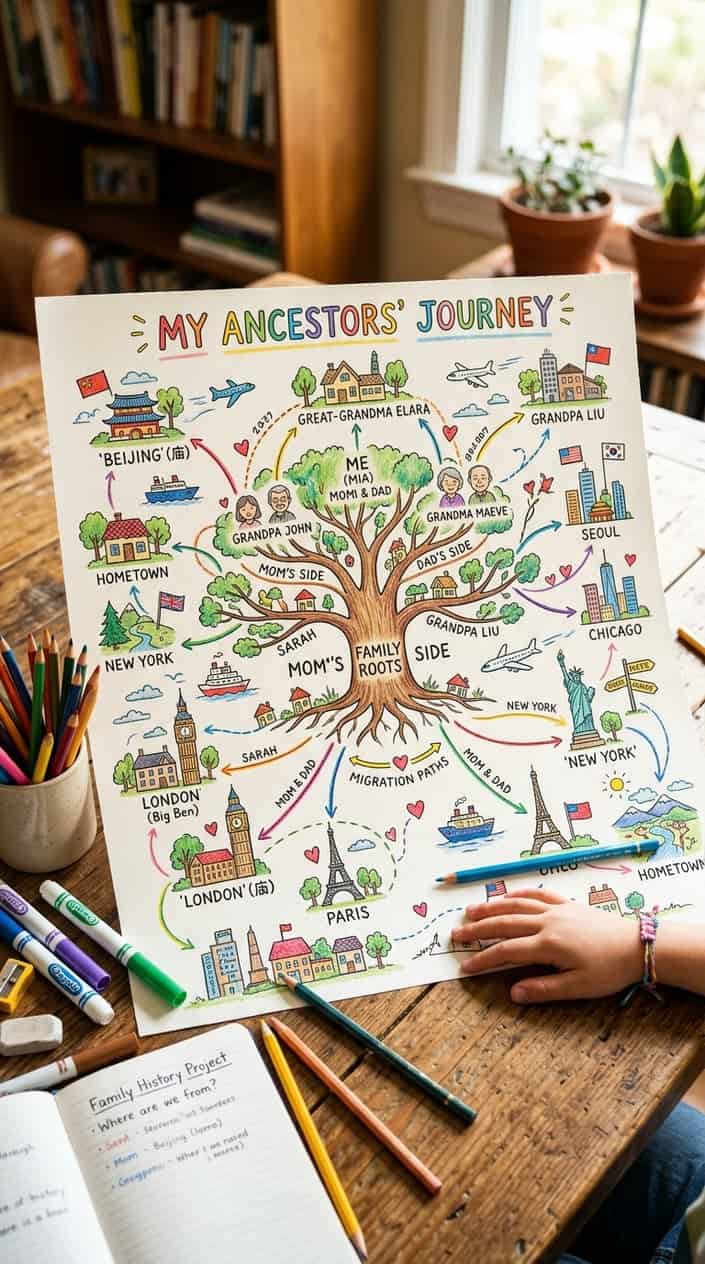
I remember my dad looking out the window at a street, waiting for supper at church. Out of curiosity, he pointed to a spot on his old atlas. That street made me want to take my boys to that street one day. I wanted to make sure they did not miss the chance to create memories at the place their people came from, instead of just hearing about it from stories.
Gather your family’s photos, memories of where your grandparents, great aunts, and cousins lived, and some of the following materials: paper, pencils, colored pens. Then, draw a simple map of the locations your family resided and label them. Kids should draw the roads and create small doodles to represent houses, churches, and a few ballfields.
While drawing, narrate little stories. Who do you think walked to that church? Who kept the family recipe when the house was sold? When kids draw the map, they are more likely to recall the story, and as people are connected to places, they become animated fragments of family history.
4) Recipe Heirloom Book with Family Notes

Grandma would chuckle when she remembered a funny accident on the stove that became one of our favorite Sunday side dishes. A greasy card held the recipe and all the measurements. It also included a story about the first time she did it and the blessing she always said before we ate.
Gather some old recipe cards and printed recipes, along with a simple scrapbook or binder. You can even ask family members to share when and where they made a special dish. Did someone in the family love it, or perhaps they had a prayer before serving it? Children can glue a recipe on each page, tracing the relatives’ handwritten notes, so they’ll learn the names, dates, and tastes of recipes associated with real people.
This book will be a treasured family heirloom. It will narrate the tales of food and family to generations to come and be a more truthful depiction of family connections than a chart with boxes and lines.
Researchers who study memory and identity have found that children who know family stories, including the funny and hard ones, tend to show stronger resilience and a clearer sense of self. A recipe book with grandma’s handwriting in the margins is doing more work than it looks like.

New Seasons Deluxe Chalkboard Recipe Binder
Check Price5) Photo Scavenger Hunt for Family Traits
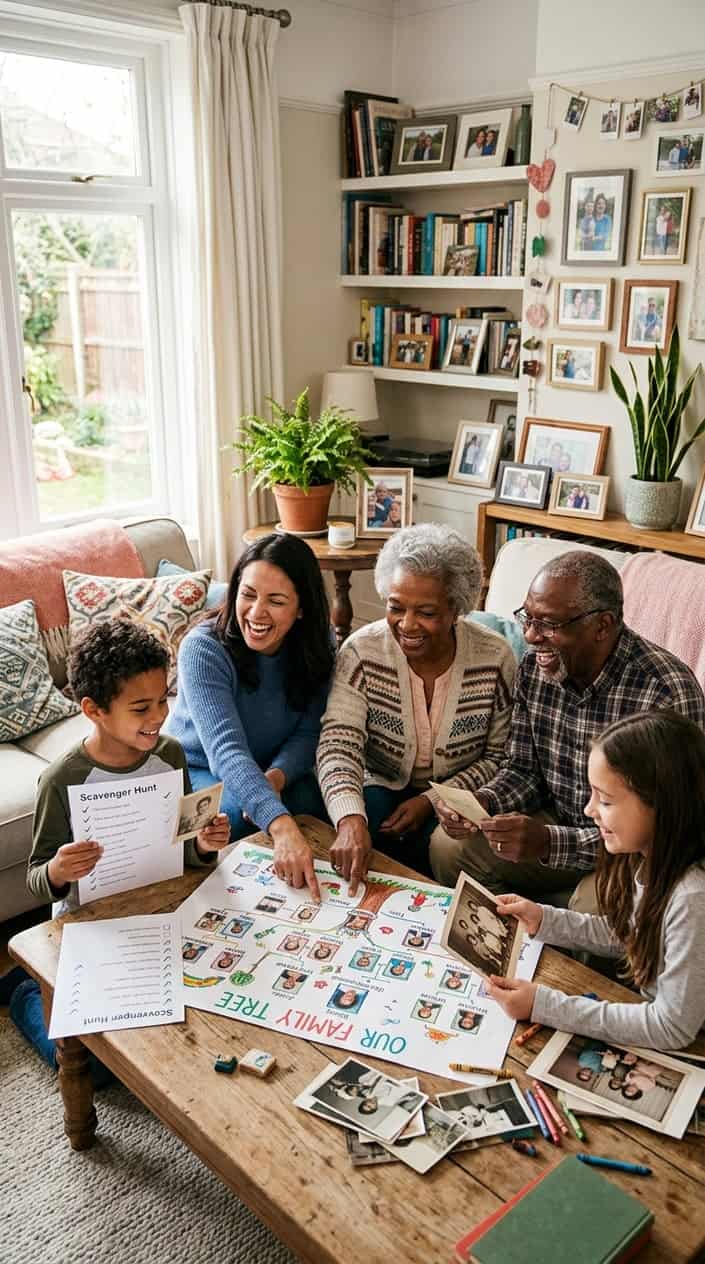
My boys spent a good 10 minutes looking at old photo albums trying to figure out whether Daddy’s smile came from his daddy or his mama. That little debate was the start of this scavenger hunt, and we enjoyed it so much.
Grab your phone and/or camera and make a list of smiles, dimples, hands in action, cooking faces, and a family favorite hat. Have them take pictures of the people who exhibit these traits and compare what they got after.
The moments captured are simple and genuine. The photos are memories that will last a lifetime. Kids will always ask who handed off what, and it will almost always lead to a great conversation.
6) Story-Correspondence Postcard Exchange

On Sunday, after lunch, my oldest wrote a postcard to Great-Grandma. The smiles on their faces were worth more than any craft. The mail moment, like any app, really made family history.
Collect postcards or sturdy index cards, some pens, a few photos, and a list of relatives who are willing to do a note swap. Have your child write a short story to the recipient, then ask that person to respond to the recipient’s story by including a memory, a question, or even a blessing. If you have a photo, tape it in the story.
This demonstrates to kids the route of stories. Various individuals view the same event differently; the stories in the replies illustrate how customs, beliefs, and family unite. With the passing of time, you amass a portfolio of authentic voices that highlight the essence of the family beyond mere identifiers on a family tree.
“A paper trail of real voices teaches children more about where they come from than any printed chart with boxes and arrows ever will.”
7) Create a Family Crest with Meanings

Out of pure entertainment for ourselves, my boys had a twenty-minute-plus argument over what animal represented our family. During the argument and for the sake of making the argument fun, they broke down the stories of granddaddy’s work boots and mama’s biscuit recipe. Those are the conversations you want.
Gather paper, crayons or colored pencils, and a simple list of family traits or memories. Ask each child to choose and identify symbols for values, occupations, hobbies, or write a brief story about a family member. Assist them in drawing a shield, sectioning it off, and labeling each section with a brief explanation of what each symbol represents and who it is directed toward.
By creating their crest, children will learn to express their significance by relating it to real people and real events. The finished crest can be an example of an heirloom that has meaning and something they can explain to someone. It can even be an item that they place on a wall or in a Bible.
8) Life-Event Memory Jar with Prompts

On a rainy Saturday, I started a little activity with my sons. Together, we made hot cocoa and told each other stories as we began a fun little writing activity. I gave each of them some pieces of paper, and we wrote about the little moments we remembered. Some examples were the first time we rode a bike, big prayers that were answered, and a funny Sunday story. It sounded like something quiet and true was being passed between us.
Don't lose this article. Enter your email below, and I'll send it to you right now. Plus a little encouragement and inspiration from me, straight to your inbox.
You’ll need a jar, some paper, and some prompt ideas that you will create with the kids. With my kids, we’ve included things like a relative’s birthday, a relative’s first job, family dinners, and when the family prayed during a difficult time together. The kids will write the memory on a piece of paper, fold it, and drop it in the jar.
We read one slip on holiday evenings and family nights. It is a tradition that helps children concentrate on the memories, those who attended, and the connection of family and faith. It keeps stories and memories alive without a need for special occasions.
To start a new tradition with the new school year, in August, take some construction paper and create a memory book. Then, in December, have a family Christmas memory book sharing event. Things that were big in August and things that are big in December show how the family’s values have shifted over time.
9) Sibling Oral History Podcast Episode

My boys were fighting over who gets the aux cord when they started laughing about Grandma’s biscuit secret instead. Why not channel that energy into a family podcast episode! Each child can interview a family member.
You will need a phone or simple recorder, a quiet room, and a few written prompts like “What’s a proud moment you remember?” or “Which family tradition matters most to you?” Assist the children in preparing follow-up questions and keep each segment 3-5 minutes for focus.
Listening, waiting, and respect are some of the values recorded by teachers. It makes the struggle of learning feel more like a game. We saved one episode for Sunday dinner and played it when the casserole was being passed around. It was definitely unexpected when my dad started talking about prayer.
10) Generational Quilt Square Craft
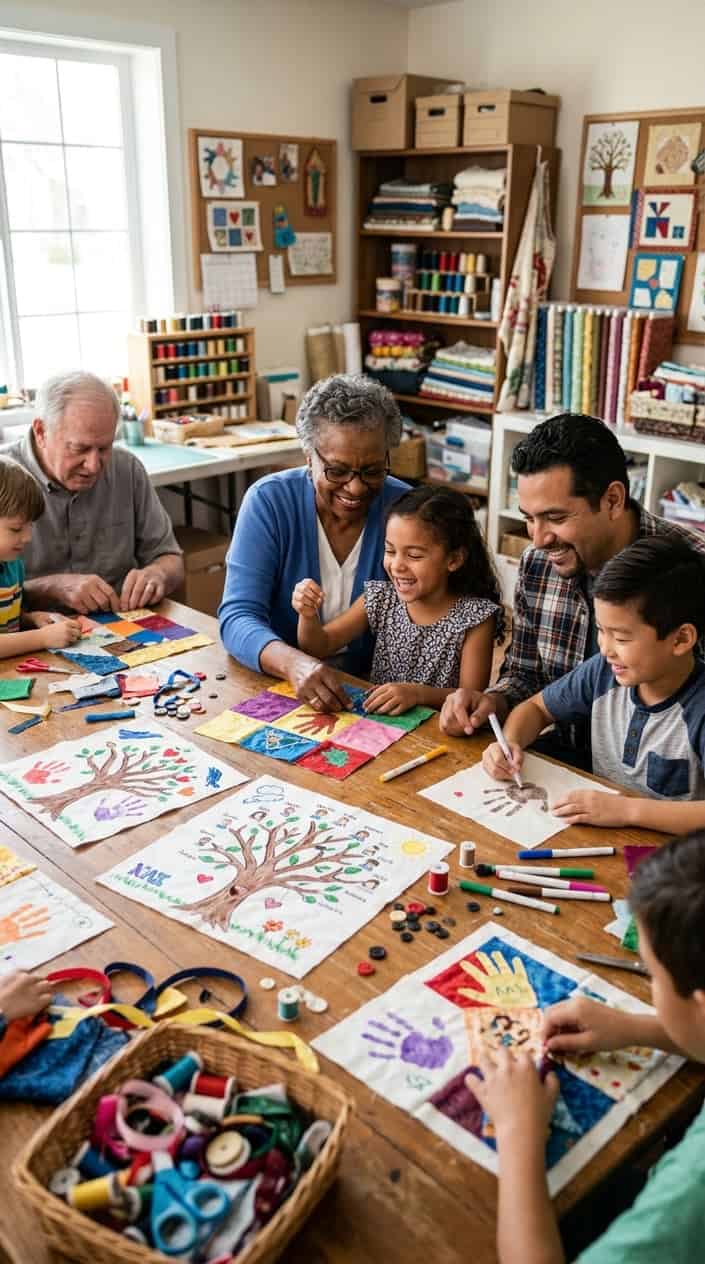
I love this project because it helps me think about all the stories a single antique, like a faded square of cloth my grandma gave me, can tell. My grandma told me it belonged to my great-grandma, which was far more interesting than the dozen photos of her I had. I want to imagine the stories behind all the antiques.
Gather fabric scraps, fabric markers, needle and thread, or fabric glue, and a backing square. Each child gets to decorate a square with a name, small drawing, prayer verse, or memory. The squares can be sewn or glued together to create a quilt or a wall hanging that can actually be displayed.
When kids make a square, they can capture a story and tell it, like a family ritual done in silence, or a prayer stitched in.

ERLCZHU 100pcs 7x7 Cotton Fabric Squares
Check Price11) Migration Route Map with Pins

It all began on a rainy afternoon when the boys were getting restless, and Grandma’s childhood stories mixed with nibbles of cornbread. We spread a world map across the table, took out some photographs and a couple of old letters, and questions erupted from every corner of the room.
All you need is a large map, push pins, some string, and a marker. Once the kids ask family members about where they have lived/moved, you can start to mark and connect those locations with a string to help the kids visualize movement over time. This helps kids learn not only about geography and the family’s routes, but also the reasons why people moved: jobs, church calls, wartime displacement, etc. The map is a perfect combination of data and real human decisions, instead of just coordinates.
When my boys ask who/why/how life got better when we pin great-granddad’s work or cousin’s mission trip, those are the conversations I want. It leads naturally to faith stories, difficult decisions, and traditions of moving beyond just names on a chart.
12) Family Bible Verse Timeline with Notes

As Chris was tucking the boys in after church, he recalled what Grandma used to say about her favorite story. Sharing the story made him not only speak about Grandma and the Bible, but also, as he weaved his stories, he created a timeless memory.
He took out some paper and took a bit of time to get the verses that family members sent him for every milestone, be it a baptism, a wedding, a tough period in their life, or a time when they gave thanks to the Lord after a blessing. Chris told the boys to add a brief note next to the Bible verse reference about the significance of the verse to the family member.
Grandpa was an artist and taught the children how to make models from cardboard, string, glue, and scissors. Children don’t only gain a new skill; along with it, they learn the history, the values, and the comforting presence of God behind these decisions, and the unheard faith. Along with a closed recipe and faith, the recipe is also a passage method. Lived faith is like a recipe. It is the faith of generations passed that instilled belief.
Passing Down Stories That Matter

My mom would tell us kids a little story about Great-Granddaddy at every family gathering. Each story about my family history felt priceless and was worth more than anything I could find on a pedigree chart. It gave me a sense of origin, faith, and bravery. There was no reason to try to make it sound more exciting. It was the point.
Finding Faith in Family History
Sifting through Sunday school pictures, prayer cards, and family letters from out of state can spark fascinating exchanges. I say, “Who do you think prayed when things got tough? Who do you think had faith in God before they had the benefit of seeing how it all turned out?” Bring a notebook, a cell phone/camera, and try to answer some of these questions: Who do you think had to really rely on their faith during a tough season? What Scripture do you think they were holding on to? Where do you think that person prayed when the house was quiet?
Demonstrate to your children tangible things like the old and stained Bible that bears the name of its owner on the front cover and an old handwritten blessing on the back of a recipe card. Tell the story associated with that item. This is how faith becomes more than just a lesson. Children comprehend and have confidence that faith inspires genuine actions, not only emotional, and they see that throughout history, both in expressions and deeds.
Making Room for Honest Conversations
When you ask open-ended questions like “What do you want to know about Aunt Rosa?” or “Did Grandpa ever feel scared?” you create the most opportunities for people to share. These questions can be awesome conversation starters. Choose a quiet hour after dinner. Choose a box of photos and, if you feel like things are getting too heavy, promise to stop and give you a break. Show what the answers should look like by giving a calm, honest answer, and if you don’t know the answer, don’t pretend.
If the story contains elements such as a divorce, a death, or an unfortunate mistake that changed everything, you should be direct about that, as best as you can, at the child’s age. Then, discuss what the family did afterward, and who the supporters were. Kids get that family stories have hard parts, and they also get that you are being honest when you say the tough parts.
Keeping Family Roots Strong Through Rituals
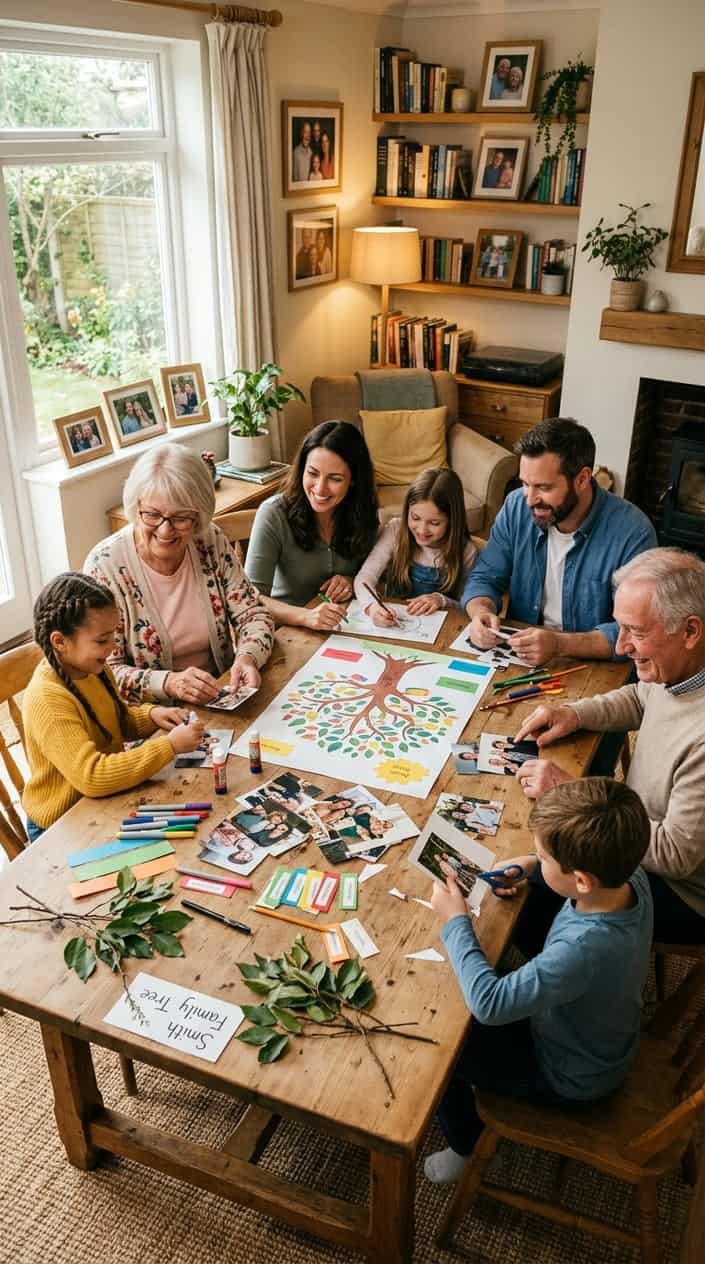
Family Sunday suppers were my favorite part of church every week. I loved when my whole family was back together at the table while my dad said our prayer. From experiences like these, I learned our value as a family and the importance of family traditions. You do not owe us anything extravagant or out of your way. All we ask is for you to do just the bare minimum, so it is something we look forward to.
Gathering Everyone in Real Life, Not Just Online
Kids learn much more from people rather than screens. They learn from people, hugs, and stories. Keep it simple and predictable. Sundays, monthly picnics, Saturday afternoons at Grandma’s. Have each child bring a memory to share, a photo, or a question about a relative. This gives kids practice in listening and asking, which are the skills that keep family history alive.
You will want to get a calendar system, a shared notebook, and some photos or scrapbooking supplies. When the time comes, call them (don’t group text), and schedule one concise activity like reading a family letter or looking at a baby book. Through repetition, children will internalize names, relationships, and the sense of family.
Weaving Generational Blessings Into Daily Life
My boys have even started saying my simple bedtime blessing back to me unprompted. An example is one my grandma said. At mealtimes, before school, or at bedtime, pick a blessing, prayer, or saying that is important to you and do it repeatedly. It should be concise enough to remember and broad enough to express an idea.
Speak the words aloud and allow them to articulate their meaning. Let the students know that they may write a line for the poster whenever they are ready, and invite them to do so. Children will feel a sense of ownership of the words and of their learning. That is, of course, the whole point: to give your students something that they will take with them long after they have sat at your table.
The brooch question from my youngest that Sunday afternoon sparked six months of questions, four recorded conversations, a memory jar that was very full, and a map with more pins than expected. Not because we intended to do anything big, but because one simple question drew an authentic answer and encouraged more investigation.