

You know that moment when the kids burst out the door, and you pray they don’t come back wearing mud pies and a mysterious sticky substance? I do that daily, and I also know you need more than “play in the backyard again” to keep them curious. If your go-to is the same four corners of grass, this list gives 28 fresh ways to get outside — stuff like a neighborhood scavenger hunt or a backyard bug hotel that actually holds their attention.I’ll tell you what to grab, how to start fast, and one real tip that makes each idea less chaotic and more fun. You’ll get simple, doable outdoor plans that push past the usual backyard loop and actually let you enjoy being outside with the kids.
Don't lose this article. Enter your email below, and I'll send it to you right now. Plus a little encouragement and inspiration from me, straight to your inbox.
1) Neighborhood scavenger hunt with printable checklist
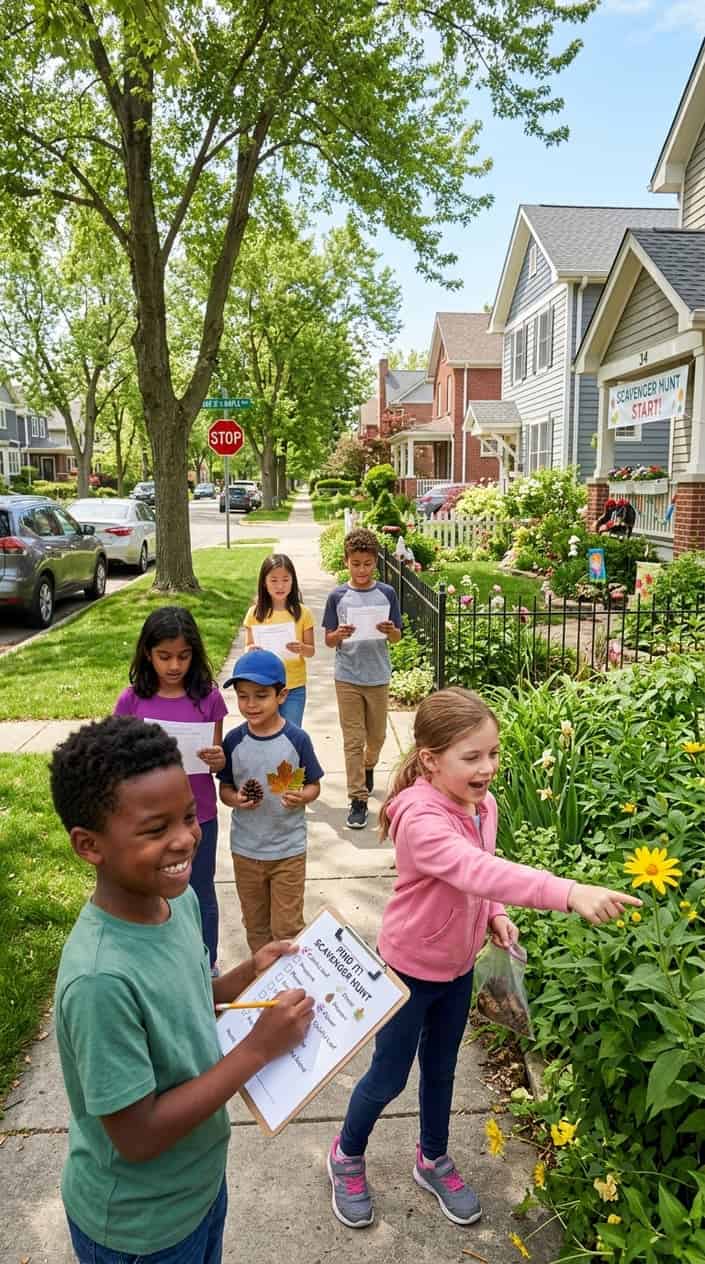
I love this because it gets everyone moving and stops the “I’m bored” chorus for a solid half hour — though expect someone to try to bargain for more snacks. Keep an eye on street crossings and remind kids to stay together.
Grab a simple printable checklist, clipboards, pencils, and a small bag for found treasures. Walk a safe loop around the block and mark things off: red mailbox, dandelion, tire swing, bird feather. I tape the checklist to a clipboard so my hands aren’t full and hide a tiny prize for the first to finish. Change items each week to keep it fresh.
2) Backyard bug hotel building and observation station
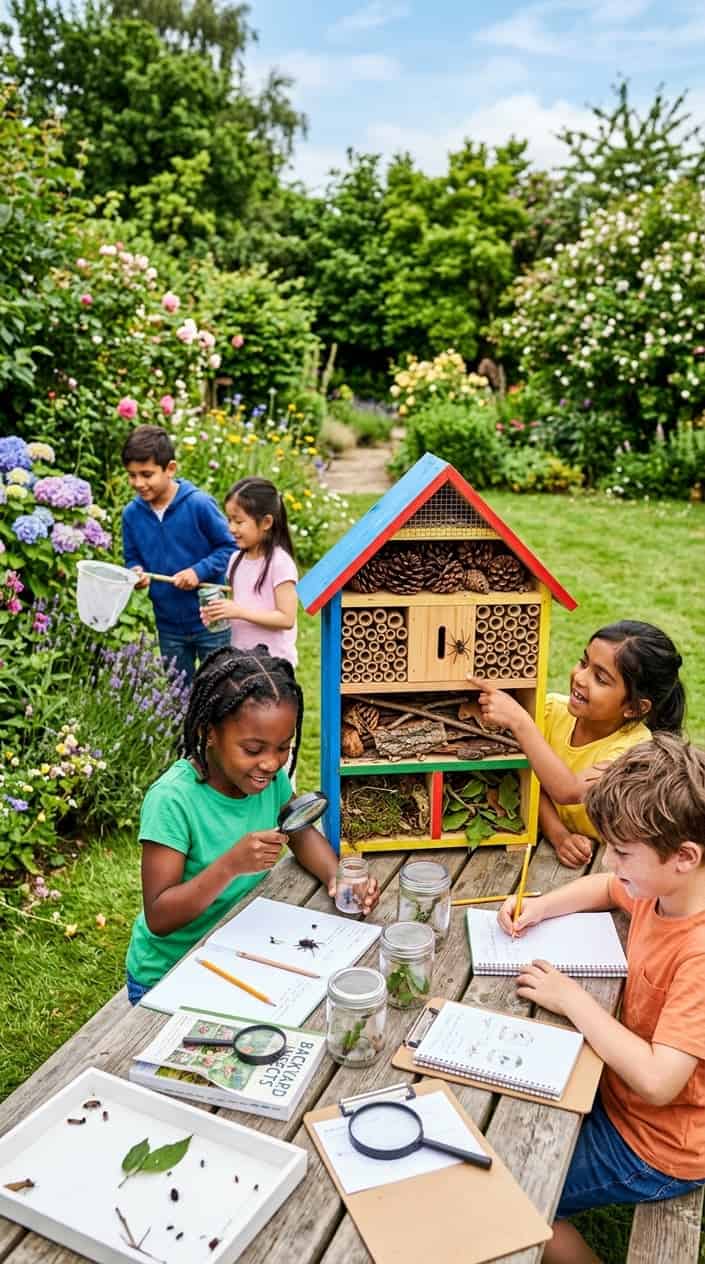
I get oddly proud when the kids and I stuff a jar full of beetles and then quietly put it back outside. It’s messy, a tiny gamble — you might pull a spider you didn’t want — but watching them poke and note patterns is worth the short freak-out.
Grab an old wooden crate or deep flower pot, straw, pine cones, bark, hollow stems, and a glass jar for close views. Stack materials with gaps so critters can crawl in, label sections with a marker, and set the jar on a tray to watch short-term visitors up close. My tip: place the hotel near plants and a water spot; insects will show up faster if they have food and shelter nearby.
3) Nature journaling with watercolor set and tiny sketchbook
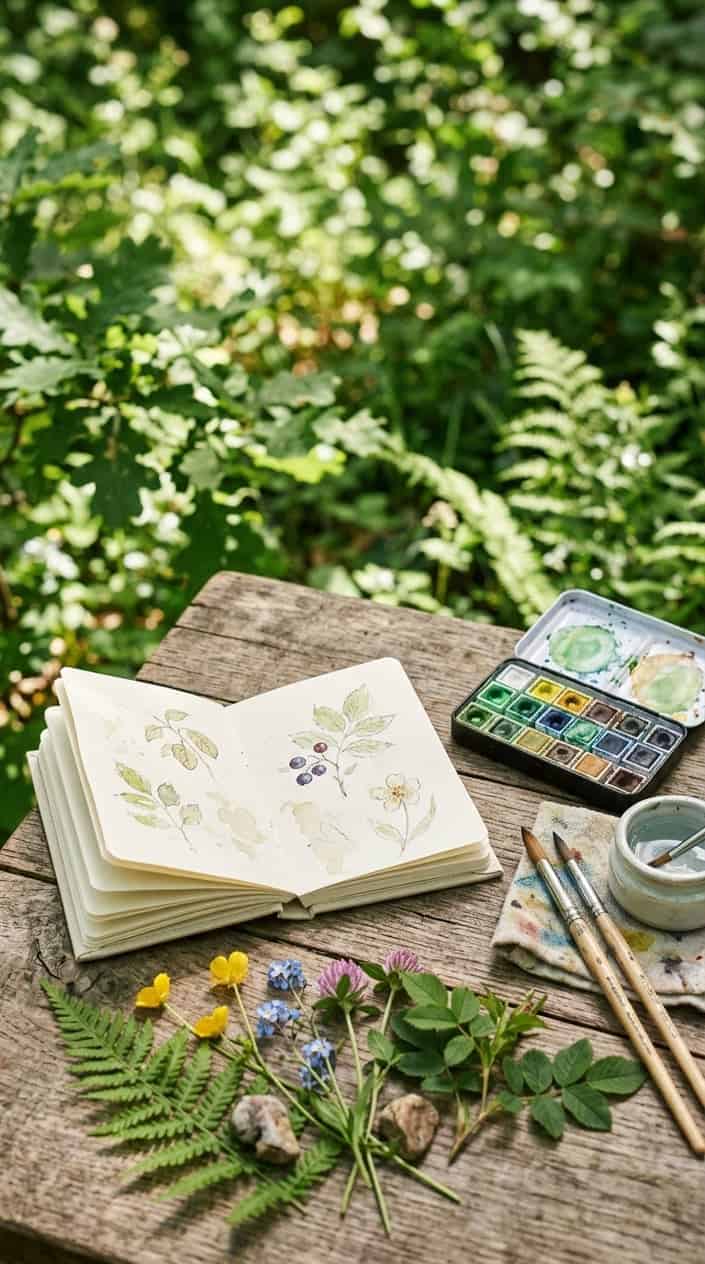
I love this because it gets kids quiet enough to notice stuff, and yes, they’ll still squabble over who gets the blue. Expect some spilled water and a few smudged pages; that’s part of the fun.
Bring a small sketchbook, a travel watercolor set, a tiny brush, and a pencil. Find a shady spot, sit with the kids, and ask them to pick one plant or bug to draw. Start with a quick pencil outline, then add a wash of color; small sets dry fast and kids feel proud when a page looks finished.
Tip: tape the page down so it doesn’t warp, and stash baby wipes nearby for muddy hands. If patience runs out, have a five-minute timed sketch race to keep it lively.
4) DIY obstacle course using pool noodles and crates
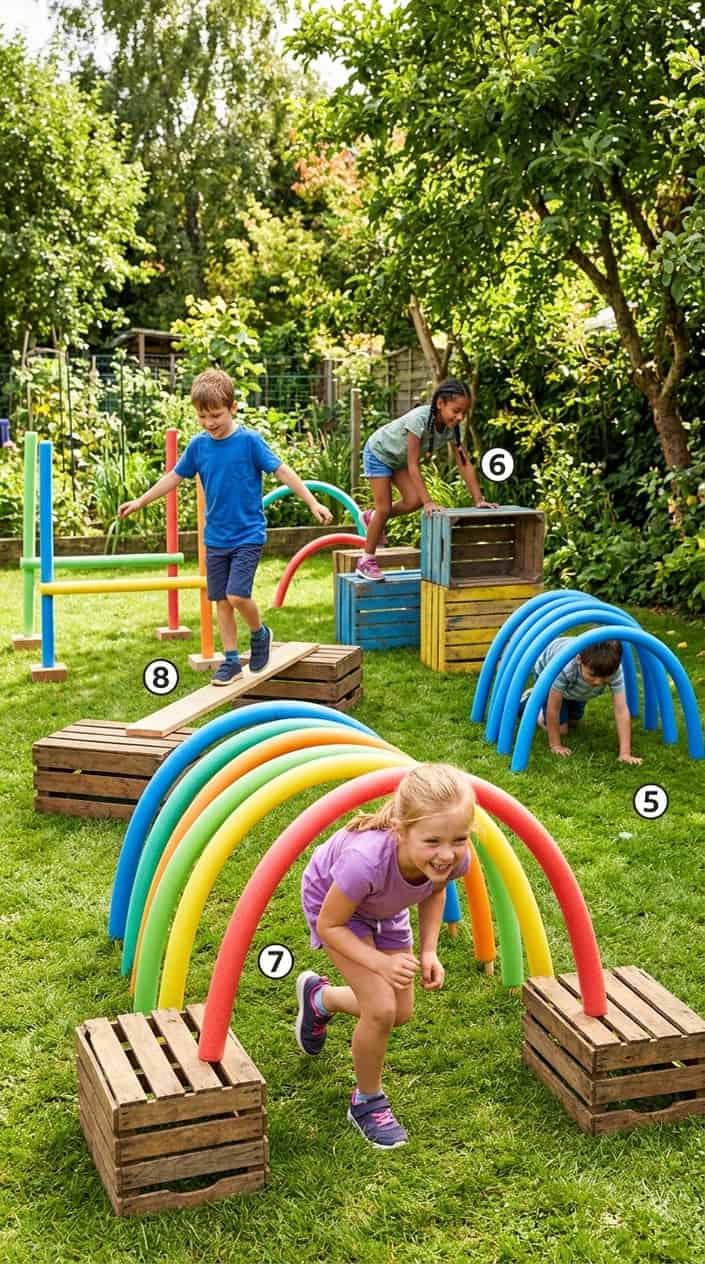
Warning: kids will take this way more seriously than you expect, and things will get loud. I promise it’s worth the chaos — and the clean-up is mostly just hauling plastic.
Grab pool noodles, plastic milk crates, tape, and a few cones or chalk marks. I set up a crawl-under noodle, a crate-stepping path, and a balance line with rope on the grass. Start simple and let them rearrange it; they’ll invent rules faster than you can say “timer.” A small tip: tape noodle ends to stakes so they don’t fly when someone dives through.
I time runs with my phone and make silly penalties like “sing the ABCs” to keep kids laughing. Swap in chairs or cushions if crates feel unstable. You’ll get energy out, and you’ll get a good excuse to sit with coffee while they play.
5) Local creek pebble-painting and skip contest
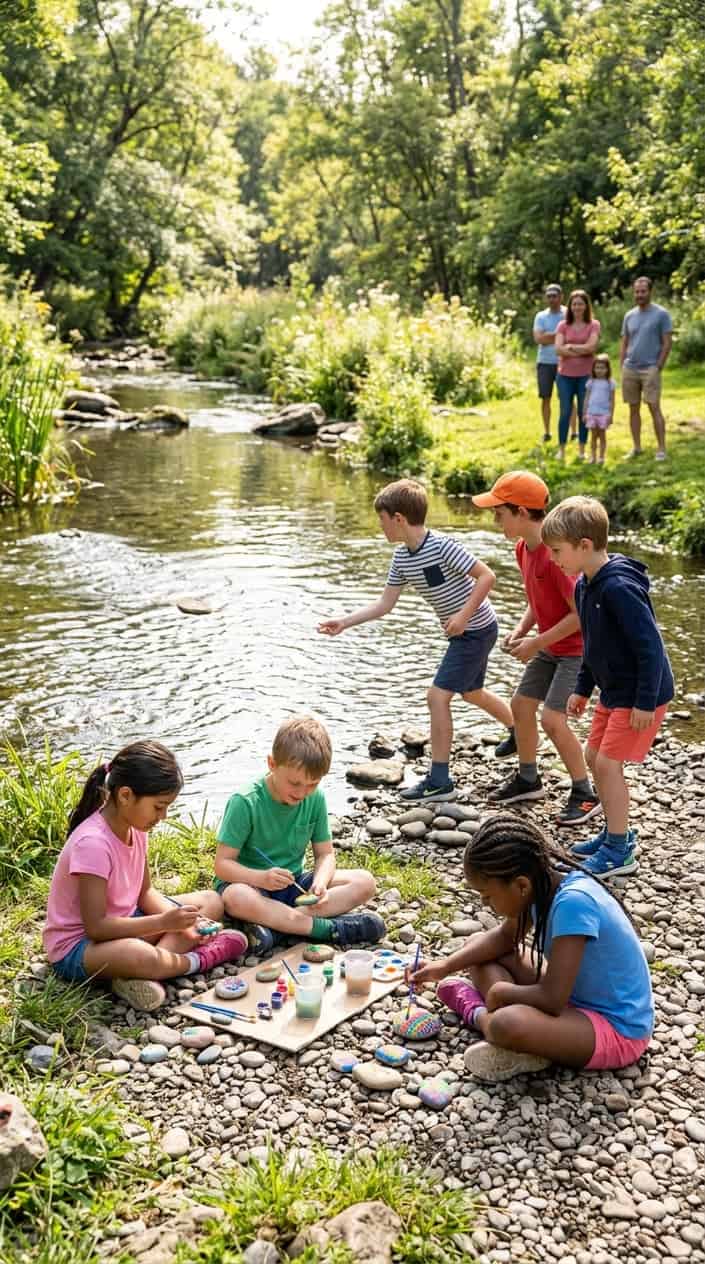
I love this because it gets kids grubby and quiet at the same time, which feels like a win. Bring shoes that can get wet — rocks are slippery and creek bottoms hide surprises.
You only need washable paint, a small jar of water, a rag, and a mesh bag for collecting pebbles. Pick smooth, flat stones for painting and skimming; I let my girls choose one painted pebble as a keepsake and the rest go back to the creek.
Show them how to hold a pebble between thumb and forefinger for a good skip and demo a gentle wrist flick. Time a short contest for most skips or best painted pebble, and the winner gets bragging rights or a silly prize like choosing dinner.
6) Tree identification walk with an app like Seek
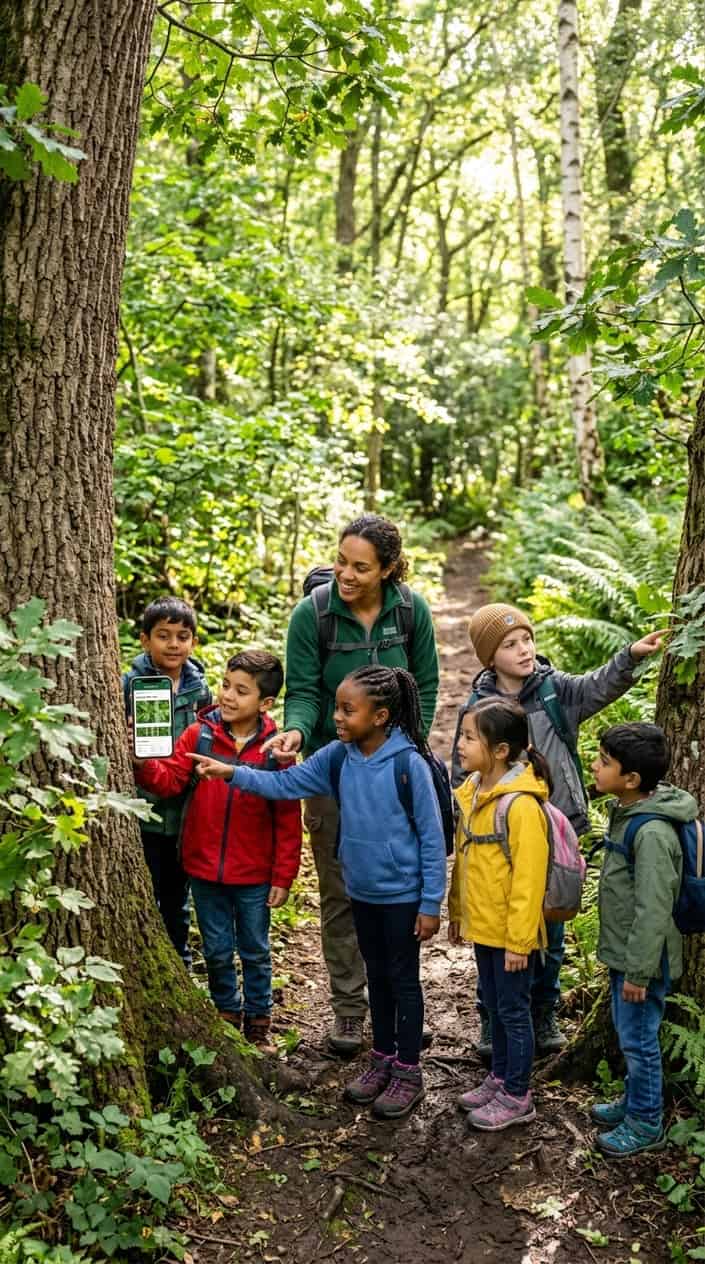
I get oddly excited when my girls point at a leaf and ask what tree it came from. Bring patience — phones might lag, and a stubborn oak will refuse to cooperate — but kids love the guessing game.
Grab a phone with the Seek app, a simple field guide, and a small notebook. Walk slowly, let kids snap photos of leaves or bark, and read the quick ID together. I tell them to take two photos: one close-up and one that shows the whole tree; it cuts down on wrong matches. For extra fun, make a tally of how many species you find and crown a “nature detective” at the end.
7) Rock balancing and temporary sculpture garden
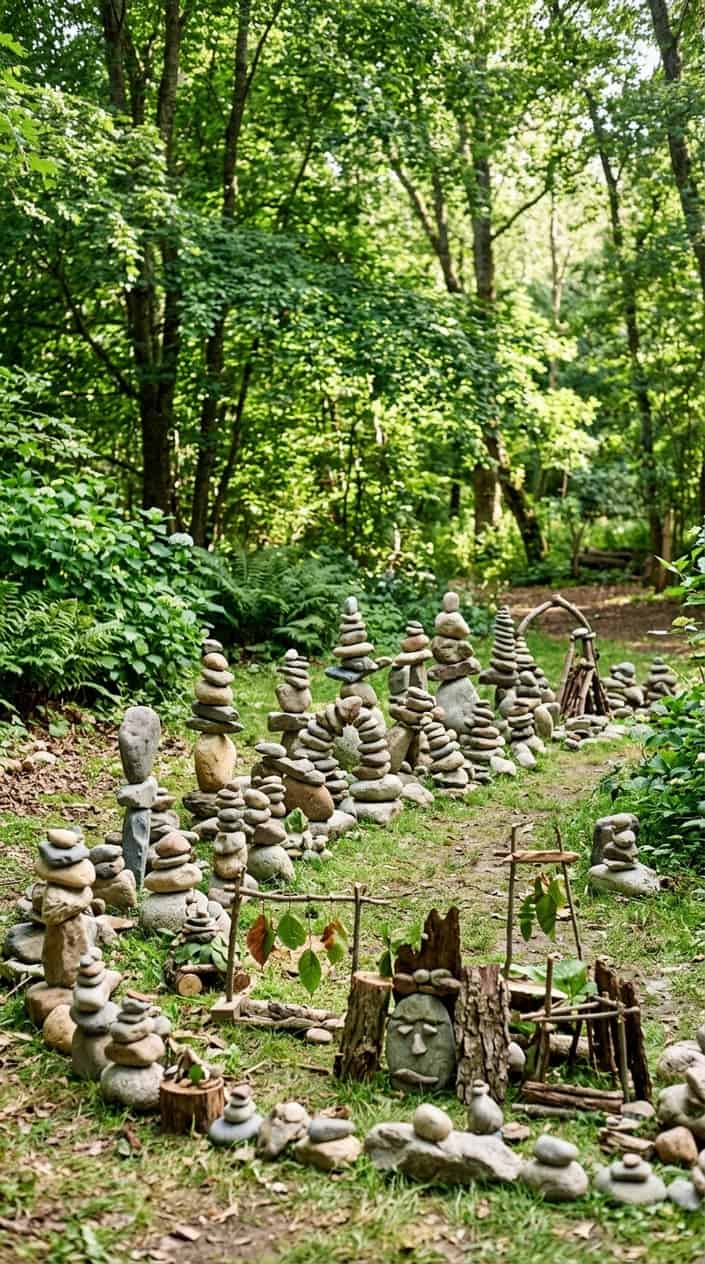
I love how this can eat an hour and leave the kids tired but quiet — and also how a gust of wind can ruin our masterpiece in two seconds. Expect some frustration and lots of laughter when things tumble.
Grab smooth stones from a creek or the driveway and a picnic blanket for a base. Show the kids how to find flat contact points and hold each rock steady for a few breaths before stacking the next one. I bring a small spray bottle to rinse grit off stones; cleaner surfaces stick better.
Make a “sculpture garden” path with chalk or sticks so each child has a spot. Take photos of finished stacks, because the whole garden might disappear overnight, and that way we still have bragging rights.
8) Portable stargazing with a Redfield kiddie telescope

I love pulling this little scope out after bedtime chaos because it feels fancy without needing a PhD. Expect a few fumbled parts and a lot of “ooh” when the moon shows a crater.
You need the Redfield kiddie telescope, a star chart app, and a blanket to sit on. Set it up on level ground, point at the moon or Jupiter first, and tighten the eyepiece gently so the image stays steady.
Tip: Pick a night with low wind and let kids rest their elbows on the blanket for steadier viewing. I bring snacks and a flashlight with red cellophane taped over it so we don’t mess up night vision.
9) Community garden plot planting and maintenance
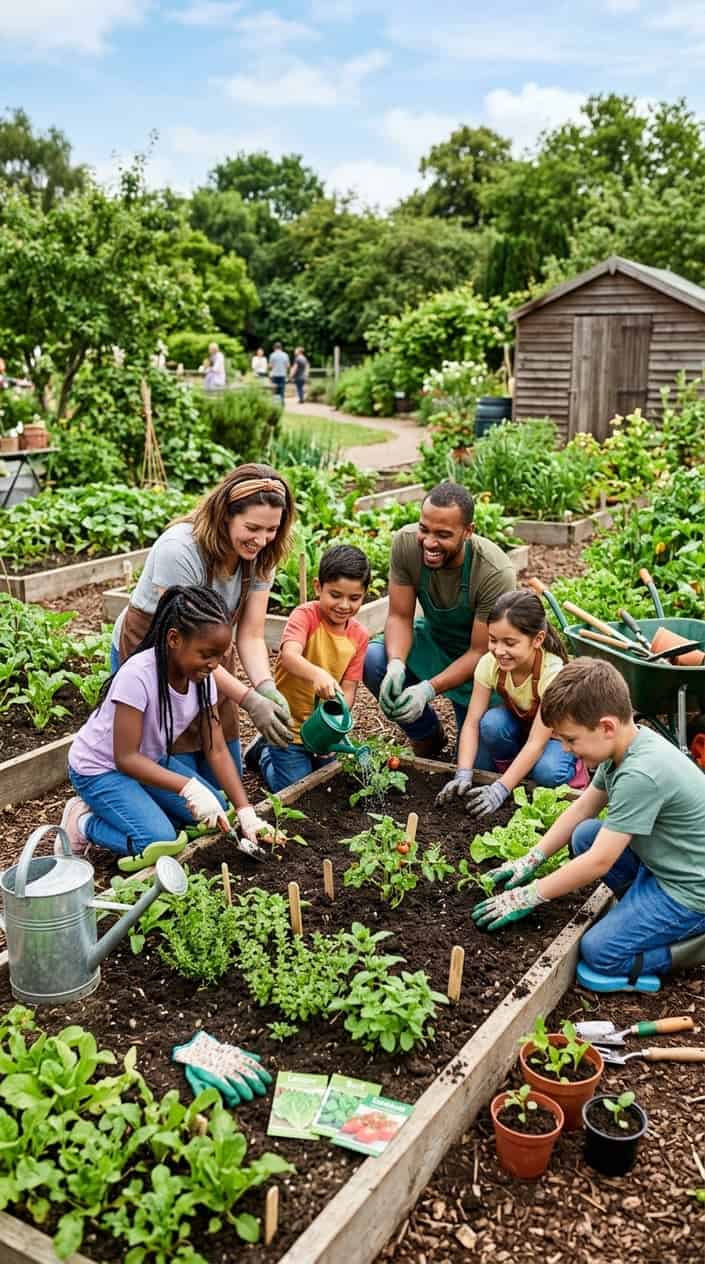
I love the slow reward of a garden plot, but be warned: plants will flop if you forget them for a week. Expect some digging, sun, and the occasional neighbor who gives you tomato tips.
Bring gloves, a trowel, seeds or seedlings, and a watering can. Sign up at your local garden and pick a sunny spot. Start with easy plants like cherry tomatoes, lettuce, or nasturtiums that actually show results fast.
Set a simple schedule: water in the morning, pull weeds twice a week, and mark what you planted. Trade extra seedlings with a neighbor; sharing saves money and makes the plot feel like ours.
10) Mini orienteering with a compass and map
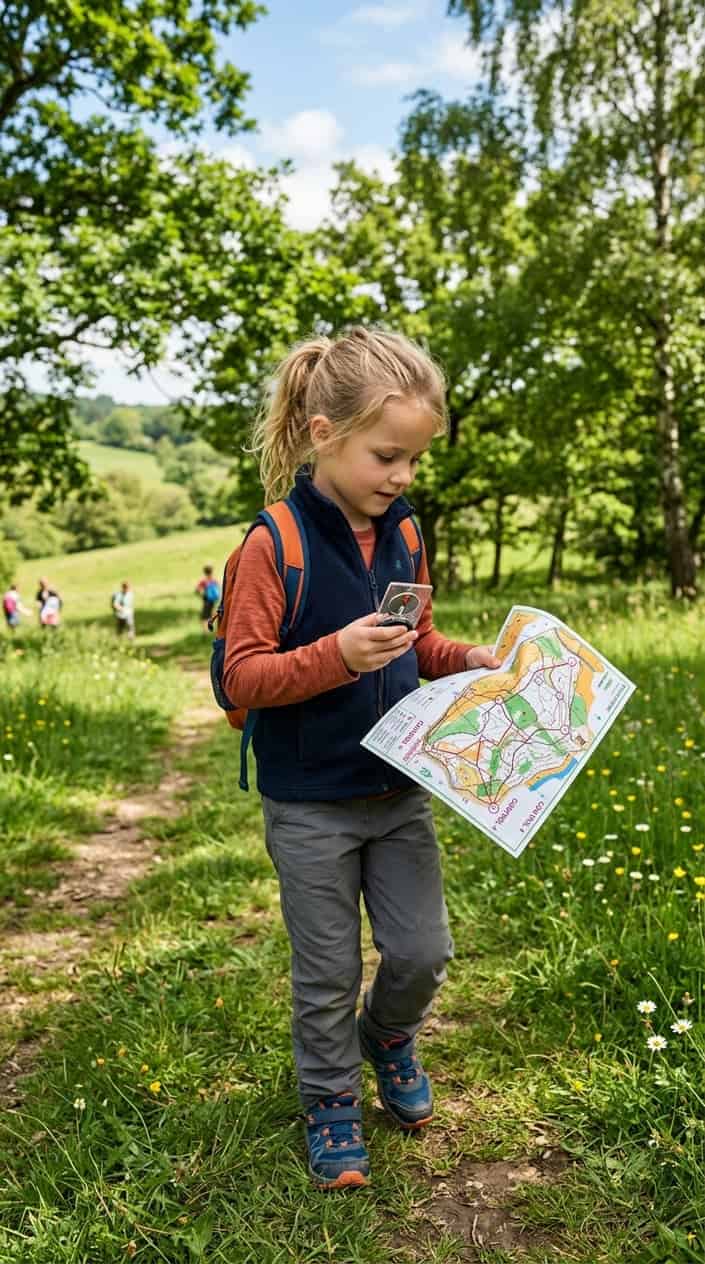
I get nervous when our walks turn into “where did we park the stroller” hunts, so I made a tiny orienteering course that actually works. It’s a little competitive and only slightly chaotic — perfect for the kids and my patience.
Bring a simple compass, a rough map on paper, and a few clothespins or stickers for checkpoints. Show the kids how to hold the compass flat and find north, then give them a short route of 3–5 points to find. I start with landmarks they know, like “big oak” and “red bench,” and I stand nearby so they don’t wander off.
A cheap wrist compass and a crayon map keep this low-stress. Offer small rewards for finishing, and mix in a reverse route so they use the map, not just memory.
11) Backyard theater night with homemade shadow puppets
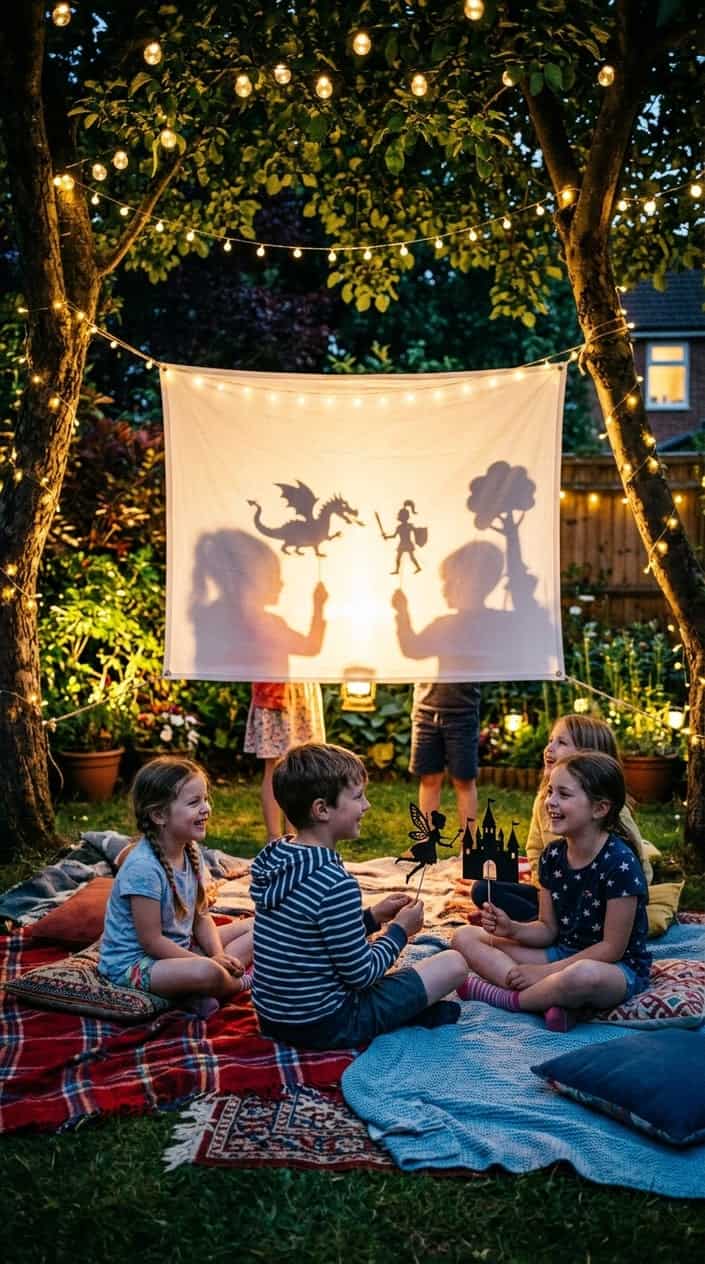
I love night shows in the yard, though setting up lights and cords can get messy fast. Expect a bit of fumbling the first time, but kids laugh through it and so do I.
Grab a white sheet, a bright lamp or flashlight, and some stiff cardboard for puppets. Cut simple shapes—people, animals, trees—and tape them to skewers or sticks. Hold the light low behind the sheet so shadows are big and clear.
Start with a short, silly story and let each child control a puppet for one scene. My tip: mark where the light and performers should stand with chalk so the shadows don’t wander off the stage.
12) Bike-powered neighborhood delivery for neighbors’ mail

I love how this gets the kids moving and makes them feel useful, though expect one or two crushed envelopes and a dramatic “mail drop” when a gust hits. Pick a quiet block and stick to short routes so everyone stays safe and happy.
You need bikes, a basket or crate, helmets, and a grown-up on standby. Practice with empty envelopes first, map a simple loop, and mark houses with tape on the crate so kids know who gets what.
Set a rule for stopping at driveways and checking traffic. Offer a small treat at the end — stickers, hot chocolate, or a tiny allowance — and suddenly chores feel like a mission.
13) Citizen science bird count using Merlin Bird ID
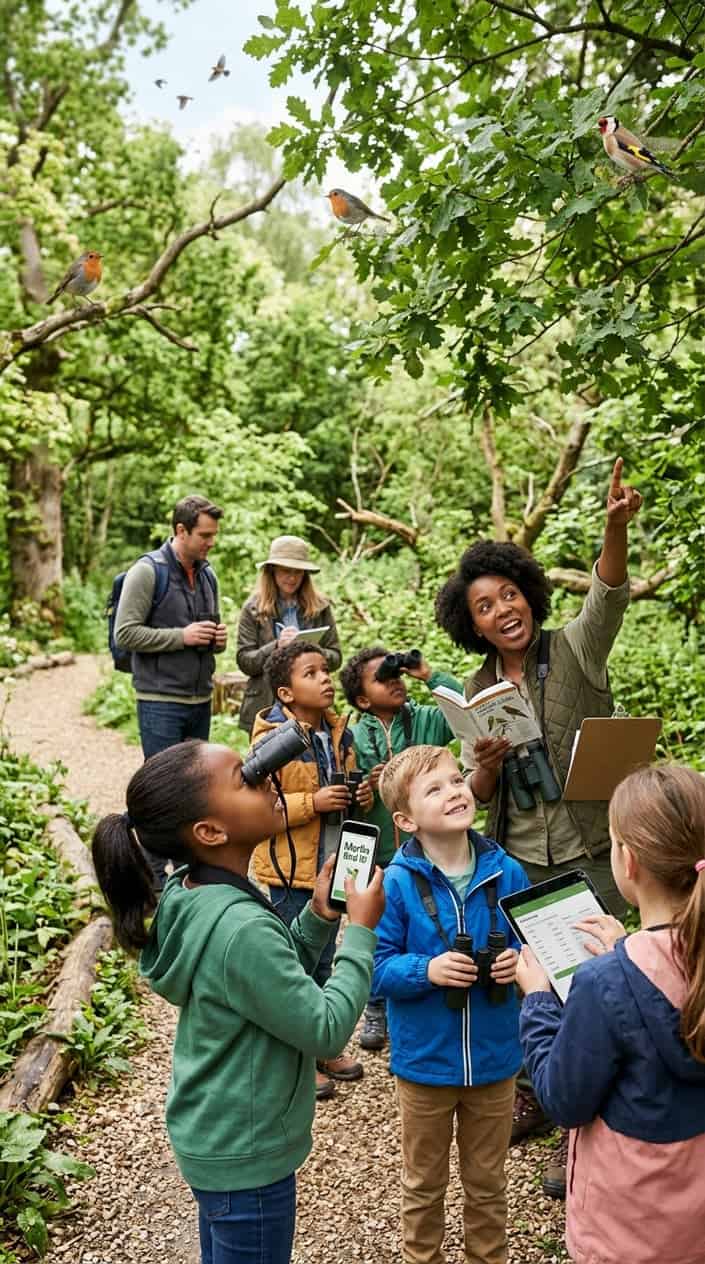
I get oddly proud when my kids and I can name a bird without guessing. It’s fun and a little nerdy, and you might freeze for a second when a hawk shows up.
You need a phone with the Merlin Bird ID app and a notebook or voice memo. Pick a park or your yard, open Merlin, tap sound or photo ID, and record what you see for 15–30 minutes.
Give each kid a simple task: listen for calls, watch the canopy, or tick off colors. Submit your observations to eBird if you want; it’s quick and makes your count useful to scientists.
14) Outdoor storytelling circle with a blanket and lanterns
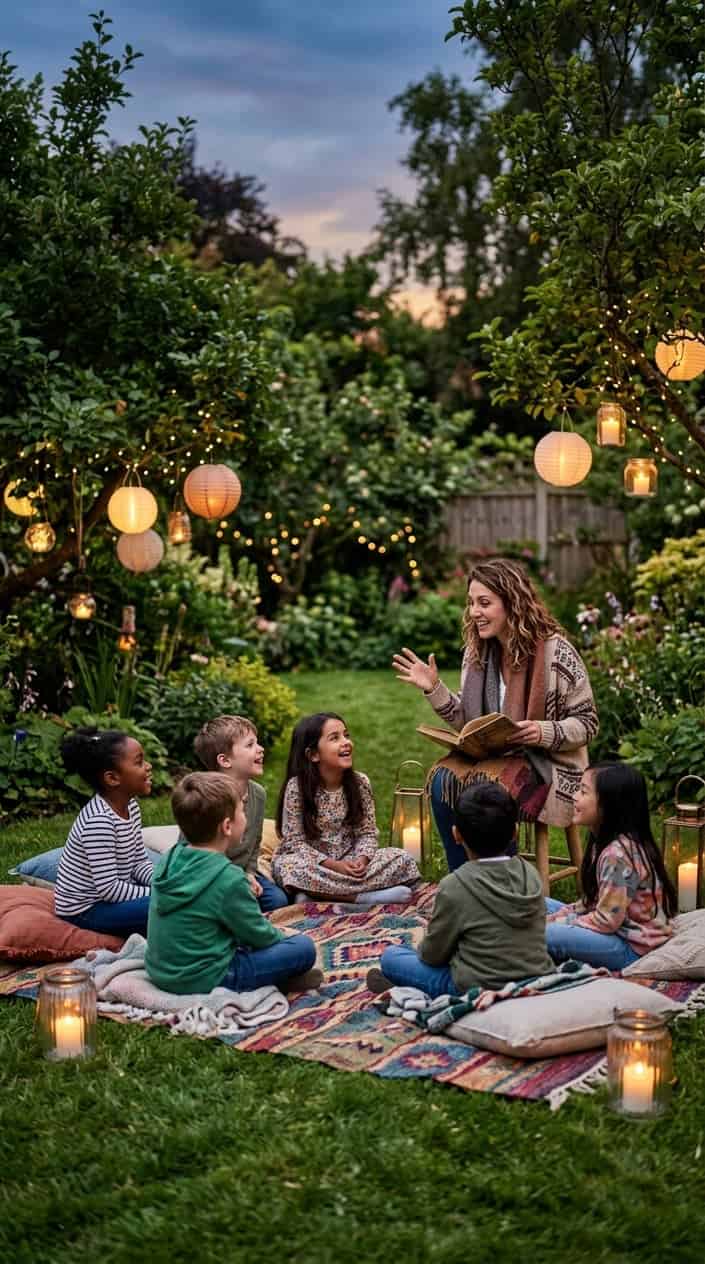
I love this because kids suddenly sit still when you add a blanket and a lantern — and yes, it feels delightfully old-fashioned. Expect a few fidgety minutes while they test the blankets for optimal fort-building potential.
Bring a cozy blanket, a couple of battery lanterns, and a small stash of snacks. Gather in a circle, dim the lights, and start with a short personal story or a silly prompt to get them talking. Let each kid add a line or page; the best stories get weird fast, which is half the fun.
Tip: keep a playlist of soft songs on your phone for background noise and use lanterns with adjustable brightness so you can pause without losing the mood. If bugs are out, spray the blanket edges or move to a breezy spot.
15) Seasonal fruit-foraging walk with ID guide
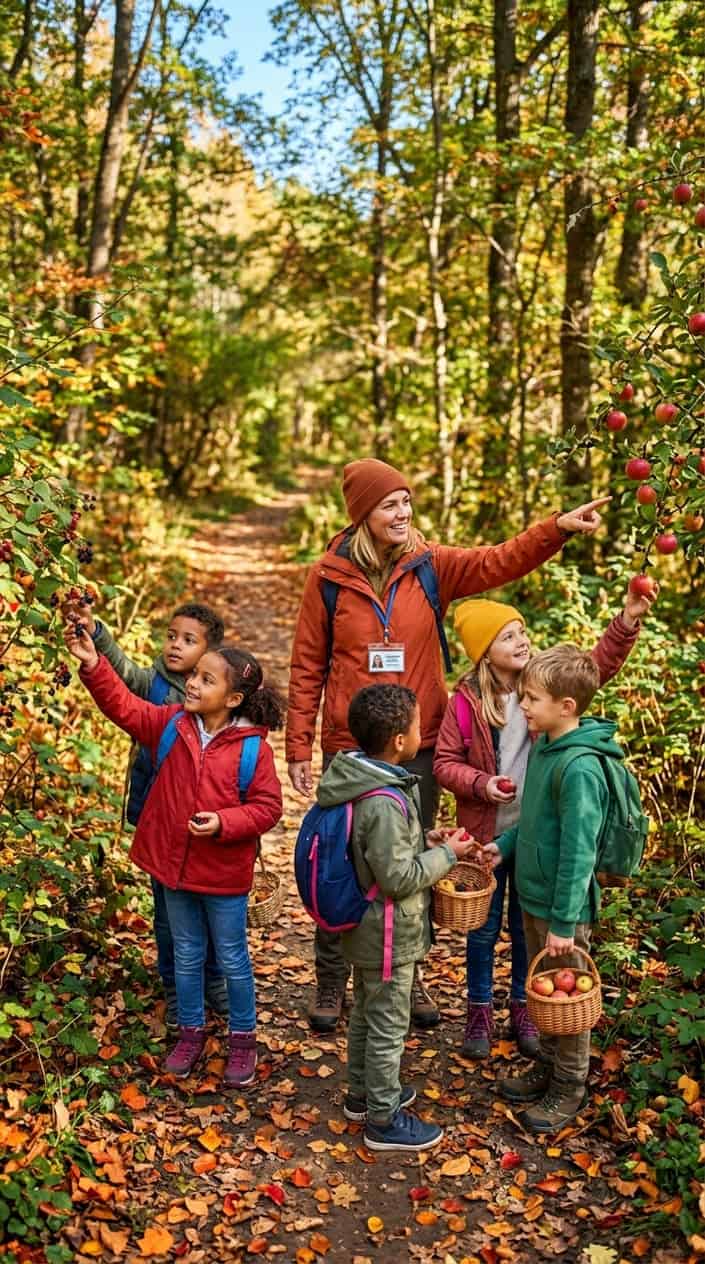
I love this because kids get to eat something they find, and yes, I worry about poison berries every time. Bring a simple ID guide and phone photos—better safe than sorry.
Pack small baskets, water, and paper bags for samples. Start in a safe, familiar spot like a community orchard or park edge where fruit-bearing plants are common. I show my girls one plant at a time, point out leaves and seed shape, then let them gently pick a few.
One tip that helps: make a rule—only eat fruit after I check it. Take photos and use an app or book to confirm ID later. This keeps things slow, curious, and actually learning instead of chaotic grabbing.
16) Urban parklet picnic and people-watching bingo
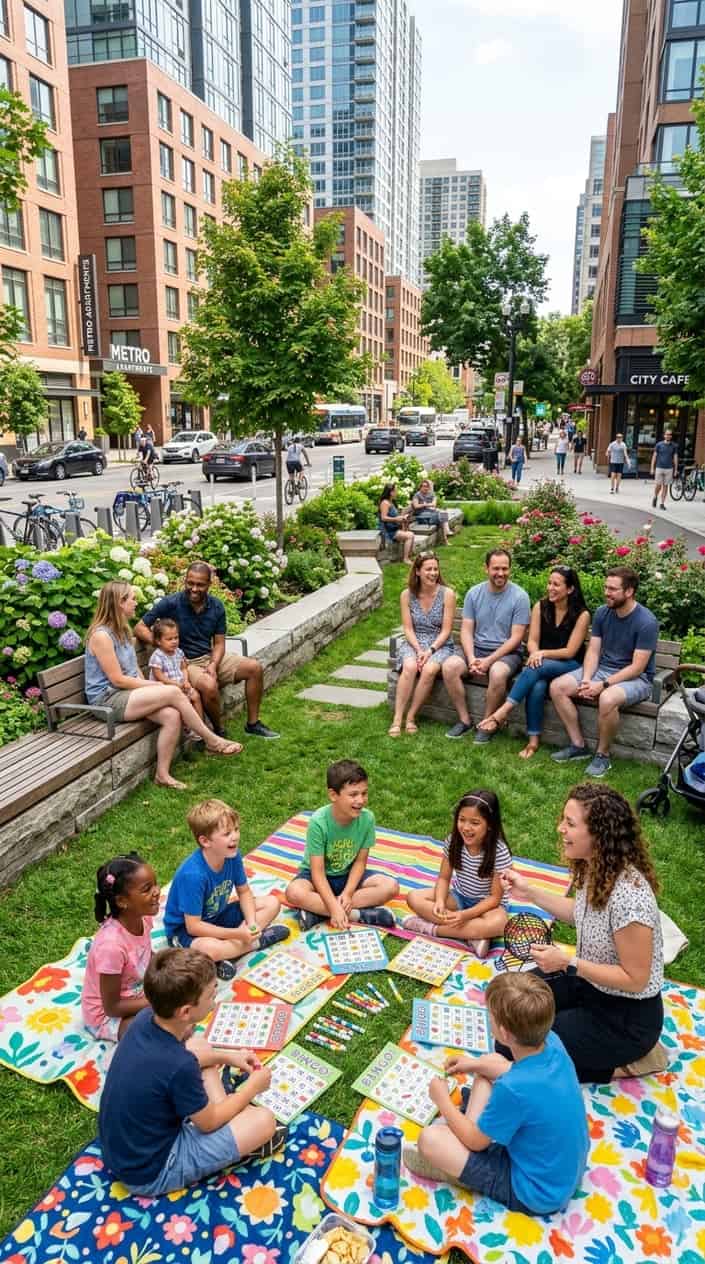
I love taking the kids to tiny parklets because you get fresh air without hauling a picnic cooler like you’re moving. Expect benches, planters, and curious neighbors — and maybe a rogue scooter.
Bring a blanket, easy snacks, paper bingo cards, and washable markers. I print simple bingo sheets with things to spot: a dog in a costume, a delivery bike, someone reading, or a weird hat. Sit, snack, and call out squares; kids stay engaged watching the street instead of digging in the mulch.
Don't lose this article. Enter your email below, and I'll send it to you right now. Plus a little encouragement and inspiration from me, straight to your inbox.
One tip: tuck a small prize in your bag for the winner — stickers work great. If it’s busy, pick a bench with a good view so you can see crosswalks and storefronts.
17) Stream eco-safety lesson with nets and specimen trays
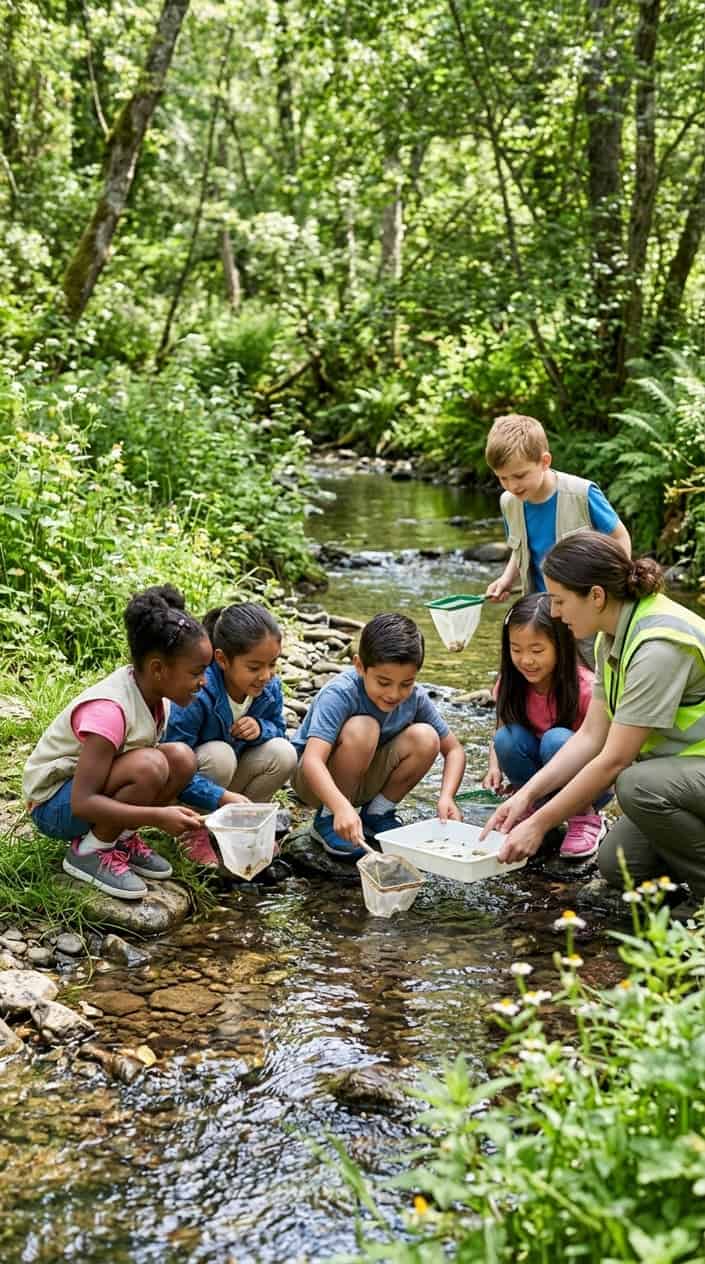
I love that kids get filthy and fascinated by streams, but watch for slippery rocks and cold water — boots and short time limits save us from crying. Bring simple tools: a fine net, clear specimen trays, a clipboard, and a phone for quick ID photos.
Start at the shallow edge and let each child scoop slowly, then lay the finds in trays for a closer look. Ask questions: does it crawl, swim, or cling? Point out things like gills, legs, and trash that shouldn’t be there.
Teach gentle handling — one hand in the water, one on the critter — then put everything back where you found it. My trick: set a five-minute “mini-lab” timer so the kids stay focused and we all leave before snacks melt.
18) DIY kite-making and hilltop flying session
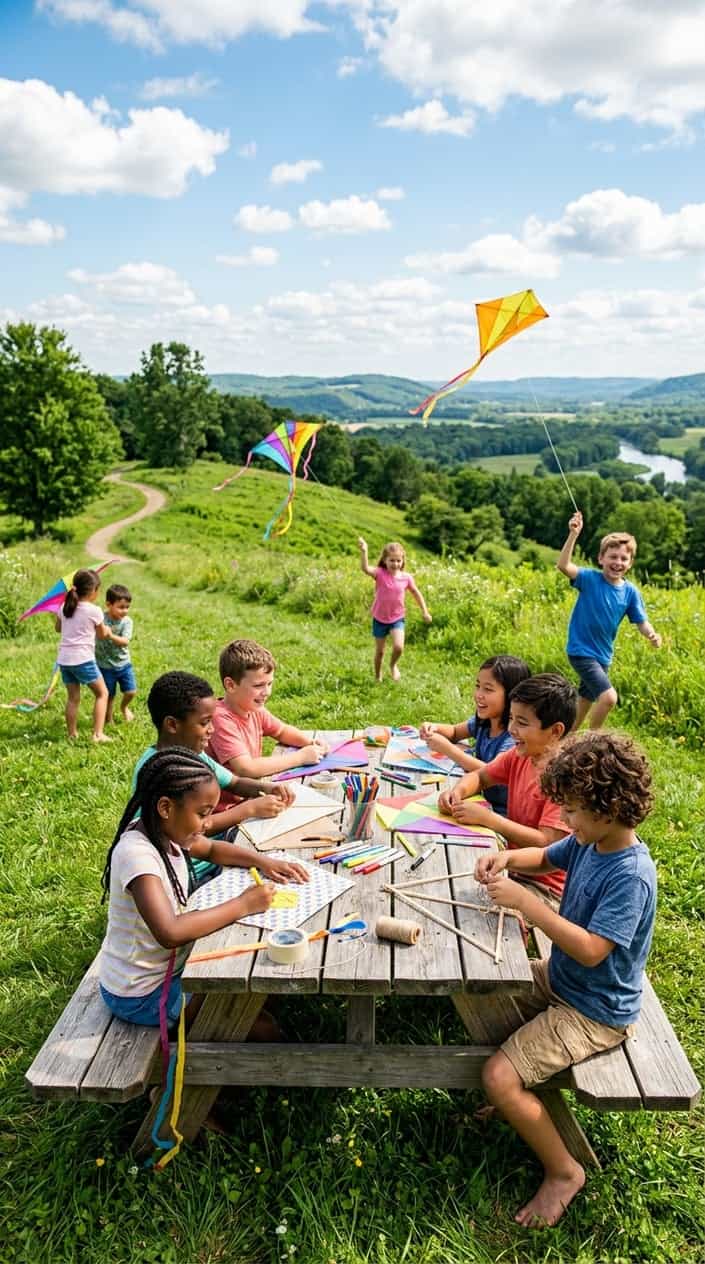
I love when a messy craft actually leads to outside play, but be ready: kites can nose-dive the first few tries. Bring patience and snack breaks; the kids will lose focus if you don’t.
You need a few sticks, tape, lightweight paper or a plastic bag, string, and scissors. I sketch a simple diamond shape, lash the sticks with tape, and attach a tail made from ribbon or scraps for stability. Test on a small grassy slope first; a gentle run and steady wind usually do the trick.
Pick a safe, open hill away from trees and power lines. If the wind is too strong, wait or move to a lower slope — kites fare better with a steady breeze than gusts. Kids love decorating kites, so let them pick colors and stickers; it makes them cheer louder when it finally lifts.
19) Outdoor yoga for kids with animal-pose game
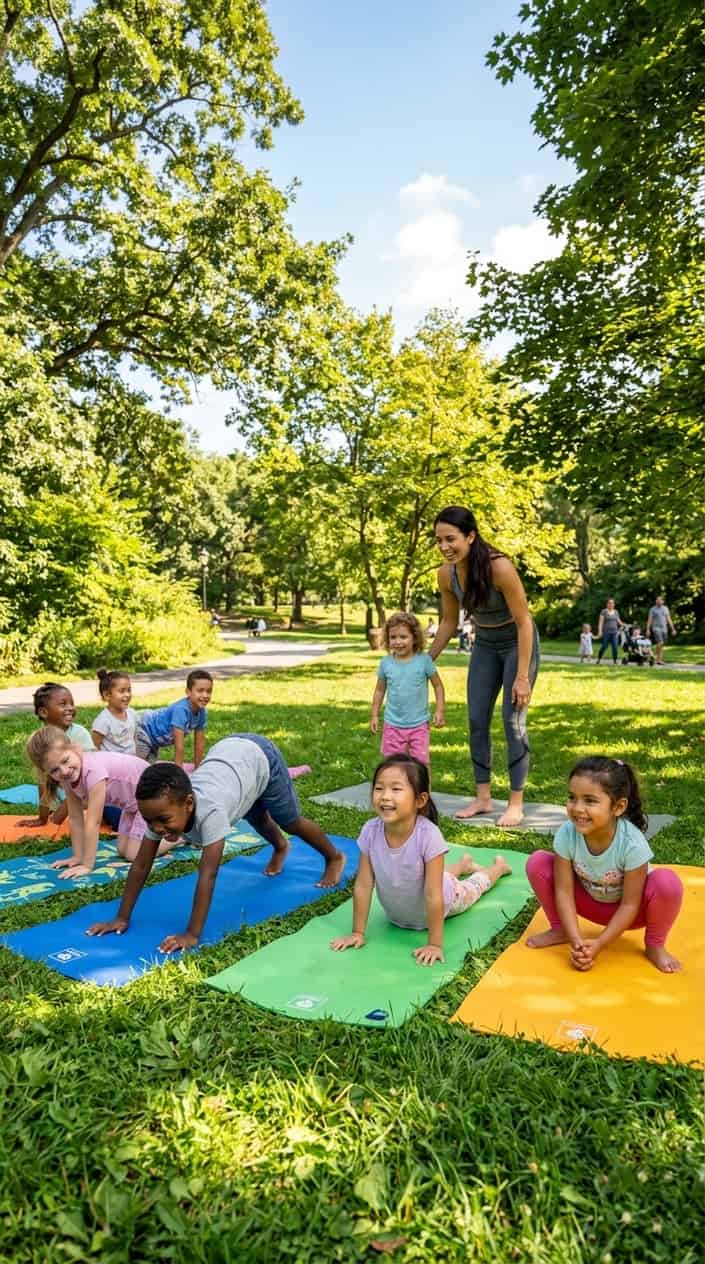
I like this because it gets us outside, and it’s silly enough to keep my kids’ attention for more than two minutes. Expect noise, giggles, and a few collapsed attempts at downward dog.
Bring a mat or towel and a small stack of picture cards or notes with animal poses: cat, cow, frog, cobra, butterfly. Start with a quick breathing game, then call an animal and show the pose; everyone imitates and makes the animal sound. I let my kids pick the next card so they stay in charge.
A tip that helps: add a short nature challenge after each pose, like “find one yellow flower” or “hop to that tree,” to add movement and reset focus. Keep sessions under 15 minutes so no one gets bored.
20) Neighborhood chalk mural swap day
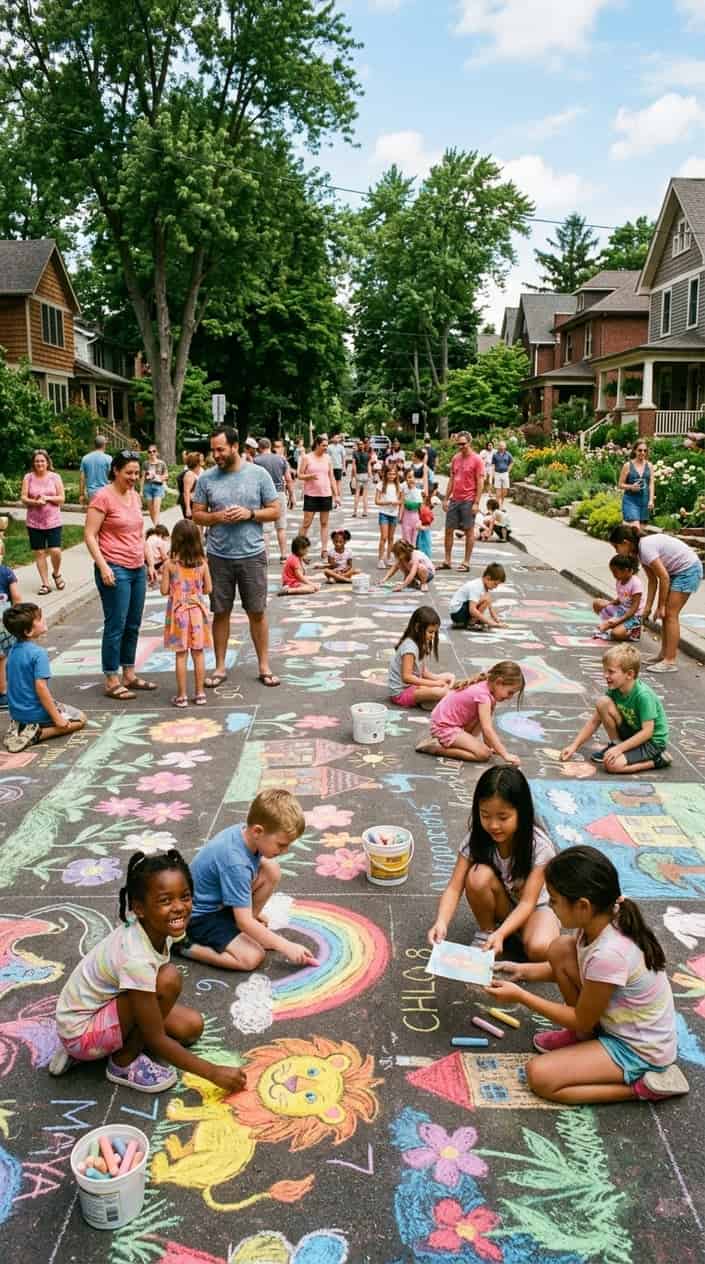
I love when the street turns into a block-party art show, though expect a few smudges if someone rides a scooter through your masterpiece. This works best on a slow weekend morning when neighbors can set up, and kids are buzzing with ideas.
Bring sidewalk chalk, water for blending, a few small brushes, and a camera to document each mural. Assign squares or sidewalks, set a time limit, and let everyone trade spots after 30–45 minutes so each artist tries a new canvas. A little wet sponge makes colors pop and cleans any accidental mess on driveways.
21) Sunprint art session with botanical materials
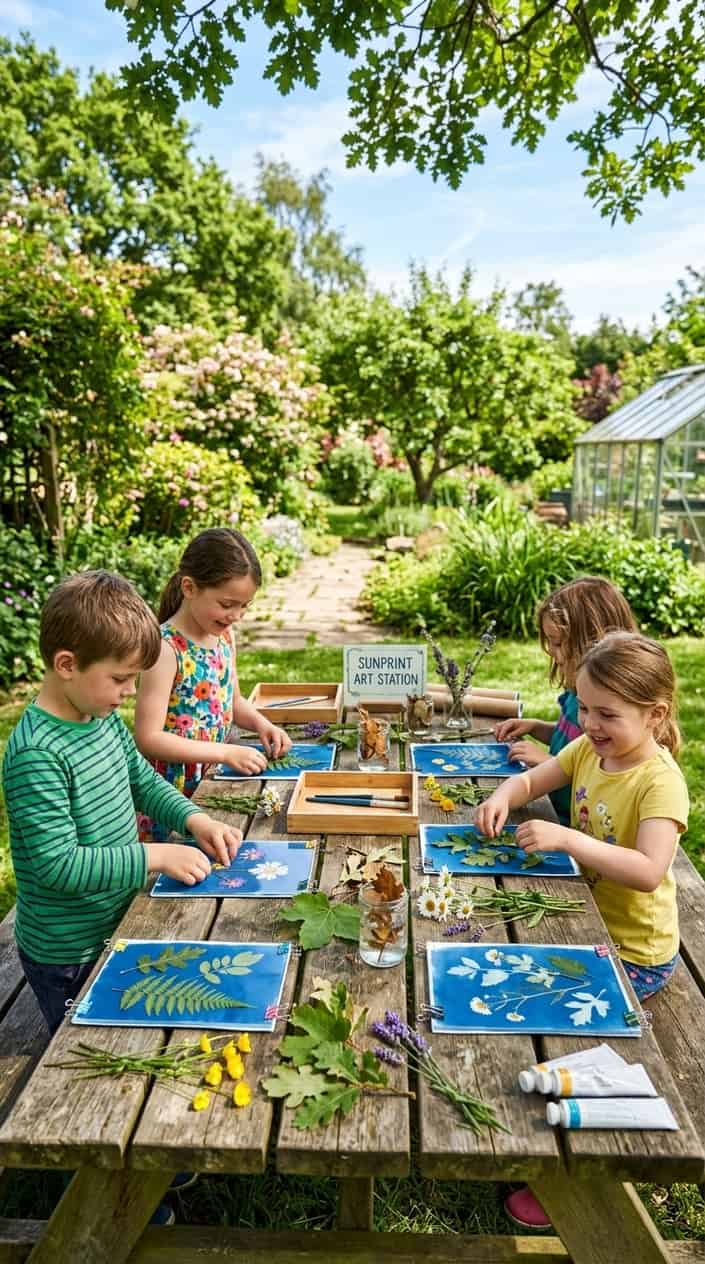
I love how sunprints look like tiny miracles, though they can be fussy if the sun hides. Expect about 10–20 minutes outside plus drying time, and plan for impatient kids.
Grab sunprint paper (or cyanotype kits), some flat leaves, flowers, clear plastic, and a sunny spot. Lay the plants on the paper, cover with plastic to press them flat, and set a timer for the exposure—longer makes lighter prints. I let the kids hunt for unusual leaves first; it keeps them busy while I set up.
Rinse or soak the exposed sheets per the kit directions, then lay flat to dry. A tip: press heavier leaves so you get crisp shapes, and use small flowers for delicate whites.
22) Leaf-rubbings collage and plant press project
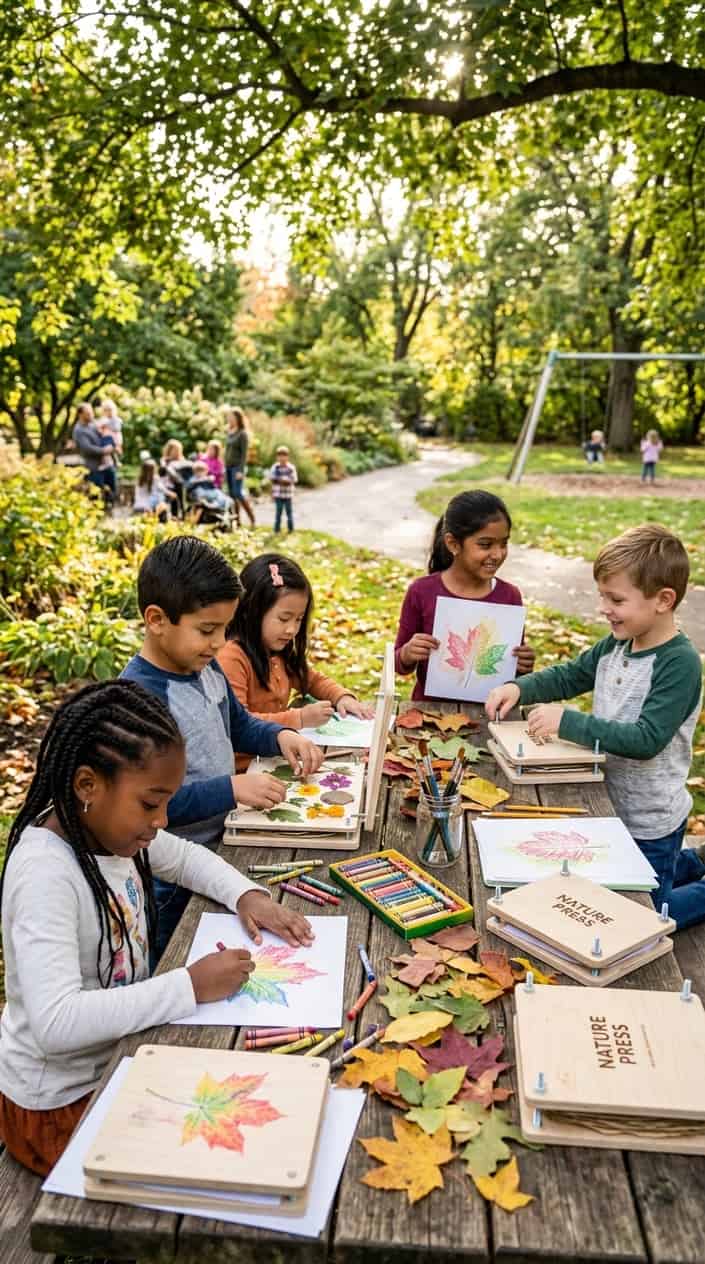
I get excited when the yard finally looks like a plant shop and the kids want to collect everything — this is perfect, but expect squabbles over the “best” leaf. Gather plain paper, crayons, a clipboard or hard surface, heavy books, and some cardboard or blotting paper for pressing.
Show them how to place a leaf under paper and rub with the crayon on its side until the veins appear. For the press, stack leaves between cardboard and heavy books and leave for a week; label each with date and where you found it.
Tip: pick different shapes and sizes for the collage so it reads like art, not a pile. I tape the favorites to a poster board and let the kids arrange — they get proud, I get the fridge back.
23) Backyard mud kitchen and recipe contest
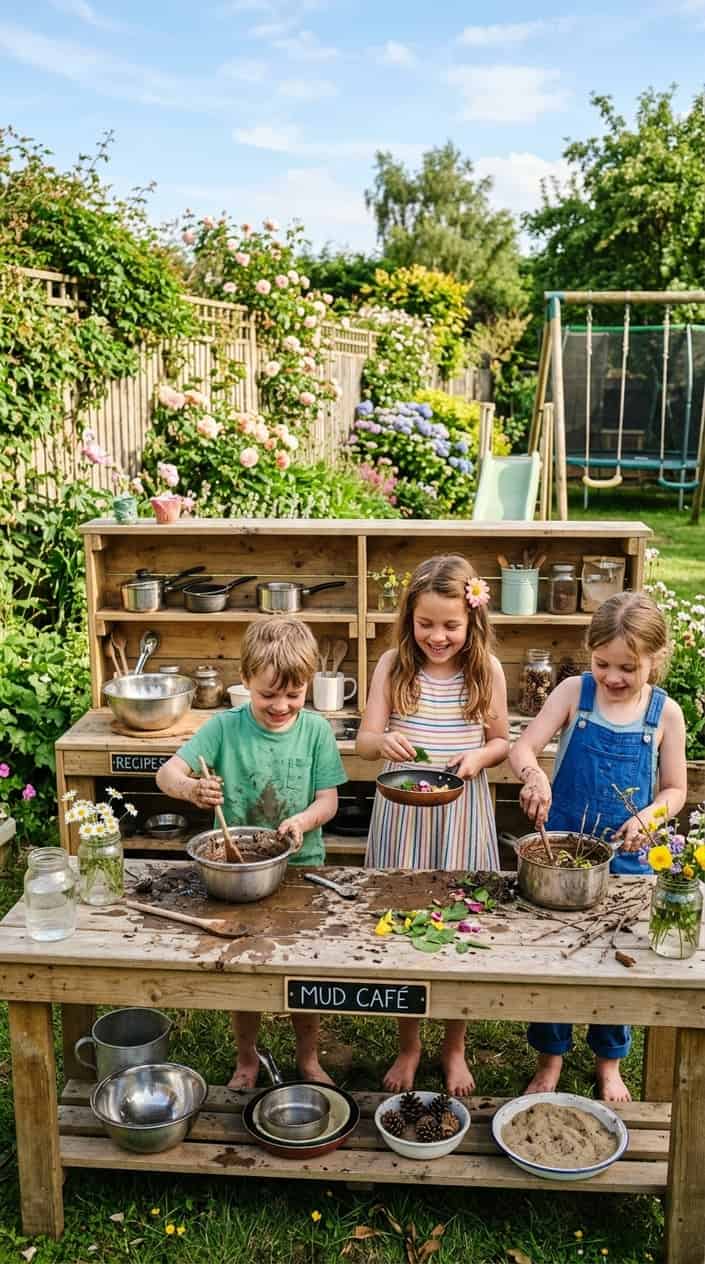
I love when the yard looks like a soup factory and the kids are happily filthy. Expect muddy hands, wet shoes, and a hose on standby.
Set up a table, some old pots, wooden spoons, and a few plastic bowls. Let them gather dirt, leaves, and petals to mix. I give each kid a “menu” card and a marker so they name their creation — that turns play into a goofy contest.
Keep wet wipes and change of clothes within arm’s reach. A simple prize, like choosing dinner music, beats trophies and keeps it silly. I always let them judge one another; kids take their mud seriously and it’s hilarious.
24) Nighttime glow-stick bug hunt

I love this because kids turn into tiny scientists with flashlights and ridiculous levels of focus. Expect a little chaos and some glow-stick-splattered fingers, but also lots of quiet giggles.
Grab several glow sticks, a few cheap plastic bug catchers or jars with holes punched in the lids, and flashlights. Head outside after dusk when the yard cools, and bugs start moving; shake a glow stick and tuck it in the jar, then gently shake to lure flies and moths in without hurting them.
Keep one adult as “door guard” to watch for roads or pets while another scoops bugs. Try different colors — some moths seem more curious about green — and let the kids compare how long each glow stick lasts. End by releasing the bugs and rinsing hands; snacks afterward make it feel like a prize.
25) Family geocaching adventure with a handheld GPS
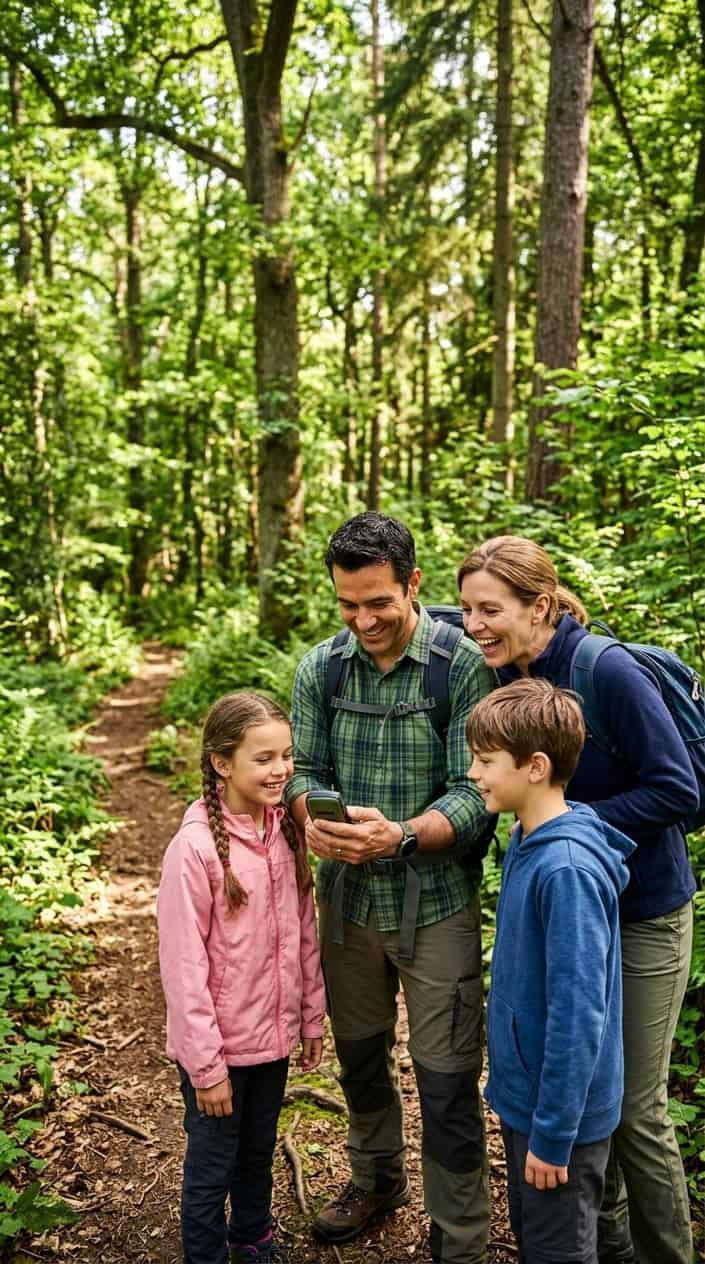
I love geocaching, even if I’m terrible at keeping track of the logbook. Expect some wandering, a bit of squinting at trees, and the pure joy when a kid finds a tiny treasure they didn’t know existed.
Bring a basic handheld GPS or a phone with a reliable app, a few small trinkets to trade, and a pen for signing logs. Start by picking an easy cache near a park or trail and set the GPS to the coordinates; explain how to read the distance counts and arrows. Let each kid take turns navigating and celebrate finds with a silly high-five ritual.
Wear shoes that can handle mud and pockets for swapped items. If a cache looks disturbed, leave a note in the log and report it online so others don’t get confused. Geocaching turns a neighborhood walk into a low-pressure mission, and the kids love being “treasure hunters” for an hour.
26) Puddle-jumping rain-gear fashion show
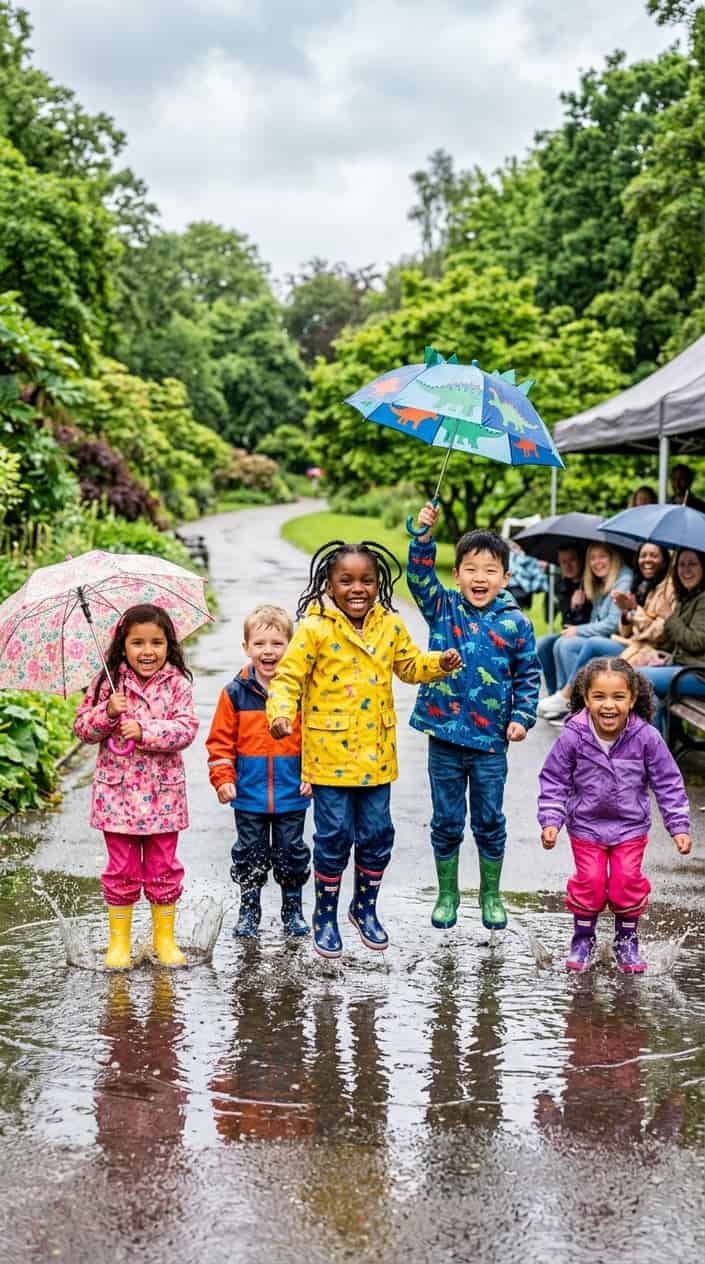
I get oddly excited when the sky opens and the kids beg to go outside. You will get wet, laugh a lot, and probably hose off a few muddy boots afterward.
Grab bright raincoats, silly boots, and any hat or umbrella that makes them grin. Line them up on the porch, let each kid pick an outfit, and walk a short neighborhood loop so they can show off their looks. Bring a cheap camera or use your phone for goofy runway photos — they love posing and it makes cleanup feel worth it.
Give each outfit a theme like “galaxy,” “dinosaur,” or “puddle pro” to keep it playful. I let them swap items mid-walk; the chaos is the fun, and swapping keeps the game fresh.
27) Park clean-up plus treasure-reuse crafting
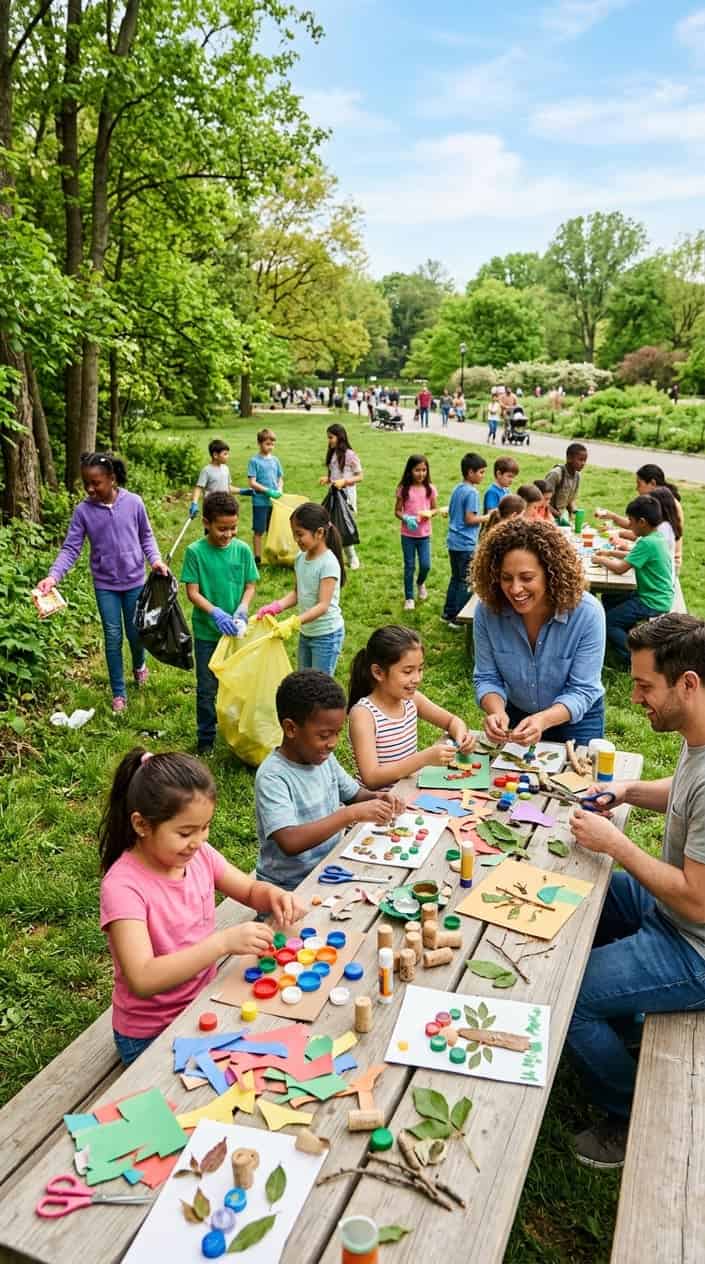
I love this because it gets us outside and I don’t have to nag about doing chores—just hand the kids gloves and a trash bag and we’re off. It can be messy and slow, but you’ll find cool bits worth saving.
Bring gloves, grabbers, bags, and a small box for treasures. Walk a set path together and make a game of spotting recyclables versus trash. Keep one rule: only safe items go in the treasure box.
Back home, sort what you kept and wash anything grimy. Turn bottle caps into magnets, sticks into painted wands, or jars into fairy lanterns. My girls love picking which junk gets a second life; it makes the clean-up feel like a prize.
28) Window-mounted bird feeder study station

I love having birds so close I can whisper to them and still wear pajamas. Be ready for pecking messes and an occasional crow who thinks my hair is a threat.
Stick a suction-cup feeder to a low window, grab a notebook and a pair of cheap binoculars, and park a chair nearby. I use mixed seed, a laminated ID sheet, and a timer so the kids don’t wander off after five minutes. Watch feeding habits, count species, or sketch favorite birds; those quick rules keep it focused and fun.
A little towel under the feeder catches droppings and makes cleanup fast. If the sun glares, clip a paper shade to the glass so you can see feathers and not your own reflection.
Staying Sane While Supervising Outdoor Chaos
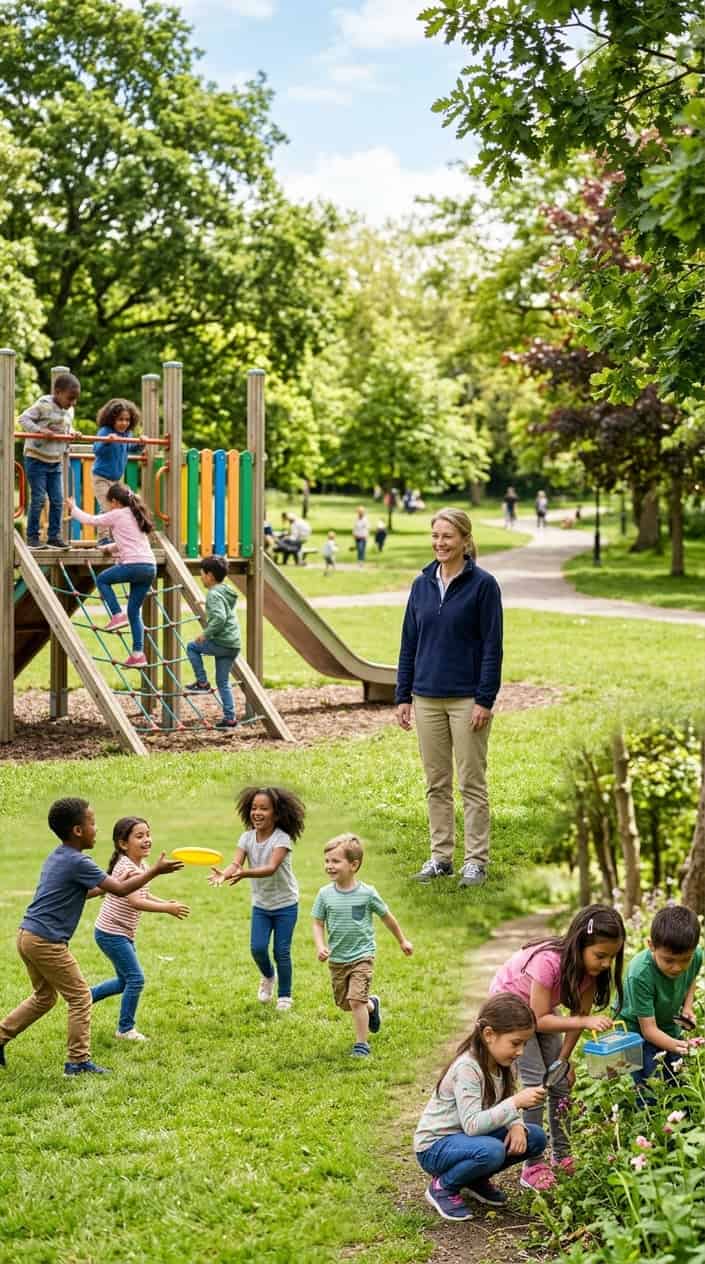
Kids will argue over who found the best stick and how mud counts as a food group. Keep a hot drink, loose rules, and a dry towel within arm’s reach.
Keeping Your Coffee Hot for Longer Than Two Minutes
I learned the hard way that lukewarm coffee equals instant regret. Bring a stainless-steel travel mug with a tight lid and preheat it with hot water while you pack snacks. A small thermos for hot cocoa or tea works too when the weather’s cold.
Sit on a low folding chair near the action so you can sip without sprinting. If you must chase someone, stash the mug in a shallow cup holder clipped to the chair or stroller. A single extra minute of hot coffee makes the whole afternoon feel manageable.
Lowering Your Standards and Loving It
Perfection isn’t happening outside, and I stopped pretending it would. Let muddy clothes, mismatched socks, and unfinished crafts be part of the day. Tell yourself one honest rule: kids get messy, you don’t clean every face instantly.
Have a bin for “dirty play clothes” and a quick wipe kit—baby wipes, hand sanitizer, and a damp cloth—so you can handle the worst without full laundry mode. Celebrate tiny wins: one snack eaten, one polite thank-you, one child wearing sunscreen. That’s parenting gold.
Why Shoes Are Optional (For Everyone)
Bare feet make kids run faster and complain less, but thorny paths and hot pavement can ruin that plan. Check the ground first; if it’s cool grass or soft sand, go barefoot. If not, bring easy slip-on shoes like water shoes or crocs that kids can spring into when needed.
Teach a quick check: prickly bush? shoes. Hot asphalt? shoes. Otherwise, let toes be free. I keep a small shoe bag in my car with spares and bandaids so I don’t have to invent footwear at the moment of crisis.
Making the Most of Outside Time as a Mom
I love being outside with my girls, but I also need my brain not to melt by noon. I pick spots and roles so everyone gets fresh air without me becoming the playground referee all day.
When to Join In and When to Watch From the Porch
Expect to get messy if you sit down to play; that’s fine most days but not when I have a video call at 1 p.m. I join when an activity needs an extra set of hands, like building a fort with heavy boards or helping tie a kite string. I step back and watch when they’re running tag, digging in dirt, or using kid-safe tools — those moments build confidence if I don’t hover.
A quick rule I use: if I can fix the problem with one short intervention, I jump in. If fixing it would take a long lecture, I let them figure it out and watch from the porch with my coffee. I check in every 10–15 minutes so they know I’m nearby without being in their way.
Recognizing the Line Between Free Play and “That Looks Like an ER Trip Waiting to Happen”
My gut tells me when play is leaning toward risky. Things that cross the line for me are climbing where a fall would be more than a bruise, using glass or sharp metal, or mixing chemicals (yes, even mystery potion experiments). I interrupt calmly: “Pause — let’s move this to a safer spot,” and offer an alternative: lower branch, rubber mallet, or plastic cup.
I teach simple safety rules: shoes on for rocky areas, no running with sticks near faces, and check before you jump. If a child ignores the rules, I step in quickly and remove the hazard. If they learn the rule, I let them try again under supervision so they master it without me doing everything for them.


